• Home
  • Free Funding Guide
  • What We Offer
    • Products
    • Services
    • Free Guide
  • About Us
  • Contact
  • Sign Up

  • Ask Joe Any Question!
  • Business Credit Cards
  • Business Line of Credit
  • Topics

Brex Card Review: Is This Corporate Card Offer Too Good to be True?

April 5, 2021 By Joe

I mentioned Brex in my last post about the best business credit cards for startups (high on the list, I might add). That’s when it dawned on me that we haven’t covered the Brex corporate card offer yet. And, this is something you need to see. 

The two top highlights for the Brex card are that there is no personal guarantee (underwriters don’t look at your personal credit score) and it’s free. Not every business will qualify for one of these cards. But, if you are able to, it’s definitely worth looking into. 

This is what’s in store: 

  • Brex Card Overview
    • Who Owns Brex?
    • Brex Account Offers
    • How Does Brex Make Money?
  • Brex Card Rewards Summary
    • Up to 30K in Introductory Bonus Points
    • Earn 1-8X Points Per Dollar on Spending
    • $150K Worth of Partner Perks
    • Built-In, Real-Time Expense Tracking
    • Consultant, Accountant, & Travel Agent Connections
  • How to Qualify for a Brex Card
  • Brex vs Ramp vs Stripe vs Divvy
  • Final Thoughts

Keep reading to learn everything you need to know about the Brex corporate card and find out if this offer is too good to be true or right for your business.

Brex Card Overview

The Brex card, issued through the Brex financial operating system, is a corporate credit card, which means it’s designed for businesses with multiple employee spending (in this case, tech, life sciences, and eCommerce companies). However, corporate cards don’t have to be used by several staff members. In fact, some applicants qualify for a single corporate card with a $1K limit for individual business spending. 
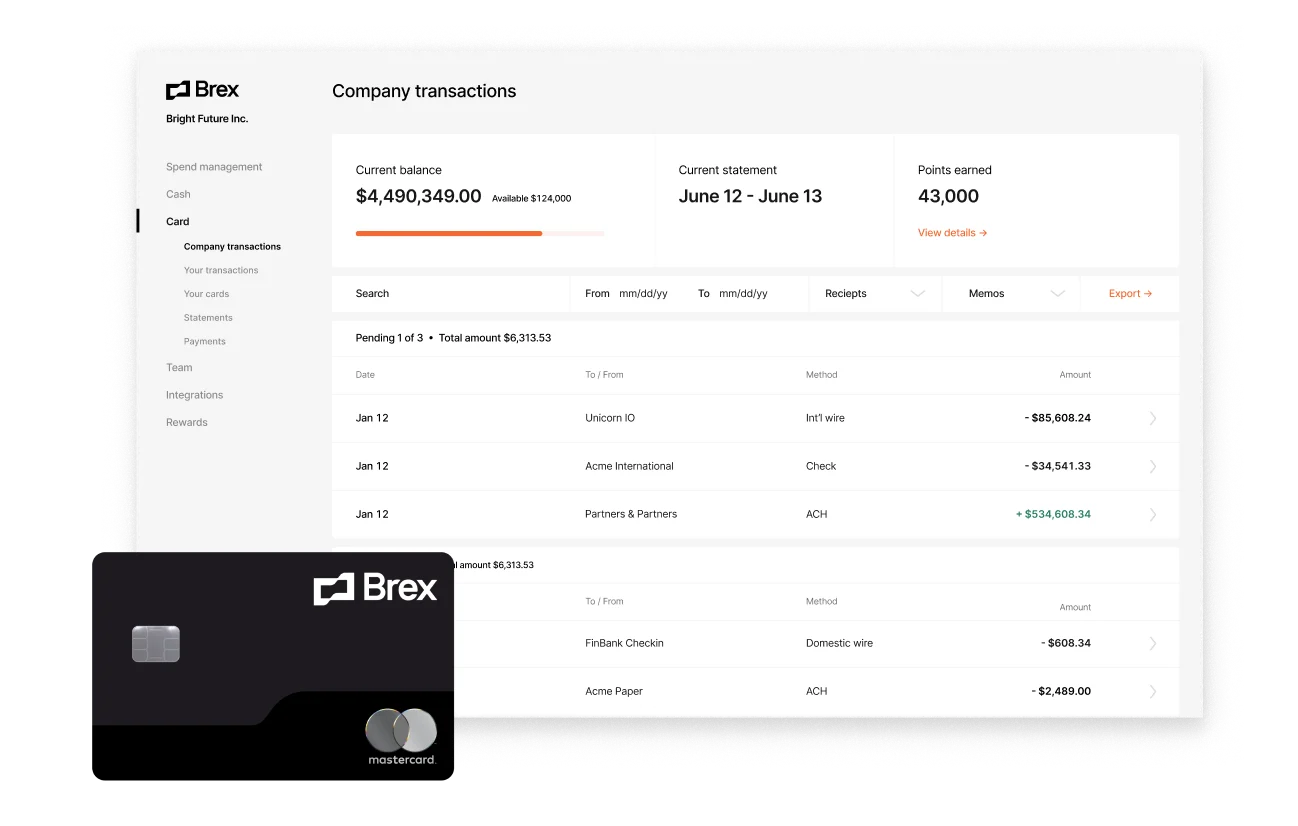
Brex corporate credit card

Most corporate cards don’t require personal guarantees. Instead, applicants whose companies demonstrate a high probability to repay the funds are extended credit. The Brex card works the same way. So, if you own a company and you have a low FICO score, it shouldn’t affect your ability to obtain credit. 

Now, the most impressive feature of this card is that it’s free. Cardholders pay no annual fee, no interest, and no other costs. 

 Recommended: 7 Best Cash Back Corporate Cards to Explore

Who Owns Brex? 

Brex was co-founded by Henrique Dubugras and Pedro Franceschi in San Francisco, California. The pair previously co-founded the online payment system, Pagar.me before selling it in 2016 to Brazilian credit card processor, Stone. According to Forbes, the pair moved to the bay area to attend Stanford before dropping out after just a few months. Entrepreneurship seems to favor them. 

Brex Account Offers

When you sign up for a Brex account, you will have the option to apply for three different offers: Cash, Card, or Cash & Card. 
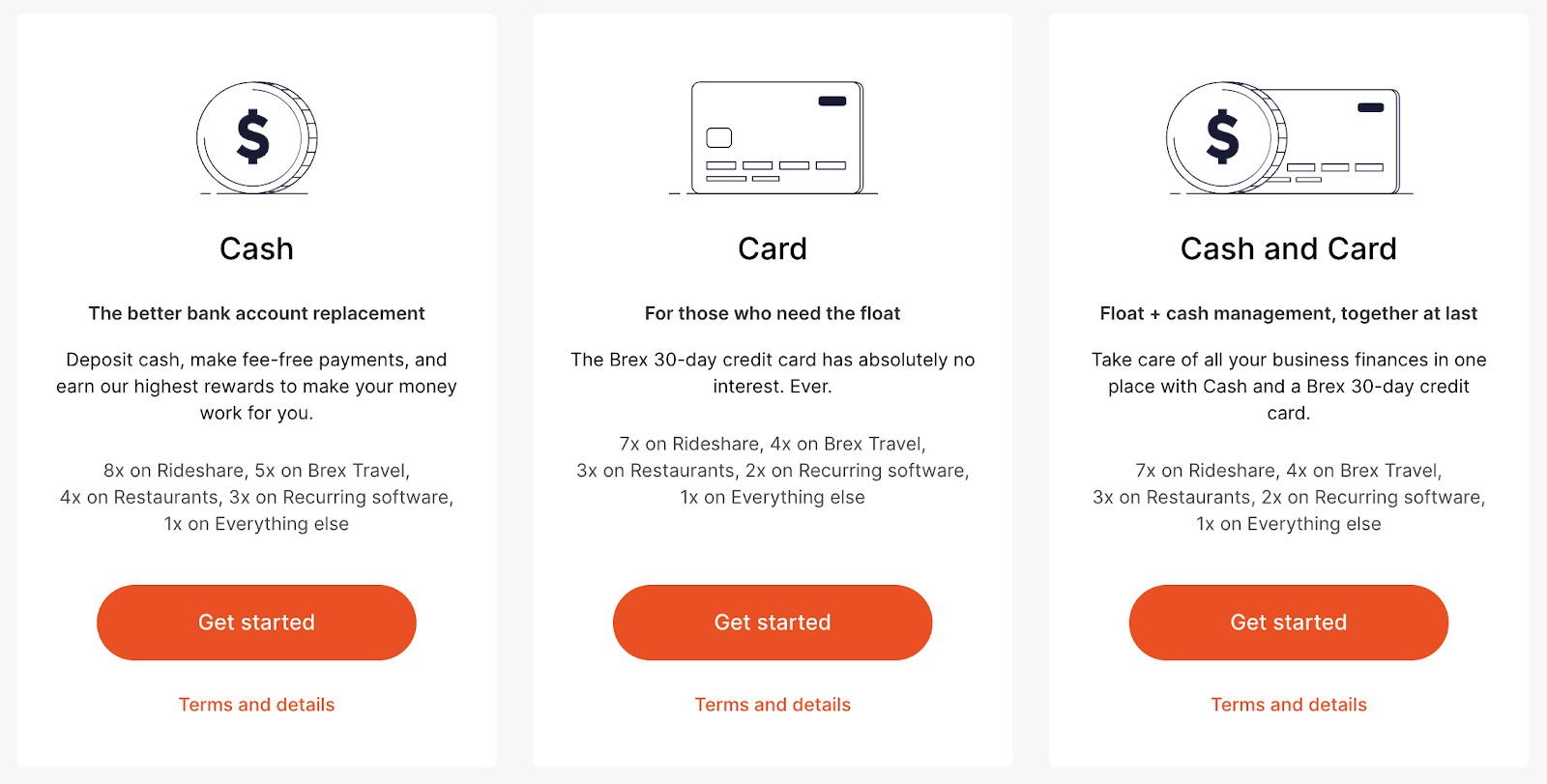
Brex Cash vs Brex Card Accounts

A Cash account is similar to a checking account, though the website explicitly states that it is not a bank account. Still, you can use a Brex Cash account to deposit money, make payments without fees, and earn rewards. Using your “daily pay” account, you can earn rewards on all your spending.

Essentially, Brex offers a way to get funding with net 30 terms, which means your account must be paid in full at the end of each month. Traditionally, credit cards offer users the ability to make a “minimum payment” each month. Brex terms are a little different. So, if you’re looking for a way to fund a large purchase and pay it off slowly over time, this card isn’t for you. 

But, you can use a Brex Card to boost cash flow while you earn rewards. Furthermore, the company claims that tech companies specifically can get 10-20X higher limits than they will with other cards. 

Cash & Card is the best of both worlds. Boost your cash flow with the Brex Card while you handle business transactions through Brex Cash. 

How Does Brex Make Money? 

Rather than charge interest rates and annual fees, Brex earns a percentage from merchants for each transaction. Cardholders are offered attractive rewards on spending with partners and given incentives to pay daily rather than monthly like most other credit cards. Shorter payment terms for users frees-up cash flow for the brand, allowing them to offer attractive terms.  

Brex Card Rewards Summary

Above, I mentioned that Brex caters to tech, life sciences, and eCommerce businesses. While being in one of these industries isn’t a requirement to obtain credit, those that fall under this umbrella will benefit the most. In addition to being a free card with no fees or interest, here are the benefits of using Brex for your business spending.

Up to 30K in Introductory Bonus Points

Brex is the only corporate card with zero fees that currently offers an introductory bonus. Just for linking your new Brex credit card account to Brex Cash, you will earn 20K bonus points. In addition, when you spend $3K on your card in the first 3 months, you’ll earn 10K bonus points. 

Earn 1-8X Points Per Dollar on Spending

All Brex spending has the potential to earn you points. 

With a Brex Cash account, you can earn 8X points on rideshare apps, 5X points with Brex travel partners, 4X on dining at restaurants, 3X on recurring software subscription payments, and 1X on everything else.  

And, with a Brex Card, you can earn 7X points on rideshare apps, 4X points with Brex travel partners, 3X on dining at restaurants, 2X on recurring software subscription payments, and 1X on everything else. 

Points can be redeemed through Brex travel, via gift cards and cash back, or as statement credit (for cardholders who don’t use Brex Cash). 

$150K Worth of Partner Perks

Brex partners include big names like AWS, Slack, and Google Ads. If you were to utilize all of the savings offered as a Brex cardholder, you could redeem up to $150K in perks. 

  • AWS – $5,000 credit and up to $100,000 in AWS Activate, depending on eligibility
  • Slack – 25% off 12 months of eligible Slack paid plans
  • Carta – 20% discount on first year and waived implementation fees, plus 10,000 Brex Points
  • Zoom – 20% discount on annual Zoom subscription
  • Quickbooks – 40% off your first 12 months of QuickBooks
  • Google Ads – Up to $150 in Google Ads credit
  • Dropbox – Get 50% off on all Dropbox Business, Standard, or Advanced plans
  • Gusto – Get 50% off any plan for 12 months

Note that many of Brex’s competitors offer similar perks. 

Built-In, Real-Time Expense Tracking  

Essentially, Brex expense management tools enable you to put your expenses, including employee spending, on autopilot. Upload receipts and the software will match spending in your accounting platform. You may be able to cut reconciliation time by up to 50% and spend up to 75% less time chasing receipts. 
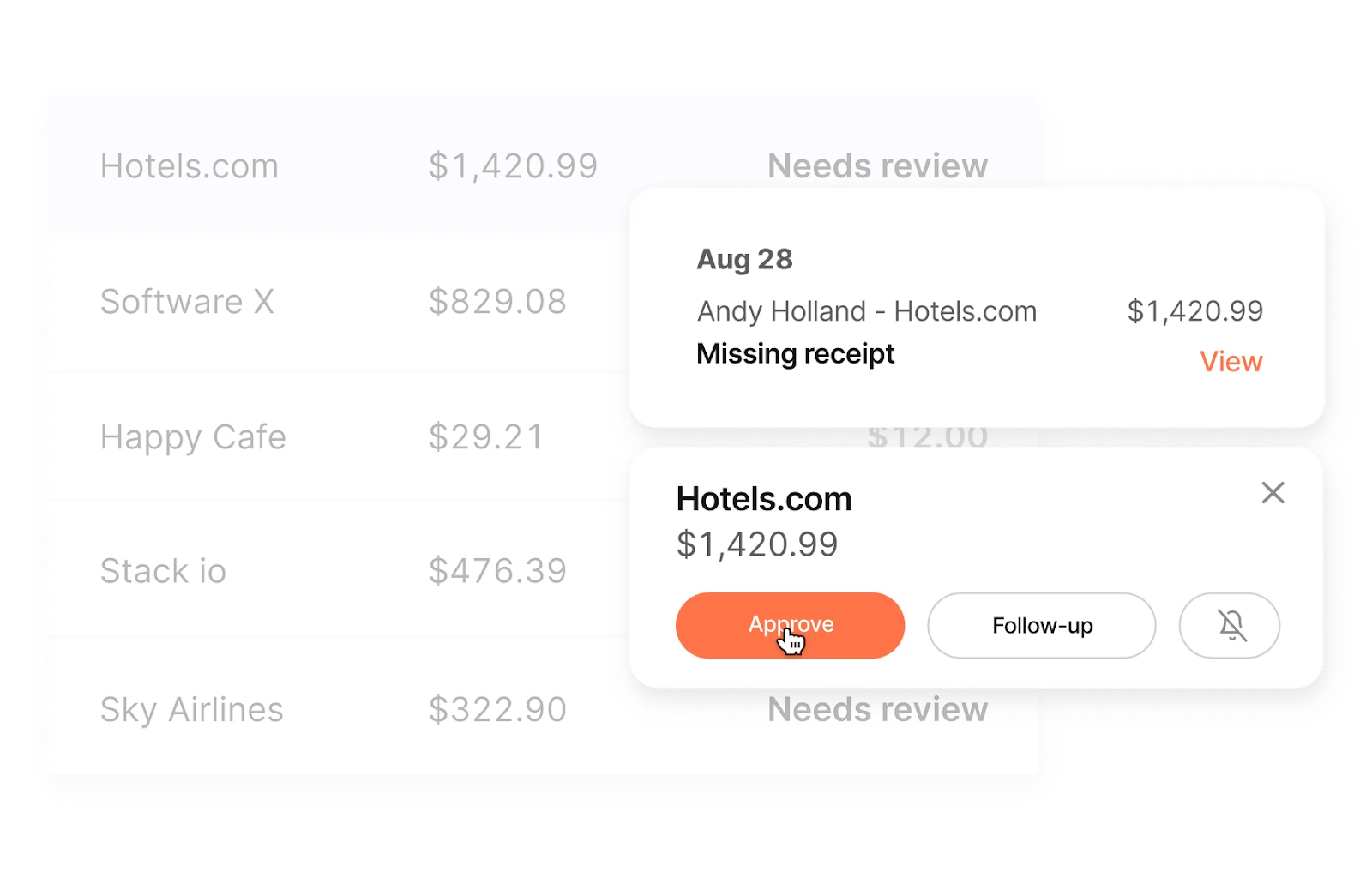
Brex Expense Tracking

You can also set up monthly spending limits for each card, which can give employees more flexibility and management more time freedom. 

Another key feature of Brex expense management are the virtual cards. Divvy has a similar offer, which means your employees don’t have to wait for a physical card to be issued. The technology seems to be a hit amongst users. 

Consultant, Accountant, and Travel Agent Connections 

When you book your trips via Brex Travel, you can access experienced corporate travel agencies for free. Travel agents are available 24/7 to help you redeem points and book with 30% to 60% discounts. 

Looking to hire an agency to help you with consulting services? Brex cardholders can access a directory of vetted agency and accounting partners that you can leverage to help you scale your business. Take advantage of the opportunity to work with service providers experienced with Brex expense tracking. As far as I know, other credit card companies don’t offer anything like this. 

How to Qualify for a Brex Card

Brex isn’t super transparent about their qualification terms, but here’s what we do know: 

  • You must have an EIN for a US-based business
  • You must have a business bank account
  • You will need to verify your identity with photos of your government-issued ID

Furthermore, here’s what we think, based on anecdotes from existing cardholders. 

  • You should have $50K to $100K in the bank at all times

If you bank with a smaller community bank or credit union, you will need to upload your two most recent bank statements. The process is quick and painless, but applications can take up to 15 days to review. 

Brex vs Ramp vs Stripe vs Divvy

Now, here’s how Brex stacks up side-by-side with its top competitors: Ramp, Stripe, and Divvy. 

Brex vs Divvy vs Ramp vs Stripe

Each of the corporate cards is free and comes with some alluring rewards. Some of the key value indicators when we compare are that Brex is the only card that seems to offer an intro bonus. Next, in order to qualify for Stripe’s corporate card, you must use their software and either wait or ask for an invitation. 

Final Thoughts

Brex has an impressive corporate card offer for tech, life sciences, and eCommerce companies. If you can qualify and you’ll take advantage of the rewards, I’m sure it’s worthwhile – you can’t really go wrong with free. But, if you aren’t able to qualify, you have plenty of other options. Want to learn how to obtain $100K in business credit in 30 days? Join Business Credit Workshop today! 
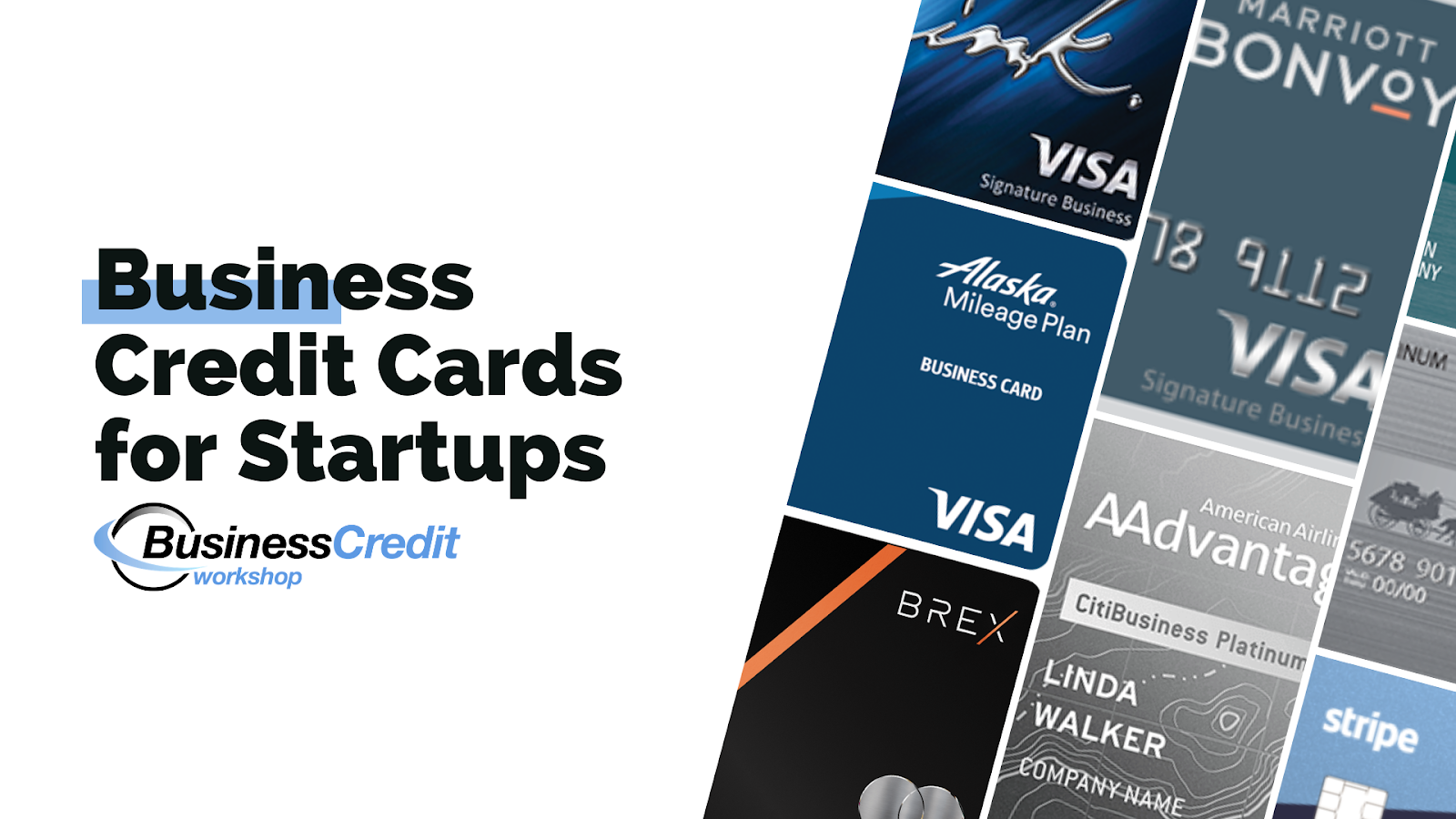
What are the Best Unsecured Business Credit Cards for Startups?

March 29, 2021 By Joe

business credit cards for startups

New business owners often fund their ventures with personal capital, which includes savings, loans, and credit cards. Without established business credit, companies sometimes have a hard time finding business credit cards they can qualify for. I’m often asked about the best business credit cards for startups, so I wanted to do a write-up to share with everyone. 

Here’s what’s covered: 

  • Startup Business Credit Basics
    • Secured vs Unsecured Credit Cards
    • Corporate vs Travel Rewards vs Cashback Card
    • What is the 5/24 Rule?
  • Best Corporate Credit Cards for Startups
  • Best Travel Rewards Credit Cards for Startups
  • Best Cashback Credit Cards for Startups
  • Final Thoughts

Keep reading to learn everything you need to know. 

Startup Business Credit Basics 

A business has its own credit scores, different from FICO scores. Before a business can qualify for a credit card, it must build business credit, which is separate from personal credit. A company must form their business in a way that sets them up to become “business credit ready,” network with banks, establish business credit profiles, then build small tradelines of credit. When they make the right moves, they can generate high credit scores and qualify for large lines of credit. 

Companies without business credit can get credit cards, but are often limited by personal credit. 

Secured vs Unsecured Credit Cards

There are several categories of credit cards available for businesses and individuals: secured and unsecured. Secured credit cards are designed for companies and people who want to build or repair credit by reporting responsible payment history. Unfortunately, secured credit cards require a deposit, essentially allowing you to spend your own money in exchange for reporting on-time payments to credit bureaus. 

On the other hand, unsecured credit cards extend deposit-free lines of credit to companies and individuals based on existing merit. Unsecured cards are typically available to those with moderate to excellent credit history. The higher the credit score, the more card benefits and higher limits a business or person can usually qualify for. Here, we’re going to talk only about unsecured credit cards for startups. 

Corporate vs Travel Rewards vs Cashback Card

Companies usually turn to credit cards to manage cash flow. Another top reason to use credit cards for business spending is to save and earn. Ideally, you want to pay off your card balance each month to avoid interest payments and cash in on the available discounts and rewards. 

  • Corporate cards help large companies manage employee spending and offer savings with high profile partners. 
  • Business travel cards are designed for companies that want to earn travel rewards like airline miles, free hotel stays, and more.
  • Business cashback cards provide rewards in the form of points that can be redeemed as cash to a bank account, applied toward a statement balance, or redeemed for other items. 

So, when you explore which card is right for you, first decide which you’re more interested in. Then, proceed through this list accordingly. 

What is the 5/24 Rule?

One last item to note before we move on to explore the cards listed here is Chase’s “5/24 rule.” All card issuers have provisions that, if not met, can immediately disqualify you from the ability to obtain a card. Chase has a black and white rule that if you have opened five or more personal credit cards within the past 24 months, you cannot open a new credit card account with them. 

So, if you want to apply for a Chase credit card, start with them before you move on to other banks. 

Best Corporate Credit Cards for Startups

Typically, corporate cards have lower risk to you as the business owner because they require no personal guarantee. But, they can be trickier to qualify for. Qualification terms are instead based on a company’s financial track record and proven ability to pay back funds. Right now, there are some impressive names in the corporate card game; here are the four top corporate cards for startups, none of which charge fees. 

1. Brex 

brex card

Read more about the Brex corporate card. 

2. Stripe 

stripe corporate card

Read more about the free Stripe Corporate Card’s cashback rewards. 

3. Divvy

divvy card

Read an in-depth Divvy credit card review before you apply.

4. Ramp

ramp card

Learn more about the Ramp card. 

Best Travel Rewards Credit Cards for Startups

Now, let’s take a look at the best startup business credit cards for the best travel rewards and sign on bonuses that I know of. 

1. Amex Marriott Bonvoy Businesses

marriott bonvoy business card

Read a Marriott Bonvoy Business credit card review and comparison.

2. Barclay American Airlines AAdvantage Aviator Business

Barclay AAdvantage Business Card

Learn more about Barclay’s AA Biz card. 

3. Bank of America Alaska Airlines Business

BoA Alaska Airlines Business card

Learn more about the BoA Alaska Biz card. 

4. CitiBusiness American Airlines AAdvantage Platinum 

CitiBusiness Alaska Airlines Advantage card

Learn more about the CityBiz AA Platinum card.

Best Cashback Credit Cards for Startups 

Now, these cards can help you manage cash flow while you earn as much as possible on spending for your startup.

1. Capital One Spark Cash Small Business

Capital One Spark cash business

Learn more about the Capital One Spark Cash card.

2. Chase Ink Business Preferred

Chase Ink Business Preferred Card

Read a deep dive into the Chase Ink Business Preferred card.

3. US Bank Business Leverage 

US Bank Business Leverage

Learn more about the US Bank Biz Cash card. 

4. Wells Fargo Business Platinum

Wells Fargo Business platinum card

Read more about Wells Fargo business lines of credit before you apply. 

Final Thoughts

These are the top business credit cards for startups, including corporate, travel rewards, and cashback options. We’ve written in-depth reviews on a handful of additional business credit cards you might also find interesting: 

  • PNC Bank Business Credit Card Review & Comparison
  • We Studied Suntrust Business Credit Cards & Here’s What We Found
  • How to Get a Business Credit Card — The Ultimate Guide

And, if you’re ready to learn how to get $100K in business credit in 30 days, join Business Credit Workshop today! 

Should You Use a Real Estate Investor Line of Credit to Buy or Renovate Property?

March 9, 2021 By Joe

Real Estate Investor Line of Credit

One of the best ways to build net worth is through investing in real estate. Whether you buy and flip or buy and hold, real property can generate tremendous profits for individuals and businesses. The average ROI on real estate investment is in the 12-16% range, which is quite a bit higher than the stock market.

Once you get serious about your real estate investment strategy, you need to explore all of your financing options. Here, I want to talk specifically about real estate investor lines of credit. 

Here’s what we’ll cover: 

  • What is a Real Estate Investor Line of Credit?
    • Credit Cards vs Loans vs Lines of Credit vs Hard Money
  • Frequently Asked Questions
  • Conclusion

What is a Real Estate Investor Line of Credit? 

A real estate investor line of credit is a revolving credit line dedicated to the purchase, repair, and renovation of investment property. This type of financing is extended based on equity in a real estate investment and can be used much like a credit card, which means that an investor can tap into the funds multiple times. 

These credit lines are extended from banks and credit unions to individuals and businesses for the purpose of funding new investments or rehabilitating or updating an existing investment. The process is fairly straightforward and similar to a HELOC loan on an owner-occupied home. 

And, here’s how these dedicated credit lines stack up against some of the most common real estate (RE) investment financing options. 

Credit Cards vs Loans vs Lines of Credit vs Hard Money

Let’s quickly clarify the differences between credit cards, loans, lines of credit, and hard money as they can apply to real estate investing. 

First, a credit card is a revolving line of credit that can be used for various purposes. Visa, Mastercard, American Expresss, and Discover cards can be used universally to pay for almost anything, as long as the seller accepts these payment forms. While most home sales channels don’t accept credit cards, you can convert credit cards into cash to pay for investments. Credit card interest is around 15% on average. 

Next, a loan is usually extended with set terms. This means that you will be given a certain amount of cash to be used at one time then paid back by a given date. In Real Estate terms, a loan typically refers to a mortgage and can be taken in the full amount of the property, less any down payment. Typical repayment terms are 15, 20, and 30 years. Right now, the average interest rate on a mortgage is between 2.3 to 2.9%.

Then, lines of credit can be used like credit cards with revolving terms, yet typically have interest rates akin to mortgages. In a sense, it may seem like they provide the best of both worlds. However, lines of credit typically can’t be used to fund an entire home purchase and instead provide a short term solution to an immediate real estate investment need. 

Finally, hard money loans are usually reserved for investors with less than ideal credit as a short-term funding option since the average interest rates are between 11 and 18%. A hard money loan is usually extended to a buyer by a private party like an investor, business, or the seller of the property. 

Frequently Asked Questions

Here are answers to some of the most common questions I hear when discussing real estate investing with both BCW members and colleagues. 

Can you get a line of credit on an investment property?

Yes. As long as a property has equity in it, whether it is used as your primary residence or place of business or solely as an investment, it can be leveraged to obtain a line of credit. 

How do real estate investors get financing?

Real estate investors fund their home purchases and renovations through a variety of financing options including loans, credit cards, lines of credit, and other less common channels. 

What is an investment line of credit?

An investment line of credit is a short-term financing solution that provides the borrower with a revolving line of credit on either a property that is not occupied by the owner or another investment. 

Can you take out a line of credit on a rental property?

Yes. You can take out a home equity line of credit (HELOC) for a property that you rent the same way you can a home that you occupy. 

Can you get a 30-year mortgage on an investment property?

Yes. 30-year mortgages are available for investment properties and owner-occupied properties. 

How can I invest in real estate with no money and bad credit?

The most common way that people with bad credit can get started with real estate investing is through hard money lenders. These situations are usually short-term (until the buyer can improve their credit) and used as a last resort. 

Can I use a business line of credit to buy a house?

If you have a large enough business line of credit, you can use it to buy a house, but you should not treat it as a 30-year mortgage because this would incur much higher costs than necessary. Learn more about the BRRR method of real estate investing. 

Is it smart to use home equity to buy an investment property?

If an investment can generate more income for you, it can often be a smart move to use your home equity to buy another property. 

Conclusion

If you’re looking for a line of credit that you can tap into repeatedly on your real estate journey, you will use the funds solely for real estate, and you already have equity in property along with a good credit score, a real estate investor line of credit may help you make your next move to secure your future. I find that it’s best to diversify your funding options. 

If you’re interested, here I explain how to use business credit to buy real estate.  And, if you want to get up to $100K in business credit in 30 days, join Business Credit Workshop today.

Here’s How to [Actually] Get Business Credit With Just an EIN +More Options

February 16, 2021 By Joe

Business Credit With Just EIN

Lately, I’ve found quite a bit of online content that pertains to getting business credit with just your EIN, and I’ve seen some pretty good information. But, I haven’t found a thorough answer to the core question, which is, “How can you get business credit using your EIN and not your SSN?”

First of all, if you’re not up-to-date with the lingo, what you’re essentially looking for here is business credit without a “personal guarantee.” Luckily, there are lenders that do not require a personal guarantee for business financing, but most of the good options are not common nor easy to find. So, let’s explore everything you need to know. 

Here’s what’s in store: 

  • In Business Credit, What is a Personal Guarantee?
  • What if You Aren’t Eligible for an SSN?
  • What if You Have Bad Personal Credit?
  • How Can You Use Your EIN Instead of Your SSN to Get Business Credit and Loans?
  • Lenders That Offer Financing With No Personal Guarantee
    • Business Credit Cards
    • Corporate Credit Cards
    • Business Loans
    • Alternative Financing [Proceed With Caution]
  • Final Thoughts

In Business Credit, What is a Personal Guarantee? 

When a business takes out an unsecured loan or line of credit, most lenders want assurance that the funds will be paid back. A personal guarantee is a promise that, should the business fail to repay, the individual will be responsible for the debt. This responsibility typically falls on a company executive or business owner.  

With a business loan or line of credit for which you are the personal guarantor, the lender has a legal right to your individual assets if your business does not repay the debt as agreed. In order to legally collect the funds in this case, the lender needs your social security number (SSN). 

Your SSN often serves a second purpose, which is to see if you have shown responsible credit behavior with your personal finances. Really, lenders just want to make sure you are responsible even when your business is obviously financially healthy.   

You might also like: Business Car Leasing 101: How to Lease a Vehicle With Your EIN

💡 Does Your EIN Have a Credit Score? 
Your business does have it’s own public credit score, separate from your private personal FICO scores. To learn more about the oldest and most-used business credit bureau, see Everything You Need to Know About a DUNS Number & Why Should You Care. 

What if You Aren’t Eligible for an SSN? 

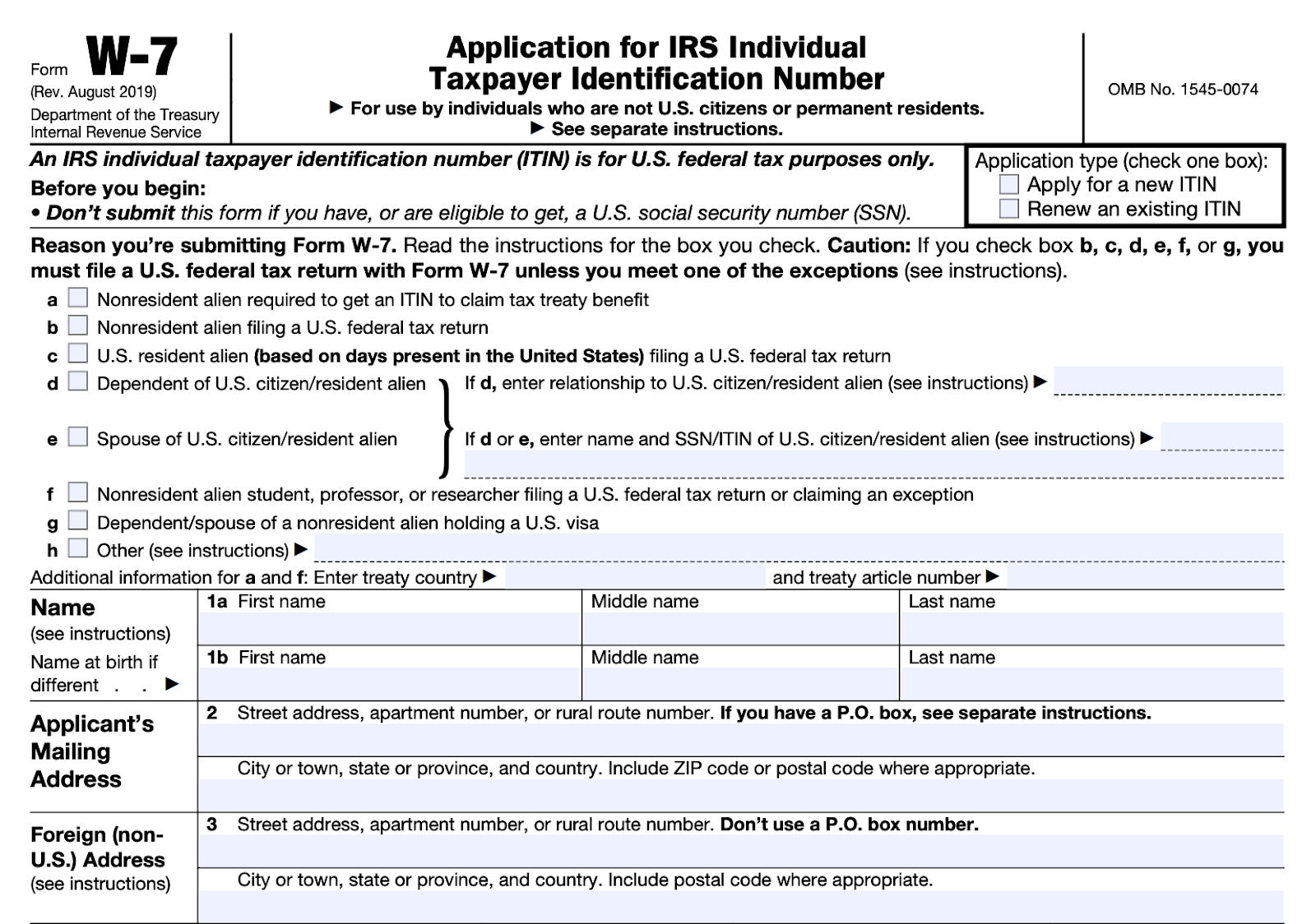
If the reason you want a business credit card is that you don’t have a social security number — maybe you’re a nonresident of the United States doing business here — you can take another route to bypass the SSN section of a credit card or loan application. In this case, you need to file for an Individual Taxpayer Identification Number (ITIN) through the IRS. 

Several credit lenders allow you to apply for funding using an ITIN instead of an SSN. I recently did a write-up on one of them and you can find more about it (and competitors) here: Chase Ink Business Preferred Credit Card: A Deep Dive. 

To apply for an ITIN, use IRS form W-7. Consult with a CPA licensed in the state where you do business to find out more as it applies to your situation. 

Apply for an ITIN

What if You Have Bad Personal Credit? 

Another reason you might want to apply for business credit using your EIN and not your SSN is that you have a low FICO score. If you’re in this boat, there are steps you can take to remedy the predicament. These steps will vary based on your situation. 

In all cases, the first step will be to learn about the common errors often reported by consumer credit bureaus and leverage them to your advantage. For example, you might learn how to best deal with vehicle repossessions and defaulted loans or what can be disputed in a credit file and how to do so.  

Recommended: Credit Secrets Book Review: Can You Erase Bad Credit History? 

How Can You Use Your EIN Instead of Your SSN to Get Business Credit and Loans?

If you want to get a line of credit for your EIN and withhold your SSN, as you probably guessed, you need to find a lender that does not require a personal guarantee. Then, you will need to meet the credit and income requirements of that lender. Finally, you’ll need to apply. 

Lenders That Offer Financing With No Personal Guarantee

As I’ve already said, lenders that do not require a personal guarantee are uncommon. But, they’re not impossible to find. Here’s a list of a some lenders who may not require an SSN or an ITIN to apply for a line of credit or a loan. 

Business Credit Cards 

These business credit cards are fairly easy for companies of all sizes, including freelancers and individual contractors, to qualify for and require no personal guarantee. 

  1. Sam’s Club Business Credit Card
  2. Office Depot OfficeMax Business Credit Account
  3. Shell Small Business Gas Card
  4. SuperAmerica Fleet Credit Card 

Recommended: How to Use Business Gas Cards to Build Your Business Credit

Corporate Credit Cards 

Rather than base your credit limit on your FICO score, you may be able to meet revenue requirements for one of these corporate cards with no personal guarantee. You may need an actual S or C corporation to qualify (in some cases, an LLC might suffice). 

  1. Brex Rewards Card 
  2. Stripe Corporate Card – see our full write-up here. 
  3. ScaleFactor Visa Charge Card
  4. Bremer Bank Business Card
  5. American Express Corporate Cards
  6. Capital One Corporate Cards
  7. Citibank Corporate Cards
  8. JP Morgan Chase Corporate Cards
  9. Wells Fargo Corporate Cards

Business Loans

While you may be required to share your SSN during the initial application process to ensure that you meet minimum credit requirements, these lenders have funding options that require no personal guarantee. 

  1. Kabbage
  2. Fundbox
  3. StreetShares – requires no personal guarantee for government contractors and subcontractors to Fortune 500 companies. 

Alternative Financing [Proceed With Caution]

First, when you don’t qualify for a business loan or line of credit, you can try for a personal loan or credit card instead. In fact, many companies are funded with personal capital. But, personal credit is typically more limited as far as funding amount and rewards than business credit. 

Next, if you have a friend or family member willing to extend a loan to your business, you may be able to request a private contract without using your SSN and with no personal guarantee. Most people avoid this to protect perfectly healthy relationships rather than muddy them with potentially disastrous business affairs. 

Then, depending on your type of and stage in business, you may also find VC or Angel investors willing to extend funding, which typically requires formal pitching and a detailed plan that outlines how you will use the money to increase company profits. In nearly all cases, investors also require a certain level of control over business management and a share of the revenue. So, if you want to maintain your operations as is (and keep your profits for yourself), this isn’t a great option.  

Finally — and I hesitate here — it may be worth mentioning that other options include working capital financing or merchant cash advances. In rudimentary terms, you can take out an equity loan on accounts payable.  However, I do not recommend these channels. Repayment on these types of loans is overly-expensive akin to personal payday loans. 

Final Thoughts

Business lenders that provide practical funding solutions you can apply for using only an EIN are unicorns in the financial universe. But, if you’ve made it here, you should know everything you need to find one. If you’ve tried, but still can’t seem to qualify for financing, there’s plenty you can do to transform your situation. 

And, if you know of other lenders who require no personal guarantee, I’d love to hear about them. For now, I recommend you learn how to build business credit so that you can access high-limit loans and credit cards with the best possible rates. If you want to learn how to obtain $100K in business credit in 30 days, I invite you to join Business Credit Workshop today. 

Chase Ink Business Preferred Credit Card: A Deep Dive Analysis

February 8, 2021 By Joe

Chase Ink Business Preferred Review

As a multinational investment bank and financial services provider, Chase has been a major player in the lending game for centuries. In 2000, the bank merged with JP Morgan and evolved into what it is today. 

While I usually endorse smaller community banks and credit unions for their flexible business loan and credit card underwriting requirements, today I want to share everything I know about the Chase Ink Business Preferred card — it’s definitely worth learning more about. 

Here’s what we’ll cover: 

  • Chase Ink Business Credit Cards Overview
    • How to Upgrade an Unlimited or Cash Card to a Preferred Card
  • Chase Ink Business Preferred Under the Microscope
    • Does Chase Report to D&B?
    • Chase Ink Business Preferred Card Benefits
      • Telephone Damage & Theft Protection
      • Free Employee Cards
      • Auto Rental Collision Damage Waiver
      • Trip Cancellation/Interruption Insurance
      • Purchase Protection and Extended Warranties
      • Transferable Points & Rewards That Never Expire
    • Chase Ink Business Preferred Preferred Card Downsides
    • How to Apply for a Chase Ink Preferred Card
  • Chase Ink Business Preferred Competitor Overview
  • Final Thoughts

Chase Ink Business Credit Cards Overview

Chase Ink Business Preferred is one of three Ink Business Visa credit cards offered through Chase, each of which have their own set of rewards. 

  1. Chase Ink Business Unlimited – Earn unlimited 1.5% cash back and up to $750 bonus cash back. 
  2. Chase Ink Business Cash – Earn up to 5% cash back in select categories and up to $750 bonus cash back. 
  3. Chase Ink Business Preferred – Earn up to 100,000 bonus points equal to $1,000 cash back or $1,250 in travel rewards. 

Chase also offers travel rewards cards for Southwest and a United travel reward card. For now, I want to share a quick side-by-side comparison of the three Ink cards before diving deeper into the Business Preferred card.

Chase Ink Business Credit Cards

With Chase Ink Business Preferred, 1 point is equal to roughly 1 cent cash back or 1.25 cents worth of travel rewards. For businesses with higher spending, because of the higher reward caps, Preferred is the Chase Ink card to strive for. 

How to Upgrade an Unlimited or Cash Card to a Preferred Card

When you meet the qualifications for a Chase Ink Preferred card, you may be able to upgrade an existing Unlimited or Cash card. Your Unlimited or Cash card must have been open and in good standing for at least a year and you will need to pay the $95 annual fee. 

Furthermore, when you make a product change, you won’t be eligible for the sign on bonus for new Preferred cardholders. 

To upgrade, simply call Chase using the phone number on the back of your card and ask for an account review or contact the company via the secure messaging platform inside your account dashboard. 

Chase Ink Business Preferred Under the Microscope

Now, let’s take a closer look at the pros and cons of the Chase Ink Business Preferred Card. We’ll start with credit reporting, since that’s the lifeblood of what we do here at Business Credit Workshop. Then, we’ll explore more about the benefits of using a Chase Ink Preferred card and when it might be better to try other channels for business cash flow. 

Does Chase Report On-Time Business Credit Card Payments to Dun & Bradstreet? 

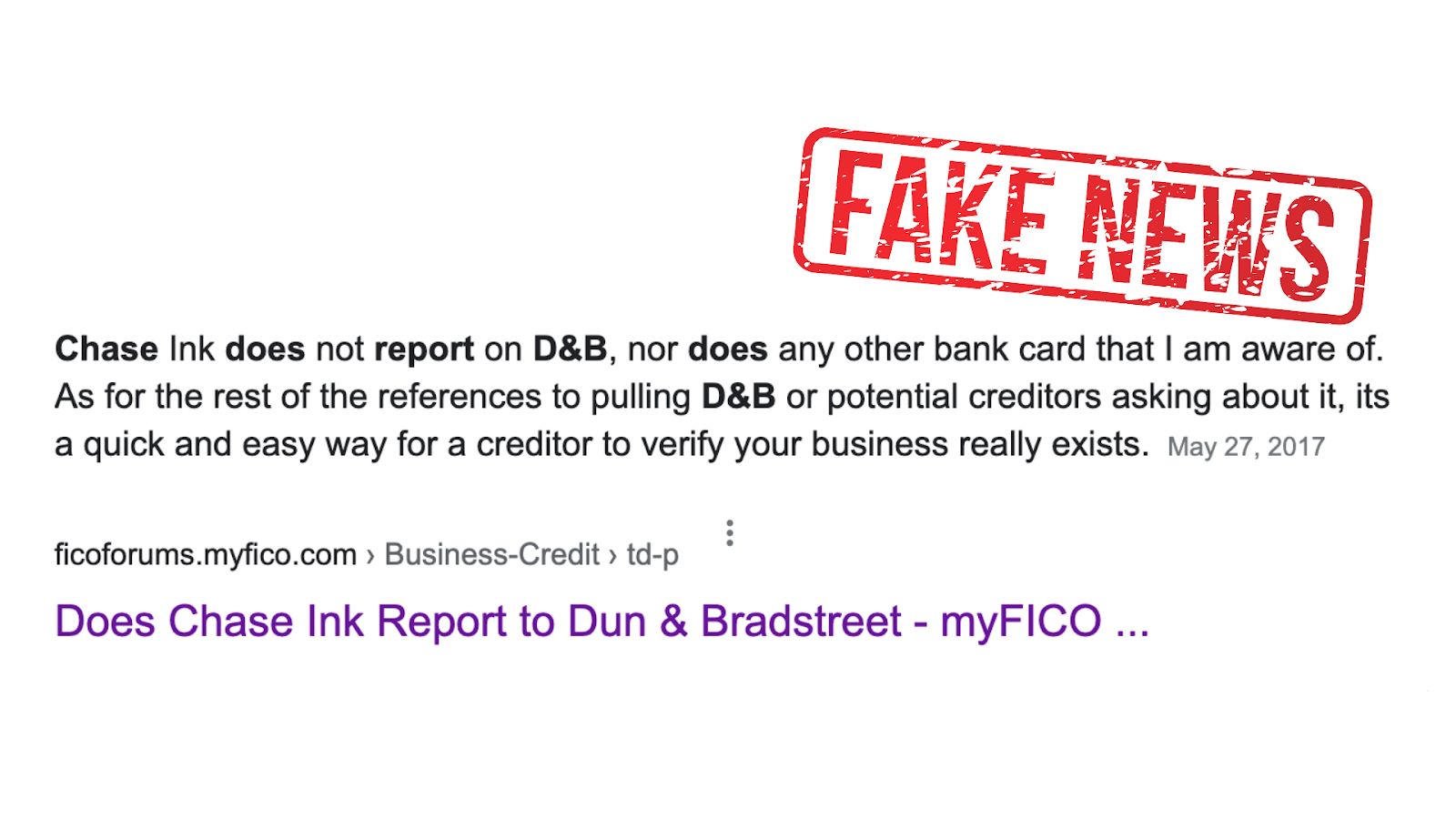
Dun & Bradstreet (D&B) is the monarch of business credit reporting agencies. While there are rumors floating around online credit forums that Chase doesn’t report to to D&B, this simply isn’t true. 

Does Chase Ink Report to D&B?

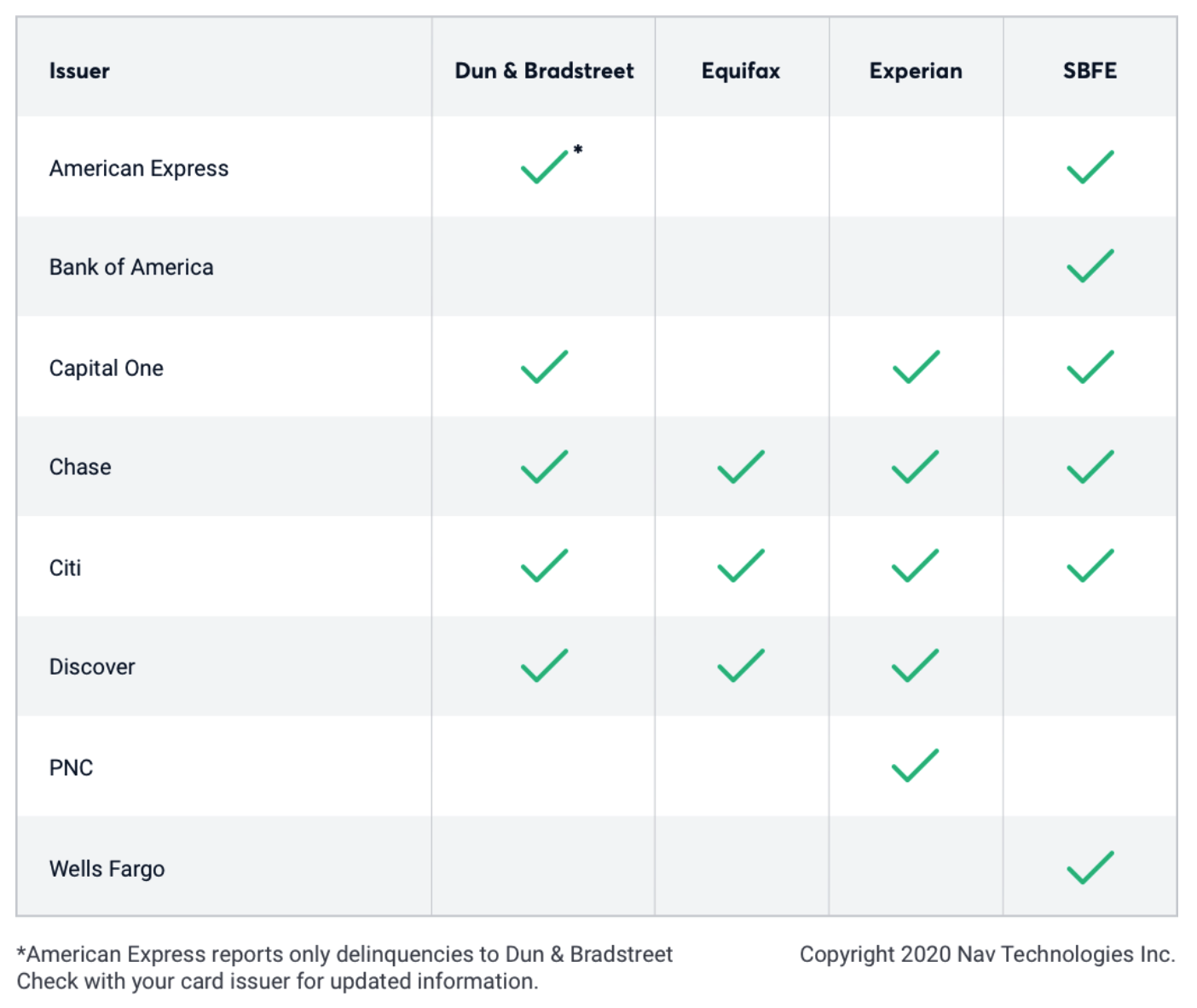
The fact is that Nav — a highly reliable source — reached out to the major banks late last year to see which ones report payment activity to business credit bureaus. They found that Chase and Citi are the only big banks in the United States that report business financing payment activity to all four of the top bureaus (D&B, Equifax, Experian, and SBFE). 

Which Banks Report to D&B?
[Image Source: Nav]

So, on-time payments and responsible credit use on a Chase Ink Business Preferred card can help you improve or maintain your business’ PAYDEX score. 

Recommended: Everything You Need to Know About a DUNS Number

Chase Ink Business Preferred Card Benefits

Some of the perks of using a Chase Ink Preferred card are summarized above. Now, let’s explore them further.  

Telephone Damage and Theft Protection 

If you pay your business phone bill with a Preferred card, you will be eligible for up to $600 per claim on damage and theft for you and your employees. This is a standout feature not offered by competitors’ credit cards. You will be eligible for up to three such claims per year, which will have a $100 deductible. 

Free Employee Cards

Once your account is approved, you can get employee cards at no cost. For each card, set spending limits to control your budget. All rewards will pool into the master account. This means that employee spending on a company Chase Ink Preferred card will count toward your bonuses and points. 

Auto Rental Collision Damage Waiver

When you rent a car and pay with your Business Preferred card, you don’t need to purchase insurance, because Chase automatically has  you covered with damage protection up to the actual cash value of the vehicle. This can save you quite a bit on business travel, especially when multiple employees rent cards when traveling for business. 

Trip Cancellation/Interruption Insurance

For prepaid, otherwise non-refundable travel fare, tours, and hotels, you won’t have to worry about losing your money if you need to cancel or delay a trip. When you pay for travel expenses using your Preferred card, they’re insured up to $5K per person and $10K per trip. Sickness, severe weather, and other covered reasons are covered when you need to take advantagee of this perk.  

Purchase Protection and Extended Warranties

If you buy a product with your Preferred card and it is stolen or damaged within the first four months after purchase, Chase will compensate you up to $10K per claim and $50K per account. This neans that you don’t need to insure every single item that you buy, instead, hold onto your receipts (or just keep track of transactions in your online account dashboard). 

Chase Ink Preferred Purchase Protection

Furthermore, any item that you buy with your Preferred card with a three year or less warranty, will be warrantied for an additional year. For example, if you were to purchase a computer with a two year warranty using your card, Chase would extend the warranty to three years. 

Transferable Points & Rewards That Never Expire 

As long as your account is open, you can redeem rewards points at any time. This means that you can save up points for years before you spend them. Furthermore, you can transfer your points at a 1:1 exchange with leading frequent flyer programs. 

100K Chase points are worth around $1K and 80K Chase points are worth roughly $800 when used in the Chase Ultimate Rewards program dashboard. Be sure to find out if your points will change in value when transferred since points/miles’ value can vary between programs. 

Login to your Chase Ultimate Rewards program dashboard or check with your frequent flyer program to find out for sure if your points would be transferrable — not all travel programs have a partnership with Chase. 

Chase Ink Business Preferred Preferred Card Downsides

As with most business credit cards from big banks, the Chase Ink Preferred Card does come with notable fees. Your APR on spending will range between 15.99% and 20.99%. We’ve reviewed cards from credit unions and community banks, as well as alternative modern funding sources, with interest rates below 10%, but they don’t typically offer the same level of rewards as the Preferred card. 

And, you will pay a $95 annual fee to maintain your account. This means that if you don’t plan to redeem your rewards, even if you pay your account in full every month to minimize interest payments, you could be out at the end of the year. However, an annual fee is typical of rewards cards in this tier. Amex, for example charges much higher annual fees than Chase. 

How to Apply for a Chase Ink Preferred Card

Before you apply, you must meet Chase’s requirements for this card. In addition to a 688+ FICO score (some recommend 700 to 740 and above), there are a handful of minimums you must meet. 

  • Less than 5 new credit cards opened in the past 24 months (Chase’s 5/24 rule)
  • No new Chase cards opened in the past few months 
  • Enough income/spending power to warrant a line of credit
  • A credit utilization ratio below 30%

Even if your credit is excellent and you meet all of the above requirements, there is not a guarantee you’ll be approved. But, if you can show these characteristics, your business is likely to appear less risky to the underwriters. And, you may up the odds if you have a Chase business checking account in good standing. If you’d still like to proceed, you can visit this page and sign in to apply or apply as a guest. If you’ve received an invitation to apply, visit getchaseink.com.   

Chase Ink Business Preferred Competitor Overview

The Chase Ink Business Preferred credit card, of course, has some competition in the marketplace. Amex Platinum and Capital One Spark are often considered by medium to high-earning small businesses looking for this type of rewards on spending. And, one of the alternatives might be a better fit for your situation.

So, let’s look at a summary of Chase Ink Preferred, Amex Platinum, and Capital One Spark next to one another to see the differences.

Chase Ink Preferred vs Amex Platinum vs CapitalOne Spark

In addition to what’s listed above, none of these cards have foreign tansaction fees. They provide various trip cancellation and delay insurance and reimbursement. And, they all have 

The Amex Platinum card certainly comes with the most benefits, but there’s a trade-off with the $550 annual fee, more than five times that of its competitors. If you only take advantage of the Fine Hotels & Resorts Perks,™ that cost will be covered.  

Final Thoughts

The Chase Ink Business Preferred card is acclaimed as one of the best small business credit cards, likely because of the huge sign on bonus. While you won’t get 0% APR and you will pay an annual fee, there’s still a lot of potential for savings and rewards here. If you think you business can meet the qualifications, I say go ahead and apply.

And, if you still need to learn how to build business credit and you want to learn to obtain $100K in business credit, join Business Credit Workshop today. 

A Complete Thryv Review: Manage Online Business Listings +More

January 20, 2021 By Joe

Thryv Review

When you set up your business to build business credit, one of the early steps is to make sure your company looks legit to banks and credit unions that you might turn to for funding. Online business listings help people (namely lenders) find your company on the web. There are several ways to list your business including manually, via a directory submission service, or through an automated platform. One of my clients uses a platform called Thryv and highly recommends it.

After talking to them about the benefits, I wanted to know more. When I researched the platform, I found that it can help with much more than just business listings and I wanted to share everything I learned. 

Here’s what we’ll cover: 

  • Thryv Platform Overview
    • What is Thryv?
    • How Much Does Thryv Cost?
    • Thryv Customer Support Evaluation
  • Thryv Competitor Rundown
    • Thryv vs Hubspot vs Salesforce vs Keap
    • Directory Submission Service Comparison
  • Final Thoughts

Thryv Platform Overview

Thryv reviews bbb

Formally a holding company, Thryv Inc. delivers marketing automation software for small businesses through its subsidiaries. Thryv recently acquired Yp.com, which was a leader in the business directory industry, and integrated their offers. Now, let’s dive deeper to find out what this means for you. 

What is Thryv?

Competing with brands like Hubspot, Salesforce, and Keap, Thryv brands their service as a customer relationship management (CRM) platform or an all-in-one business dashboard. The company caters predominantly to small, local service businesses. 

What does a CRM software do? A CRM gives companies a dashboard to store identifiable information and communications with leads and customers. In recent years, CRM platforms have evolved to offer research, marketing, and communication tools in one dashboard. 

You can use the Thryv platform to collect leads, communicate with customers, schedule appointments, process transactions, store documents, and more.

Who owns Thryv?

The tools are designed for B2B and B2C service businesses like accountants, mechanics, landscapers, and more. Recently, Thryv announced a HIPAA-compliance add-on so that it can securely be used by healthcare practitioners. 

During my demo, I learned that Thryv offers custom websites or standalone widgets that you can add to an existing website. These tools help with lead collection and marketing. They also allow you to offer a client portal so that your customers can manage their communication and payments online from your company website. 

Next, they offer to submit your website to 60+ directories, which is what piqued my interest in the first place. Uniform business listings help your brand to become visible online, your website to get picked up by search engines, and are an essential part of getting your company “business credit-ready.” Manual submission to this many directories can otherwise take hours of your time.  

Thryv login

The new payment system is powered by Plaid and costs 2.9% +30¢ per transaction. Payments can also be integrated with other payment systems like Stripe and Quickbooks through Zapier.

Furthermore, the platform has built-in email marketing sequences and follow-up communications templates that you can send to your leads and customers from inside the dashboard. You can use this feature to qualify and nurture leads, setup repeat appointments, automate invoicing, and request reviews. 

What can you accomplish with Thryv?

You can also use Thryv to schedule and post on social media. Connect your LinkedIn, Instagram, Facebook, and Twitter accounts for easy content sharing and communication without logging into the platforms in multiple windows. And, if you’re not sure what to share, you can pull content from the platform’s pre-written posts, which are updated weekly with new content from the web.   

Probably my favorite feature of the platform, which is not offered with most online review platforms, is the ability to hide live customer reviews for up to seven days. If you receive a poor review, this feature allows you some time to make things right with an unsatisfied customer and get the review updated before it is made public. 

Finally, Thryv has a reseller platform for anyone interested in promoting the software. More information about the program can be found by emailing lynn.daley at thryv dot com. And, affiliate program information can be found here.

How Much Does Thryv Cost? 

Thryv platform use, depending on which features you opt-in to, can cost from $199 to $499 per month. The directory submission service is part of the platform’s recent buyout of Yp.com and is not yet offered as a standalone service. You’ll have to work with a representative and create a custom package to leverage this feature. 

Thryv Customer Support Evaluation

When reaching out for a Thryv platform demo, I tried to make the process slightly difficult for the sales and support team… to get a feel for how well they work together to solve problems. When you choose business software it’s a tremendous decision. It takes up a sizable portion of your budget, plus it’s a serious pain to switch from one platform to another once you’re already established. 

Thryv’s support team contacted me within 24 hours of requesting more information (which I did on a weekend) and was quick to set me up with an after-hours sales demo. I rescheduled without any problems so that nobody actually had to work late. But, the fact that they were willing to do what they needed to meet my needs impressed me. 

While I was in the video conference, I tried to ask a few questions that I was sure the sales rep wouldn’t have the answer to. I succeeded and stumped him a couple of times. But, that didn’t mean that I didn’t get answers. After the online presentation ended, the sales rep emailed me with a full list of answers, including contact information for the right people to contact with further questions in each category. 

From my experience, I give Thryv customer care five stars. But, not everyone agrees. 

Thryv reviews Reddit

According to some users, it sounds like Thryv might have a tendency to reach out too much or provide too many updates. But, I would take this with a grain of salt — too much support is always better than not enough. 

Thryv Competitor Rundown

For the purpose of educating readers, I want to compare some of Thryv’s top CRM competitors. After that, let’s look at directory submission/business listing services, since that’s why we’re here in the first place. 

Thryv vs Hubspot vs Salesforce vs Keap

If you’re interested in an all-in-one business dashboard to power your operations, here are the top competitors.

Thryv Competitors

First, I want to point out that I don’t like the fact that Thryv’s pricing isn’t transparent. You will need to get in touch with a Thryv representative to build a custom package. Still, their pricing is competitive with other CRMs. Furthermore, their packages are more suited to small, local businesses, including those with multiple locations. 

You might pay less for a starter package with another competitor. But, you may later find that the feature options are too robust with Salesforcee and Hubspot while not enough with Keap. For a local small business, Thryv is the platform I would recommend. 

Directory Submission Service Comparison

And, if you’re only here to find the best way to automate your business listings for the purpose of getting business credit-ready, this list is for you. 

Business listing

If you are only in the market for business listings, Thryv is probably not your most cost-effective option. However, the multiple features their platform offers are worth the price. 

Note that you can also find freelancers or agencies in your area to list your business in multiple directories to help build your online presence, and costs can vary. To find your best option, look up “citation building service” or “directory submission service” and add your city name.

Final Thoughts

When you want to build business credit, you need to get business credit-ready. Part of the processes is to establish your online presence and create business listings in relevant directories. Thryv can automate the process while it offers you a more convenient, end-to-end solution to run your business.   

Thryv stacks up nicely next to other all-in-one business platforms. However, if listings are all you’re concerned with, you might do better to try another service or submit your business manually (depends on your budget). Overall, I do recommend you check out everything Thryv has to offer. And, if you have questions, you can easily get a company rep to show you around with a free demo. 

Now, if you’re interested in learning everything you need to get $100K in business credit in 30 days, join Business Credit Workshop today. 

This is How to Build Business Credit Fast [Step-by-Step Guide]

December 18, 2020 By Joe

How to Build Business Credit

Here on our blog, you’ll find how to get business credit. Furthermore, we’ve shared a ton of articles about various funding options, lender reviews, and other relevant advice. What we haven’t revealed (publicly) is how to build your business properly to obtain credit, which is the core of our mission — the skills that Business Credit Workshop members master. 

A high business credit score can help you increase funding options beyond the limitations of personal credit and even lower insurance rates.  

Now, I’m going to lift the curtain and share the bricks you need to lay (and how to lay them) if you want to build business credit in 30 days. Here’s what’s in store:

  • Intro: Business Credit FAQs
  • 5 Steps to Build Business Credit
    • Step 1: Form Your Business
    • Step 2: Get Your Company “Business Credit Ready”
    • Step 3: Network With Local Banks
    • Step 4: Setup Business Credit Profiles
    • Step 5: Build Small Trade Lines of Credit
  • Final Takeaway

I assume you are tempted to skip around, but I recommend you read the entire article. Each section contains little gems of wisdom to not only tell you what to do, but show you how to do it right. 

If you’re ready, let’s go! 

Intro: Business Credit FAQs

Before we explore the steps to take, I want to use this space to quickly answer some of the top questions I hear all the time about building businesss credit. 

Can I use my EIN to apply for credit?

Yes, if you have an EIN assigned by the IRS, you can use it to apply for business credit. 

Is it hard to get a business credit card?

No, it is not hard to get a business credit card, as long as you have a high business credit score. 

Do business credit cards pull personal credit?

Some business credit cards do a soft or hard pull to your personal credit and some do not – the latter is rare.  

Can an LLC have a credit score?

An LLC can have an employer identification number (EIN) and a DUNS number from Dun & Bradstreet. These identification numbers represent entities that can have credit scores separate from personal credit scores. 

Can an LLC get a loan?

Yes, a business entity like an LLC or other corporation can apply for and get a loan. 

Can I open a credit card for my LLC?

Yes, you can open a credit card for your LLC if it has a high business credit score. 

Can I buy a house with business credit or can an LLC buy a house?

Yes, you can use business credit to purchase real estate on behalf of an LLC. 

How long does it take to build business credit?

You can build business credit in as few as 30 days. 

What are the easiest business credit cards to get approved for?

The business credit cards with the lowest credit requirements are typically store cards with net 30 payment terms. 

Can you build business credit with bad personal credit?

Yes, you can build business credit with any personal credit score. However, many lenders require a personal guarantee, some require a hard or soft pull to your personal credit score, and poor personal credit limits your business credit options. 

However, a low personal credit score isn’t a death sentence. Check out this Credit Secrets book review.

Now, how do you build business credit fast? 

5 Steps to Build Business Credit

Since I started teaching owners how to get business credit, I’ve honed the process into a fully-sharpened, seven-step system. And, the first five steps of the proceess relate to business credit building; this is the first time I’ve shared them with non-members. 

Before you get your hands dirty, here’s a quick tip: Business credit is a lot like personal credit — the fundamental rule is that you must pay your debts as agreed to maintain a good score. With that in mind, let’s dive in. 

Step 1: Form Your Business 

1. Form Your Legal Business Entity

In construction, the first steps of building are to prep the site and lay a foundation. Likewise, your business needs a strong foundation: proper entity formation. Here are a few considerations. 

First, your business name should be neutral. If you call your company Legacy Real Estate, your entity will be limited to funding options available to real estate companies. However, a company name like Legacy Management keeps you open to more generic funding options.

On a similar note, your business category should be neutral. Business Management is a safe category for most companies. And, you can always establish multiple brands under one legal entity. 

Next, once you establish your business name, don’t change it. Lenders will want to see proof that your company is dependable and using the same business name over a long period will ensure this. 

Finally, how do you want to establish your business entity? Would you like to hire an attorney to do it for you, use an online service like Legal Zoom, or do so manually through your local Secretary of State? 

Step 2: Get Your Company “Business Credit Ready” 

2. Get "Business Credit Ready"

Think of getting “business credit ready” as adding a rough frame to a structure. Business credit readiness involves several steps.

  1. Establish your physical address (don’t use a P.O. box) – As a rule, a P.O. box doesn’t seem professional in lenders’ eyes. 
  2. Get business insurance if you need it – Forbes lists 13 types of insurance that small businesses might need.  
  3. Obtain the required business licenses – You will need to file your business with your local Secretary of State Office. Some towns require licensing for certain types of businesses. Check with your city or county to see what additional licenses you might need. 
  4. Create an online presence –  At minimum, your business needs a website and branded domain name. The name and address should be the same as what’s listed in your legal business entity records. 
  5. List your business in relevant directories – You’ll want your business listed in relevant directories online and offline directories, including 411. Each of these directories should include the same information about your business (name, address, phone number, etc.). This will help your business appear more trustworthy and legitimate to lenders when you start the application process. 

To accompany the above steps, you will also need a phone number and a business bank account. Here are a couple of tips. 

  • Get a local, physical, landline number. Either call your local phone provider for this or use an online (VOIP) service. 
  • Establish a business checking account that you plan to use long-term. 

See Also: 3 Best Credit Unions for Small Business Banking

When the time comes to apply for credit, you may also need operating agreements and other business documents, so keep every record handy. 

Step 3: Network With Local Banks

3. Network With Local Banks

A network is crucial to success in anything. Buildings require electrical, plumbing, and HVAC systems while business credit involves a network of real people – bankers and other financial professionals. 

If you can, attend local Chamber of Commerce events. If you’re not able to, network online with locals that you can build rapport with. Through authentic relationships, these people can teach you to about the underwriting processes for establishing major lines of business credit.  

Note: When you drive around in your community, keep track of all of the small community banks and credit unions in you see. Then, research what financing programs they offer. 

We recommend a spreadsheet of all business credit cards, business lines of credit, business loans, and other offers for each bank near you so that you can see them side-by-side before you make a decision. Furthermore, you’ll want to know if these banks lend their own money. If they don’t, find out who their underwriter is so you can get a feel for what the requirements will be. 

Step 4: Setup Business Credit Profiles

4. Setup Business Credit Profiles

Setting up business credit profiles is like installing insulation in a building. This is the padding within the walls of your business that will make it so that banks are willing to lend to you. 

Your business will have a few business credit scores. The most important is your PAYDEX score from Dun & Bradstreet (D&B). Since businesses don’t automatically have a D&B profile, you will need to set yours up and establish a DUNS number. 

You can expedite the process of obtaining a DUNS number for $49 so that you don’t have to wait a month to receive it. 

See Also: Everything You Need to Know About a DUNS Number

You will also want to monitor your Equifax and Experian business credit scores, which can be done for free here: 

  • Equifax small business 
  • Experian small business

If you do see inaccuracies, now is the time to fix them. 

I recommend you monitor your business credit with Nav (essentially the CreditKarma for businesses). There are a ton of business credit monitoring services that cost anywhere from $4 to $30 per month. Stay away from them. You can get everything you need for free through Nav. 

The only time I recommend paying for full credit reports and scores is if something doesn’t look right and you need to dispute or correct an item on your report. 

Step 5: Build Small Trade Lines of Credit 

5. Build Small Trade Lines of Credit

To make a building habitable, you need to add drywall, flooring, siding, and roofing. And, in business credit, your small tradelines of credit are what actually seal the deal. Once you have established the proper number of tradelines and those tradelines have reported to the credit bureaus, you will have a perfect PAYDEX score. 

See Also:  30 Day Net Vendors That Report to D&B

I’ll say it one more time: the key to a high business credit score is that the trade lines you establish report your on-time payments to business credit bureaus, including D&B. You can also use gas cards and store cards. Just be sure to do your research and make sure your payments will be reported. 

While you might be able to qualify for some revolving lines of credit at this point, I recommend you always start with tradelines. Crawl before you walk if you want to remain stable. 

Final Takeaway

Establishing and building business credit is crucial for companies who want more freedom in the way they fund their operations. Once you’ve completed the steps above, all you need to do is optimize your credit score and apply for funding, which is like adding trim, fixtures, mirrors, and windows then taking a final walk through the home you’ve built. 

To dive deeper into the full, seven-step process, read exclusive business tips, learn exactly how to setup your credit profiles the right way, and ultimately learn how to obtain $100K in business credit in 30 days, sign up for Business Credit Workshop.

Azlo Bank Review: Deep Dive Into Features, Competition, Fees, & More

December 8, 2020 By Joe

Azlo bank review

Anyone who knows me will tell you I’m a die-hard fan of credit unions for business banking. As a rule, I recommend owners use small community banks and credit unions for business checking. So, I even surprised myself when I fell intrigued with Azlo Bank. After reading the wildly mixed reviews, I had to do a write-up. 

Today, we’re going to analyze the online-only business banking offer from Azlo. Here’s what’s in store: 

  • Azlo Business Checking Account Overview
    • Who Owns Azlo Bank?
    • Where is Azlo Located?
  • Is Azlo Bank Safe?
    • Is Azlo Bank FDIC Insured?
  • What You Really Get With Azlo Business Banking
    • Hassle-Free Online Checking Account Application
    • Convenient & Flexible Initial Deposit
    • Unlimited Direct Invoicing
    • Azlo Envelope for Budgeting
    • Affordable Instant Transfers
    • Business Tools/Integrations
    • Azlo Pro Features
  • Azlo Business Account FAQs
  • Azlo Business Banking Competitor Analysis
  • Final Takeaway: Should You Open an Azlo Account?

Read on to get the full scoop before you go sign up all willy-nilly (choosing a business checking account is a huge decision). 

Update: On January 7, 2020, Azlo bank announced to users that their parent bank, BBVA US, has made the strategic decision to close Azlo. They stated that nothing would happen to existing accounts right away, and that they were letting users know early. This is not good news, but we are hopeful that they will find a new bank to service their offer.

Update: As of Fall 2022, Azlo has not reopened. Users looking for a similar offer might consider Novo or Bluevine instead.

Azlo Business Checking Account Overview 

Azlo is an online-only business banking offer designed for freelancers, entrepreneurs, small businesses, and non-profits. Their core offer is a forever-free, no-fee checking account that can be managed from home. And, for $10 per month, you can access advanced invoicing and budgeting features as well as premium content and accountant access. 

Who Owns Azlo Bank? 

Azlo is owned by BBVA, the US subsidiary of Banco Bilbao Vizcaya Argentaria, based in Madrid and Bilbao, Spain. Publicly-owned BBVA branches are located throughout the world. The current CEO Is Javier Rodríguez Soler, who was named to the position in 2019. 

Javier has been with the company since 2008, has a strong background in investments and corporate development, and appears to be plenty qualified. 

Where is Azlo Located? 

Azlo’s official headquarters are in San Francisco. In addition, they have offices in Portland, Los Angeles, Birmingham, and New York City.

Azlo bank address

Is Azlo Bank Safe? 

One of the top queries business owners have about this banking offer is whether or not it’s safe. The best indicator of funds safety in the United States is insurance through the Federal Deposit Insurance Corp (FDIC). Through this protection, if a bank fails, the US government assures that your money is safe. 

FDIC insurance currently grants protection for $250K in deposits per account per financial institution. 

Is Azlo Bank FDIC Insured? 

If you peek in at the FDIC’s institution directory, you won’t find Azlo on the list of insured banks, which might scare you off. But, Azlo is insured through their partner bank, BBVA. In other words, your funds will be protected if, for some reason, the bank fails.  

Is Azlo FDIC insured?

What You Really Get With Azlo Business Banking

Up to this point, you might still be wondering what’s so special about this offer. 

“C’mon, Joe.  There are plenty of online checking account offers that sound just like this one. What’s the big deal?” 

Am I right? 

Now, let’s explore the essence of Azlo’s magic so you can find out how it lured me in. 

Some of the standard features of a free account are: 

  • Unlimited transactions
  • $0 minimum balance
  • $0 overdraft fees
  • Acccesss to 55K no-fee ATMs

But, that’s not all. Below, you’ll find more about what makes this offer stand out. 

Hassle-Free Online Checking Account Application 

You can apply for a banking account with Azlo in less than five minutes. You’ll need your Articles of Organization or other official business license, your photo ID, social security number, and your business’ EIN. Rather than gather hard copies of everything and drive or fax them to a banker, you can simply upload your documents directly from the online application. 

Once you’ve submitted the app, Azlo will review and you’ll get an email when you’ve been approved. Expect the approval process to take between 2-3 business days. 

Convenient & Flexible Initial Deposit 

It can take some time to transfer operations from one bank to another. In some cases, most of your funds can already be tied up, which makes large initial deposits inconvenient. You won’t have that issue with Azlo. 

In fact, the first deposit into your Azlo business bank account can be as little as $10 or as much as $1K. 

Unlimited Direct Invoicing

Rather than use a separate invoicing platform, with an Azlo account, you can send unlimited invoices to customers and clients without leaving your banking dashboard. 

Azlo login

You can personlize your invoices with your company name, brand logo, and custom fields. In addition, you can save client information to draft and create future invoices in just a few clicks. See more about advanced options in the Azlo pro section below. 

Azlo Envelope for Budgeting

One of the first accounting lessons you learn in business is to set money aside for your taxes. A digital envelope makes it easy by automating your savings. 

When you configure your account, you can select an amount to set aside as a percentage. With each deposit, this amount will then be saved into an envelope. When you need to spend the money, simply select your envelope and release the funds for instant access. 

Affordable Instant Transfers 

Most features of an basic Azlo banking account are free, however one very common elective feature will come with a fee: instant (ACH) transfers. To send money out of your account instantaneously will cost $2 and to receive it will cost 2% of the total transaction. 

So, for a $200 instant transfer into your account, you’ll pay $4, which is a pretty competitive rate. Pro users will pay less. 

Business Tools & Integrations

It’s always smart to make sure your business tools play well with one another. Azlo has partnered with several brands so users can integrate their banking seamlessly with the tools they already use. My best guess it that they will continue to roll-out more partnerships as demand increases. 

How is Azlo business account integrations

As of today, you can connect an Azlo bank account with Bench, BigCommerce, Coterie, FreshBooks, Gusto, PayPal, Quickbooks, Shopify, Square, Stripe, Thimble, and Xero. 

Azlo Pro Features 

For $10 per month, you can upgrade to leverage some additional features. In many cases, these features can save money that might otherwise be spent on external tools and software. 

  • Advanced Invoicing – Enable the ability to schedule and automate invoicing to clients and customers. 
  • Unlimited envelopes – In addition to setting money aside for taxes in your first envelope, you can put funds into multiple envelopes, say for large purchases, payroll, and other expenses. 
  • Azlo envelopes goals – Set budgeting goals and automatically schedule allocation into the appropriate corresponding envelopes. 
  • Accountant access – Give your accountant direct access to your account without sharing your personal login information. 
  • Reduced instant transfer fees – Pro users pay half the amount for instant transfers at just $1 for outgoing funds and 1% for incoming funds. 
  • Premium content – You’ll also be able to access gated content that includes in-depth guides about business management, marketing, advertising, and financial management. 

For many companies, the pro offer is worth at least $10 in software savings alone. If you have the need for any of the above features, it’s definitely worth checking out. 

Azlo Business Account FAQs

There are still over a handful of common questions unanswered. Let’s address them. 

Does Azlo accept Zelle?

While Azlo can be connected to third-party platforms, Zelle does not allow uers to pay with business debit cards. 

Does Azlo have a debit card?

Yes, an Azlo card is a Visa debit card that can be used anywhere Visa is accepted. 

Does Azlo work with PayPal?

Yes, you can connect an Azlo account to PayPay, Stripe, or Square. And, clients and customers can pay Azlo invoices with PayPal. 

How do you deposit cash into Azlo?

To deposit cash into an Azlo account, you will need to deposit it into a linked bank account, then transfer the funds to your Azlo baking account. 

How many accounts can you have with Azlo?

You can open one Azlo account per business. To open multiple Azlo accounts, you will need to connect them to multiple legal business entities.  

Does Azlo have checks?

Azlo does not offer personal checks. Checks printed by using an Azlo account number and routing number will not work. To pay expenses by check from an Azlo account, you can use a third-party partner to send a mailed check. 

Azlo Business Banking Competitor Analysis 

I always encourage readers and Business Credit Workshop members to shop around before they make a financial decision. Since Azlo isn’t your only option, let’s see how they compare to the other top offer in thier niche (Note: I was going to add Seed.co to this list, but they have some growing to do before they can really compete). 

Azlo Bank vs Novo Bank

Initial Deposit Required$10$50
Direct InvoicingYesNo
Automated Budgeting (Envelopes)YesNo
Business Tool Integrations127
ATM FeesFree at BBVA Compass & Allpoint ATMsRefunds All ATM Fees
NSF Charges$0$27
Business FinancingStreamlined Kabbage Business LoansNo
Business Tool SavingsNoCash Savings with Merchants Like Stripe, Google Cloud, Quickbooks, & More

In a nutshell, Azlo has an amazing offer that wins on several fronts — $0 non-sufficient funds fees, invoicing, and envelopes, as a few examples. But, Novo offers some impressive cash savings worth looking at. 

Final Takeaway: Should You Open an Azlo Account? 

If you’ve made it this far and you still like what you hear, yes, I recommend you look into opening an Azlo account for business checking. However, if you’re interested in learning how to build business credit and access up to $100K in funding within 30 days, I recommend a different type of account. Join the Business Credit Workshop today to learn more.

BILL Spend & Expense Card Review (Formerly Divvy Credit Card)

December 3, 2020 By Joe

Divvy Review — Now Bill Spend & Expense

The Divvy card has been making waves as a high-tech, free, business credit card since it first launched. Now, the card has been acquired by Bill.com and rebranded as Bill Spend & Expense — And, as I’m about to show you, it’s even better than that.

This business funding solution offers powerful budgeting software, virtual cards, rewards, and more. But, do they truly deliver on all of their promises, and is the BILL Spend & Expense credit card right for you?…Here, you’ll find the answer.

This is what’s in store: 

  • What is a BILL Card?
    • BILL Credit Card Requirements
    • BILL Credit Card Limit
    • BILL App Overview
    • What to Expect When You Apply for a BILL Card
  • How Does a BILL Card Work?
    • 1. BILL Spend & Expense Management
    • 2. BILL AP Automation
    • 3. BILL Virtual Cards
    • 4. BILL Card Reward Points
  • BILL Card Customer Service
  • BILL vs Ramp vs Brex vs Stripe Capital
  • Answers to Common Questions
  • Takeaway: Should You Get a BILL Card?
Get a credit limit from $500 - $5M!

Plus receive $200 by opening a new account.

Apply Now
We may earn a commission if you make a purchase, at no additional cost to you.
Lasso Brag

What is a Bill Spend & Expense (Divvy) Card? 

Divvy membership

The Bill Spend & Expense card (previously Divvy Visa) offers fast and flexible business credit for “all-sized companies.”

And, there are a handful of edges this card has over most of its competitors: 

  1. A user-friendly platform for expense management, budgeting, and bill-pay
  2. The Spend & Expense virtual card offers a modernized credit solution
  3. More frequent payments lead to higher bonus rewards
  4. All services are free for the cardholder (Divvy used to charge for reimbursements — Now that Bill has taken over, those fees are gone)

Since they don’t charge the usual fees to cardholders, the offer makes money by taking a portion of transaction fees charged to the merchant for each purchase. 

(When you hear the name, Divvy, you might think of the bike subscription service, stock purchase product, or homebuyer program. The Divvy business credit card was an unrelated offer.)

 Recommended: 7 Best Cash Back Corporate Cards to Explore

Bill Spend & Expense Card Requirements

While the talking points above are genuinely exciting, this card (like all financial services) has it’s pitfalls for some people. In the past, Divvy was somewhat elusive about their qualification requirements, but they did share some things about what makes a successful applicant. 

  • At least $20K in an active bank account
  • A “good” to “very good” credit score 
  • Company based in the United States

Bill Spend & Expense has not likely veered far from these requirements. I would recommend a credit score of 670 to 850 before you apply. Bill is also going to look at your time in business and your company revenue when they consider extending a line of credit.

Recommended: This is How to Build Business Credit Fast [Step-by-Step Guide]

Divvy Credit Card Limit

What is Divvy credit limit? Bill Spend & Expense

Divvy’s credit card limit was $15 million and based on your business cash flow. The system’s algorithm determined the amount that you are likely to be able to afford in full each month, which would typically be about ⅓ of your monthly revenue. If you were offered a lower limit initially, credit limit increases were offered after consistent on-time payments. 

Bill Spend & Expense offers credit limits from $500 to $5 million, based on your revenue at the time of applying. With Bill, you have the option to seek a credit limit raise every 90 days — If your request exceeds $150K, you’ll need to connect your bank account to the platform. And, you may have to provide supplementary financial documents.

Recommended: No-Doc Business Loans: Get Funds Without Proof of Income

Bill Spend & Expense App Overview (Used to be ‘the Divvy App’) 

Android users loved the final updates to the Divvy app. In the beginning, their app rating wasn’t so high, but Divvy listened to early user complaints to enhance their mobile features to most cardholders’ liking. 

Divvy app rating on Google Play

Bill Spend & Expense has left users even a little more satisfied!

People love the app layout and visibility into their expenses. They also appreciate that they can upload and store receipts, categorize business transactions, and manage virtual cards from any device.

Now, let’s dive deeper. 

What to Expect When You Apply for a Bill Spend & Expense Card 

Your first step on the path to a Divvy account used to be checking out the demo or to applying for business credit. The application process was pretty thorough, yet easy. 

With Divvy, you’ll were asked to provide banking information, income, and details about your business to determine the credit limit you could qualify for. I loved their application process because it left no stone unturned and gave you the option to include documentation upfront for a faster decision (But, I was so excited that I didn’t want to wait the three days it took to hear back from an account manager.). 

Divvy card interest rate

Back then, Divvy assessed income by analyzing business checking transactions and averaging deposits to offer a credit limit of around 30%. No credit score was required; spending limits were based on bank deposits. Some applicants with past overdrafts or high-risk spending behavior were asked for a cash deposit. Even if denied a line of credit, they were typically offered a prepaid option. Upon approval, it took a couple of weeks to receive the card.

The original Divvy card did not require a personal guarantee (it wasn’t backed by the business owner’s credit or assets). Now, the Bill Spend & Expense card pre-approval application does ask for the owner’s credit score, which indicates that a personal guarantee is required. I reached out to confirm, and Bill’s customer service let me know that, “the signer is liable for the account.”

Now, the application process for Bill Spend & Expense card is said to be just as smooth as the original DIvvy card—Though some users have gotten stuck during the app authentication process.

Bill Divvy App authentication process

Overall, the application process is said to be similar to how it was when it was Divvy. The major changes are in the card now requiring owner liability and I can’t remember if they charged foreign transaction fees — but they do now.

Recommended: Here’s How to [Actually] Get Business Credit With Just an EIN

How Does a BILL (formerly Divvy) Card Work? 

If you qualify for a Divvy account, in addition to a new line of business credit, you’ll get access to some helpful tools. Learn more about their exclusive spend and expense management, AP automation, virtual card(s), and above-average rewards. 

1. Bill Divvy Spend & Expense Management 

Divvy login

Divvy’s spend and expense management platform empowered users to manage business and employee finances efficiently, particularly within specific categories, a feature highly praised by most users. The platform assigned each employee a card with a budget, allowed staff budget limitations on a case-by-case basis, enabled budget increase requests for unexpected expenses, automatically categorized spending, and facilitated receipt uploads within the app. Real-time access to spending reports was also available.

However, to access these tools for free, users needed to spend a minimum of $5,000 of their Divvy credit each month, potentially excluding those with lower budgets.

Payments were automatically withdrawn on the due date, coinciding with statement generation, although some users desired more flexibility, such as payment grace periods and additional time for invoice review.

ApBoth Divvy and Bill Spend & Expense have robust expense management solutions with features such as real-time expense tracking, automated categorization, and integration with accounting software — While the updated platform provides similar functionalities, the specific implementation and user experience will vary from person to person.

You might also like: Corporate vs Business Credit Card: What’s the Difference?

2. Bill.com Accounts Payable Automation

Divvy pros and cons

In addition to spend and expense management in the Divvy dashboard, cardholders can leverage Bill’s AP automation technology to streamline their entire accounts payable process. 

  • Import or manually enter your recurring and one-time bills
  • Simplify your payment approval procedures
  • Automate payments via ACH, credit card, check, or wire transfer
  • Sync with your budgeting software

Of course, the AP automation system from Bill is designed to work effortlessly with Divvy’s platform (what the Bill Spend & Expense system is based on), but it can also be used as a standalone service. 

You might also like: Is BHG Financial Legit? Business Loans, VC, +More

3. Bill Divvy Virtual Cards

Divvy reviews

In addition to your physical card, each user can access virtual cards on their mobile device. Instead of a carbon copy of their original card, virtual cards act as a “burner credit card.” These can be particularly helpful for temporary subscription offers where a staff member could forget to cancel their account at the right time.  

They’re also handy for high-risk situations wherein a card could be compromised. 

Divvy credit card reviews Reddit

Rather than wait a week or more for a new card or multiple cards to arrive in the mail, users can generate a new, 16-digit card number to use immediately for purchases. Plus, virtual cards can make the general business spending experience super secure. 

4. Bill Divvy Card Reward Points

Divvy credit card reviews

Reward points on Divvy card spending have three tiers. Each tier is based on how often the credit is paid off and earned points increase with frequent payments.

  1. Weekly Rewards
    1. 7X on restaurants
    2. 5X on hotels
    3. 2X on recurring software subscriptions
    4. 1.5X on everything else
  2. Semi-Monthly Rewards
    1. 4X on restaurants
    2. 3X on hotels
    3. 1.75X on recurring software subscriptions
    4. 1X on everything else
  3. Monthly Rewards 
    1. 2X on restaurants
    2. 2X on hotels
    3. 1.5X on recurring software subscriptions
    4. 1X on everything else

Rewards can then be redeemed as cash back, gift cards, statement credit, or travel (formerly Divvy Travel). Travel rewards can now be redeemed through Bill’s TravelPerk partnership for double rewards.

$1,500 in restaurant spending for an account paid weekly can earn card users roughly $100 for travel, $51 for gift cards, $49 for statement credit, or $52 cash back.

You might also like: What is the Best Credit Card for Ad Spend? Expert Insights

Divvy Card Customer Service

Divvy card customer service

The customer service at Divvy used to receive mixed reviews. Front-end communication was automated through Intercom™. One feature of the platform was that customers had access to their entire conversation, without logging in, from the company’s main website — and the customer service team had access to these conversations as well, which was appreciated.

Bill Spend & Expense utilizes Drift® for their AI chatbot. So, the customer support experience is comparable to how it was with Divvy. It’s not my favorite and support staff isn’t the fastest at responding. But, they do eventually respond.

Additionally, Divvy’s help center was a pretty extensive knowledge base designed to help users with everything from managing cards to reimbursements and more. Now, Bill’s help center is equally robust.

You might also like: Free, Printable Business Credit Application Template

Bill Divvy vs Ramp vs Brex vs Stripe Capital

Now, let’s just take a quick look at how Bill Divvy stacks up next to Brex, Stripe, and Ramp (all of which are free). Find out if this offer holds its ground. 

APR0%0%0%0%
Fees$0$0$0$0
Pay in Full Terms MonthlyMonthly OR DailyMonthlyMonthly
Virtual Cards✅✅✅✅
No Personal Guarantee✅✅✅⛔
No BusinessCredit Check✅✅✅✅
Cashback Rewards2% on two top spend categories1-7X Points on all spending 2% on all purchases1-7X Points on all spending
No Foreign Transaction Fees✅✅✅⛔
Reports to D&B ✅✅✅✅

And, while Stripe and Brex don’t have the same level of built-in advanced expense tracking as Bill (Divvy), they provide other standout features — For example, Brex can be used like a bank account with no ACH transfer fees and Stripe enables you to see your business income and expenses in one unified dashboard. 

Bill Spend & Expense charges foreign transaction fees and requires a personal guarantee, which takes it down a couple notches compared to competitor offers. But, if these things aren’t important to you, the high rewards could make it the right pick.

You might also like: Brex Card Review: Is This Corporate Card Offer Too Good to Be True?

Frequently Asked Questions

Does Divvy report to credit bureaus?

Yep. An awesome feature of Bill Divvy Spend & Expense is that they do report on-time payments to the Small Business Financial Exchange (SBFE). The SBFE then reports your payment behavior to Dun & Bradstreet, Equifax, Experian, and Lexis Nexis Risk Solutions.

What kind of card is Divvy? Credit card or charge card?

Divvy (now Bill Spend & Expense) is a corporate credit card, which means that payments are made in full shortly after the funds are used. 

Is Divvy a line of credit?

As a corporate card, Divvy Bill pend & Expense offers credit, but the terms are not revolving, and used funds must be repaid in full each billing cycle. 

Do you have to pay Divvy in full?

Yes, all payments must be made in full, since Bill Spend & Expense does not offer revolving terms. 

Is Divvy a Visa or Mastercard?

The Divvy Bill Spend & Expense card is powered by Visa. 

What bank does Divvy use?

Bill.com (previously Divvy) issues Spend & Expense cards in partnership with Cross River Bank out of Ft. Lee, New Jersey. The bank was founded in 2008 and is a subsidiary of CRB Group, Inc. 

How much money do you need for Divvy?

Your business deposits should exceed $5k per month to qualify for a Bill Divvy card. 

What credit score is needed for a Divvy card?

Bill Divvy cards now requires a personal guarantee, so there is a minimum FICO score required for qualification. Authorized signers should have “good to very good” credit to qualify. And, they report accounts to business credit bureaus, so you can build your business credit score with responsible payments. 

Does Divvy check your bank account?

Yes. During the application process, Bill.com looks at historical deposits made to your business bank account when determining whether you are eligible for credit. They require a minimum of $5k in monthly revenue. 

Can you withdraw money from a Divvy card?

No, you can’t draw a cash advance on a Bill Divvy card, nor can you withdraw funds out of a Bill Spend & Expense account from an ATM. 

Takeaway: Should You Get a Divvy Card? 

Like all financial offers, Bill Divvy Spend & Expense has its own set of pros and cons. So, if you’re wondering if you should take advantage of the offer, ask yourself the following: 

  • Does your monthly business spending exceed $5K? 
  • Does your business employ multiple staff members with spending privileges? 
  • Are you able to pay your expenses in full each month? 

If you answered “yes,” the Bill Spend & Expense credit card could be great for you. I love this card, and do recommend you check it out. So, sign up now to view the credit line you could qualify for.

And, if you’re interested in learning how you can obtain up to $100K in business credit in as few as 30 days, join Business Credit Workshop today.

The Payoff Loan Review: Is This the Debt Consolidation Option for You?

November 22, 2020 By Joe

Payoff loan review

“How can I pay off $5,000 (or more) in debt fast?” 

“How can I raise my credit score 50 points fast?”

“What can I do to get out of credit card debt and take control of my finances?” 

If you’re asking these questions, you may have found your way down the rabbit hole to the doors of debt consolidation lenders. One of these doors, naturally, leads to The Payoff™ Loan. So, should you open it?

Here, we’ll look at everything you need to know to decide if Payoff by Happy Money is the right option for you to pay off your debt. This is what’s in store:

  • What is Debt Payoff?
    • How Does a Payoff Loan Work?
    • What are the Disadvantages of Debt Consolidation?
    • How to Calculate Debt Payoff
  • What is The Payoff™ Loan?
    • What to Expect When You Apply for a Payoff™ Loan
      • Payoff™ Loan Requirements
      • Payoff™ Loan Terms and Fees
      • Payoff™ Customer Service
      • Frequently Asked Questions
  • Payoff vs Upstart vs SoFi: Competitor Overview
  • Final Takeaway

Is Payoff™ any good? Read the full review to be 100% certain you’re making the right financial decision before you sign on.    

What is Debt Payoff?

The Happy Money brand, Payoff, got their name from the financial term. A debt or loan payoff is the act of paying off the full amount of a debt (in this case, several credit card debts). Keep in mind that the balance owed on a loan or line of credit is not always the same as the payoff amount. 

At the end of each payment period, interest is often added to the outstanding balance of a loan. So, typically, the longer it takes to pay a loan off, the more you pay. A payoff ensures that the account is paid in full. You must always carefully read terms and conditions to understand what you will pay over the lifetime of funding. 

Payoff meaning in finance

How Does a Payoff Loan Work? 

A payoff loan works by consolidating multiple debts into a single new loan. Once the payoff loan is obtained, other debts will be paid in full and the borrower will then have only one monthly payment. In a good scenario, a payoff loan carries a lower interest rate than the borrower’s original debts, which can mean less money owed in the long term.

If you’re still in a 0% introductory rate on credit cards, it’s not a good idea to obtain a payoff loan to consolidate them because the interest paid will be higher. However, if you can move balances to a new loan with lower rates, this type of funding can be beneficial. 

You might also like: Torro Business Funding Review: Is This “Zero Hassle” Offer Legit?

What are the Disadvantages of Debt Consolidation? 

Every financial decision you make will come with a unique set of pros and cons. The trick is to make sure the benefits outweigh the drawbacks. So, here’s the quick and dirty on the disadvantages of debt consolidation (Keep in mind, payoff loans/consolidation are not synonymous with debt relief). 

  • You may not always save money
  • Sometimes it accomplishes a mere shift of your debt to a new account
  • It has the potential to put you in debt longer than paying off your accounts
  • Origination fees can incur upfront costs

The advantages are that you’ll owe one monthly payment instead of a payment for each debt owed. And, ideally, you’ll pay less interest over time. 

Q: Why did my credit score drop when I paid off debt? A: Sometimes paying off revolving debt can temporarily decrease your credit score if the paid-in-full account is closed. This happens when closing an account leads to an increased credit utilization ratio.

Lenders prefer a utilization ration of 30% or less. It is always a good idea to pay off debt as soon a possible. Some borrowers opt to leave credit cards open, even after they are paid off. By doing so, their credit utilization ration is not negatively impacted when debt is paid off.    

How to Calculate Debt Payoff

When considering debt consolidation, before exploring your options, you need to fully understand your unique financial situation. A lack of understanding is part of what got you into debt in the first place. 

So, before you sign anything, make sure you’re clear on each of your debts. For each credit card, gather the following information: 

  • What is your total balance owed? 
  • What is the interest rate on the card? 
  • What is the minimum monthly payment? 
  • What is the maximum payment you can afford? 

The easiest way to find your answer is to then use a loan payoff calculator. For this, check out CreditKarma (just ignore their ads for new loans and lines of credit). You can use the calculator to determine the total payoff amount (full balance), estimated payoff time, and what you can expect to pay in interest and toward the principal. 

Once you have all of this information, shopping for loans, you can determine whether a loan is even right for you. In some cases another debt repayment method like snowballing might be a better fit. 

You’ll know if the cost and duration of any loan you might qualify for is higher and longer than what you can make happen on your own that debt consolidation isn’t the smartest move. 

What is the Payoff™ Loan?

The Payoff™ Loan is one of many debt consolidation loans in today’s financial marketplace. They have a quick application process and prequalification with a soft pull of your credit. The offer is from Happy Money, a company with a mission to “turn borrowers into savers,” not a traditional lender.  

Payoff login

In fact, Payoff is not a lender at all. Instead, they offer loans from partner institutions. Happy Money, Inc. earns a commission from their partner lenders for each loan obtained through their platform(s). 

What to Expect When You Apply for a Payoff™ Loan

Checking your rate on the Payoff website will not affect your credit score. However, during the process you will consent to receive phone calls and emails from Payoff. So, even if you don’t follow through with your application or you can’t qualify for any reason, the company will likely contact you in the future, which can get annoying. 

Does Payoff hurt your credit score?

So, to be safe, find out whether or not you’re likely to qualify and if you even like the options they might extend. Learn more in the following sections. 

  • Payoff™  Loan Requirements
  • Payoff™  Loan Terms and Fees
  • Payoff™ Customer Service
  • Frequently Asked Questions

Or, skip ahead: Payoff vs Upstart vs SoFi: Competitor Overview

Payoff™ Loan Requirements

One of the best features of Payoff™ is their transparency. It’s super easy to find anything you need to know about approval on their Getting Approved page. In a nutshell, here’s what you need:

  1. ≥ 640 FICO score (via Transunion) 
  2. No current delinquencies 
  3. ≤ 50% debt-to-income ratio (See Payoff’s™ Guide to Documents and Verification)
  4. ≤ 30% credit utilization ratio

Some reviewers have said that you also need an annual income of $40K.

Payoff™ Loan Terms and Fees 

First of all, with this offer, you won’t pay for an application, early payoff, late payments, check processing, returned checks or annual fees. But, the loan won’t be free. Instead you can expect origination fees of up to 5% (On a $10K loan, you might expect to pay up to $500) and APR between 5.99% and 24.99%. 

Payoff reviews CreditKarma

Terms for Payoff™ loans range from two to five years. So, that’s how long you’ll have to pay off your loan between $5K and $40K. In New Mexico and Maryland, loans must be at least $5.1 and $6.1K respectively.

Payoff™ Customer Service

Theres something to be said for the power of the customer experience. As humans, we’re often prone to spend more for better service, which doesn’t disclude our financial lives. So, will Payoff’s™ support meet your needs?

Most people seem to love the customer service. They have a live chat feature as well as publicly-displayed contact phone number, email address, and physical location, which indicates that their team is accessible. 

Payoff reviews Trustpilot

Of course, not everyone will have a great experience, for varying reasons. Technical problems, system overload (It seems to me like most lenders has had a rough go with this surrounding the pandemic and PPP), and other problems with customer service exist with all funding providers. 

In the case of Payoff, borrowers have cited problems with the website and contacting a representative in the recent past. We can hope that the company will address these issues moving forward. 

Payoff reviews BBB

Frequently Asked Questions

Now, let’s address some of the most common questions that are still unanswered. 

  • What bank does Payoff™  use? – As of November 2020, Happy Money,™ Payoff’s parent company, currently works with six partner lenders: Alliant, FirstTech Federal Credit Union, Technology Credit Union, Teachers Federal Credit Union, GreenState Credit Union, and First Electronic Bank.  
  • Does Payoff™ verify income? – Yes, most people will be asked to provide their two most recent paystubs. Self-employed individuals may submit their most recent tax Form 1040. 
  • Can you pay off a Payoff™ loan early? – Yes, you may. There will be no penalty for early repayment on a Payoff™ loan.  
  • Can I refinance my Payoff™  loan? – Yes, personal loans can be refinanced. 
  • How long does it take Payoff™ to review application? – The review process will typically take between three and seven business days. 

Payoff vs Upstart vs SoFi: Competitor Overview

Payoff vs Upstart vs SoFi

At the bottom of the debt consolidation loan rabbit hole, you’ll find an array of options. The closest comparisons to The Payoff™ Loan by Happy Money are Upstart and SoFi’s offers. 

Payoff, Upstart, and SoFi have some commonalities: 

  • Competitive interest rates & fees
  • Simple application process
  • Cater to borrowers with fair to good credit
  • Transparent terms and conditions

Then, they have some key differences. So, let’s look at how these three lenders stack up side-by-side.

Payoff Competitors

Of the three, Upstart caters to borrowers with the lowest (fair) credit scores and SoFi has the largest personal loans, mortgages, and student loan consolidation offers. Payoff is still in the game with a decent offer for credit card debt with high or predatory interest rates. 

Final Takeaway

Is The Payoff™ Loan a good idea? If you need a loan of less than $5K or more than $40K, your personal credit score is lower than 640, or you need money to pay off more than just credit cards, you should look elsewhere for financing. Otherwise, this credit card debt consolidation offer is legit. So, there’s no harm in checking your rate to find out what you might qualify for. 

If you’re interested in learning how to obtain up to $100K in business credit in as few as 30 days, start here.

« Previous Page
Next Page »

Business Credit Blog

· Recommended Resources
· Using 30 Day Net Vendors to Build Your Business Credit Score
· How to Create a Business Credit “Entity” – Tutorial

Recent Posts

  • How To Get Business Credit With Bad Personal Credit!
  • I got $25K from a Credit Union No One Talks About
  • Hot Seat – Application Received
  • Email
  • Facebook
  • Instagram
  • LinkedIn
  • YouTube

· Sign Up for Business Credit Workshop Online!
· Login – Business Credit Workshop Online
· Forgot Password?
· Latest Posts
· Affiliates

Copyright © 2026 · All Rights Reserved · Privacy Policy · Terms · About · Contact Us

  • Home
  • Free Funding Guide
  • What We Offer
    • Products
    • Services
    • Free Guide
    • Back
  • About Us
  • Contact
  • Sign Up