• Home
  • Free Funding Guide
  • What We Offer
    • Products
    • Services
    • Free Guide
  • About Us
  • Contact
  • Sign Up

  • Ask Joe Any Question!
  • Business Credit Cards
  • Business Line of Credit
  • Topics

Are the Kwak Brothers Legit? What the Kwak Brothers Reviews Tell You

By Joe

Kwak Brothers

If you’re diving into the world of real estate investment, you might have come across the Kwak Brothers. Sam and Daniel Kwak are well-known in this space, but you might be wondering whether they’re truly worth your attention. 

Here, I explore who the Kwak Brothers are, what they do, and what reviews and other sources say about them to help you decide if they’re a good fit for your investment goals.

This is what’s in store: 

  • Who are the Kwak Brothers?
    • Who is Sam Kwak?
    • Who is Daniel Kwak?
    • Company Overview
  • What Do the Kwak Brothers Do?
    • 1. Learn to Pay Off Your Mortgage Early
    • 2. Create and Scale Your Passive Income
    • 3. Learn the Infinite Banking Concept
  • Frequently Asked Questions
  • Conclusion: Are the Kwak Brothers Legit?

Who are the Kwak Brothers?

Kwak brothers lookism

The Kwak Brothers, Sam and Daniel, are prominent entrepreneurs, real estate investors, mentors, and authors dedicated to helping you achieve financial peace of mind. They’ve made a name for themselves through their work teaching real estate investing and personal finance. 

Their companies include: 

  • Accelerated Banking, which helps homeowners pay off their mortgages faster using a proprietary strategy. 
  • The Passive Income Mastery Program that coaches new investors to help them achieve substantial monthly income in a short period. 
  • IBC Jumpstart, which offers an educational approach to financial independence through life insurance products.

Their expertise is widely-shared through social platforms like YouTube, where they provide valuable insights. They also host live speaking engagements where they motivate and educate prospective investors and those who want to increase their net worth.

In this case, “real estate investment” refers to a focus on raising capital and acquiring rental properties through owner financing—They also offer training on how to implement these strategies effectively. 

Beyond investing, they serve as mentors, specializing in personal finance and real estate to help individuals secure a stable financial future. 

You might also like: A Credit Stacking Breakdown: What it is & How it Works 

Who is Sam Kwak?
The Kwak Brothers net worth

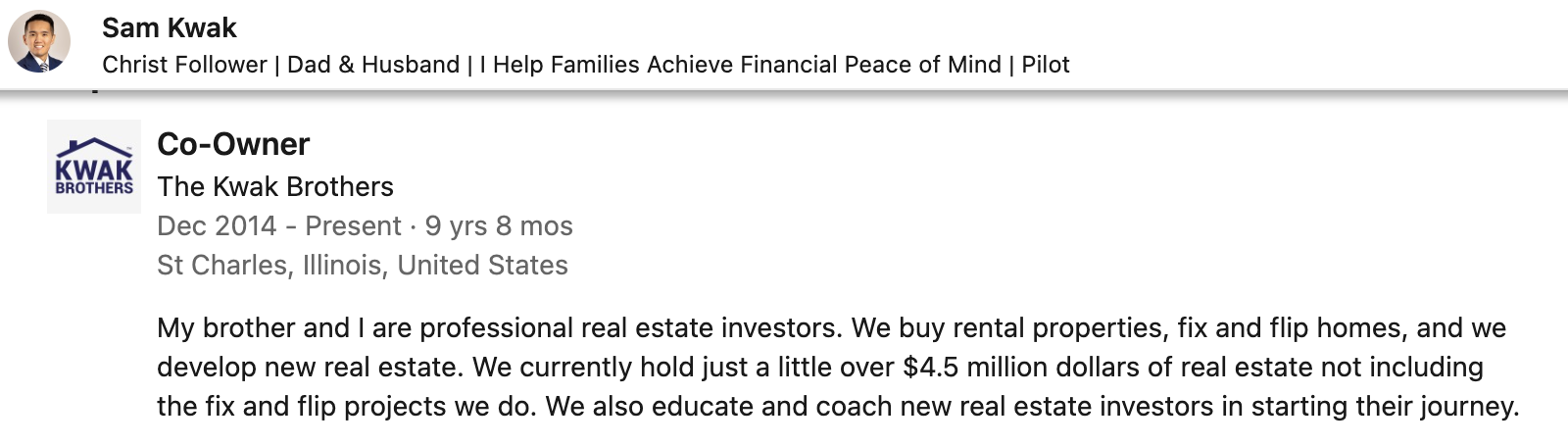
Sam Kwak is a prominent real estate investor and frontman of The Kwak Brothers. Before his career, he prioritizes being a devoted Christ-follower, father, and husband. Based in Chicago, Sam and his brother Daniel manage a real estate portfolio worth over $4.5 million.

Sam’s entry into real estate was sparked by a desire for financial freedom, and inspired by Rich Dad Poor Dad—He started by volunteering for a local investor, which he views as a shortcut to success. His first major deal came through social media, where he used owner financing to acquire a portfolio of single-family homes.

In 2017, Sam experienced significant growth, expanding his rental properties from zero to 75 units in just one year. His success is attributed to effective capital raising and seller financing. Sam also leverages his marketing and technology background to help property managers automate their businesses.

Kwak Brothers Youtube

Sam’s YouTube channel, which was initially a real estate resource, now has over 780 videos and 348K followers. The Kwak Brothers channel now also includes political commentary, aimed at a conservative audience while subtly introducing real estate concepts. 

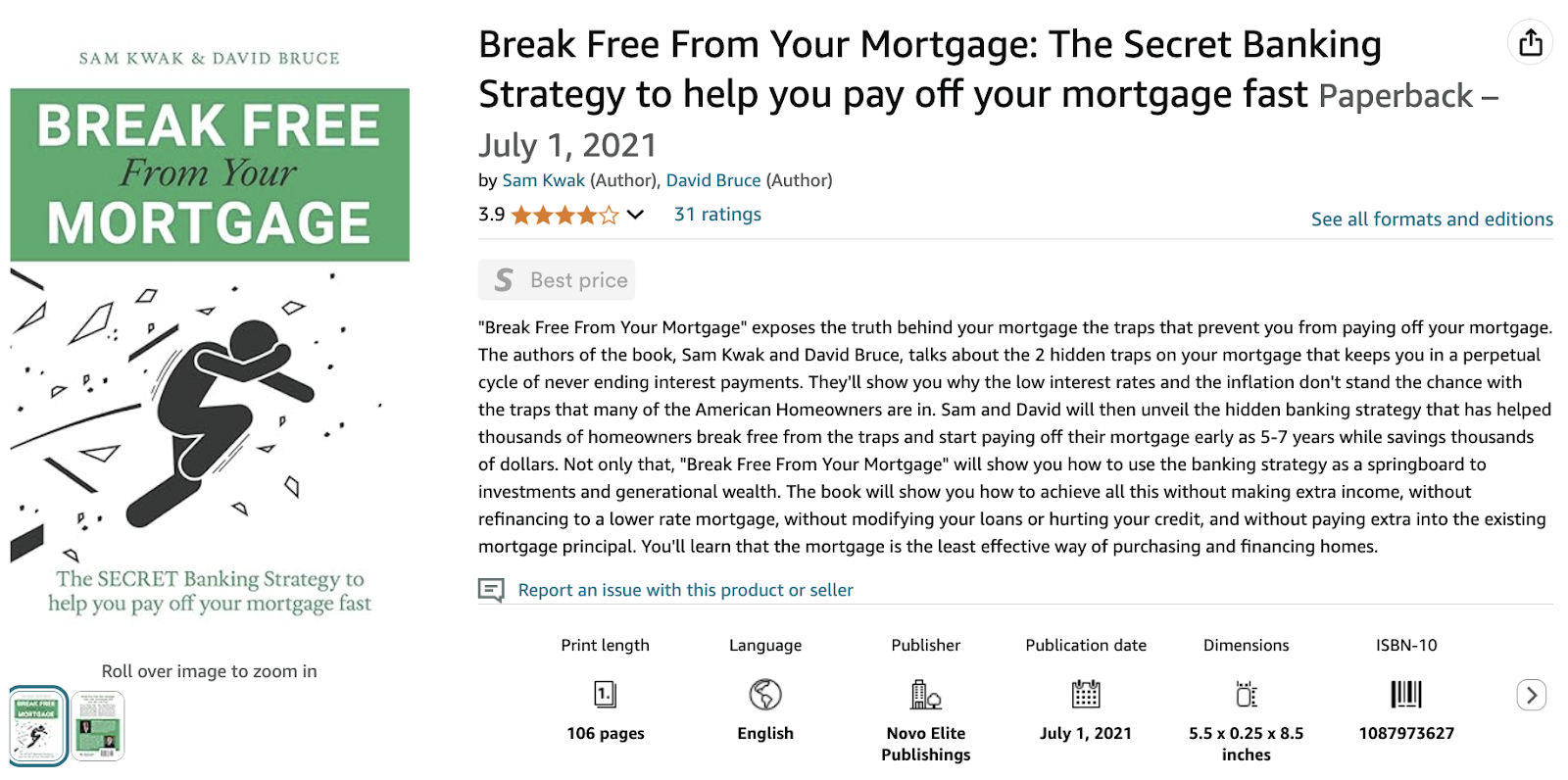
Sam Kwak has co-authored at least one book. Break Free From Your Mortgage: The Secret Banking Strategy to Help You Pay Off Your Mortgage Fast by Sam Kwak and David Bruce reveals hidden traps in mortgages that keep homeowners in a cycle of endless interest payments. The book introduces a banking strategy that promises to help you pay off your mortgage in as little as 5-7 years without extra income, refinancing, or modifying loans.
Kwak Brothers Book

Reviews on the book are mixed, and it has a 3.9-star rating overall. Some readers appreciate the powerful financial insights, while others feel the book focuses too much on upselling the authors’ services. 

Recommended: 9 Best Business Credit Books Worth Reading

Who is Daniel Kwak? 

The Kwak Brothers ethnicity

In addition to co-managing The Kwak Brothers’ ventures, Daniel Kwak is the founder and Chief Investment Officer (CIO) of Miotti Partners Capital. Founded by Daniel at 26, Miotti Partners Capital is a core-satellite fund that pioneered the equities fund management model in the real estate industry.

His role at Miotti Partners Capital involves overseeing investments and building strategic relationships, complementing his responsibilities within The Kwak Brothers. 

Daniel’s focus on raising capital and fostering relationships has been instrumental in the growth of their real estate ventures. Like his brother Sam, Daniel is deeply involved in both real estate investment and education. 

Kwak Brothers Google Reviews

Their partnership leverages Daniel’s strengths in capital raising and networking, while Sam focuses on marketing and systematizing their operations. Their combined efforts have established a robust platform for educating and empowering others in the realm of real estate investing.

Recommended: How to Get Money for Real Estate Investing: 18 Practical Ideas 

Company Overview
Kwak Brothers Novo Elite Inc.

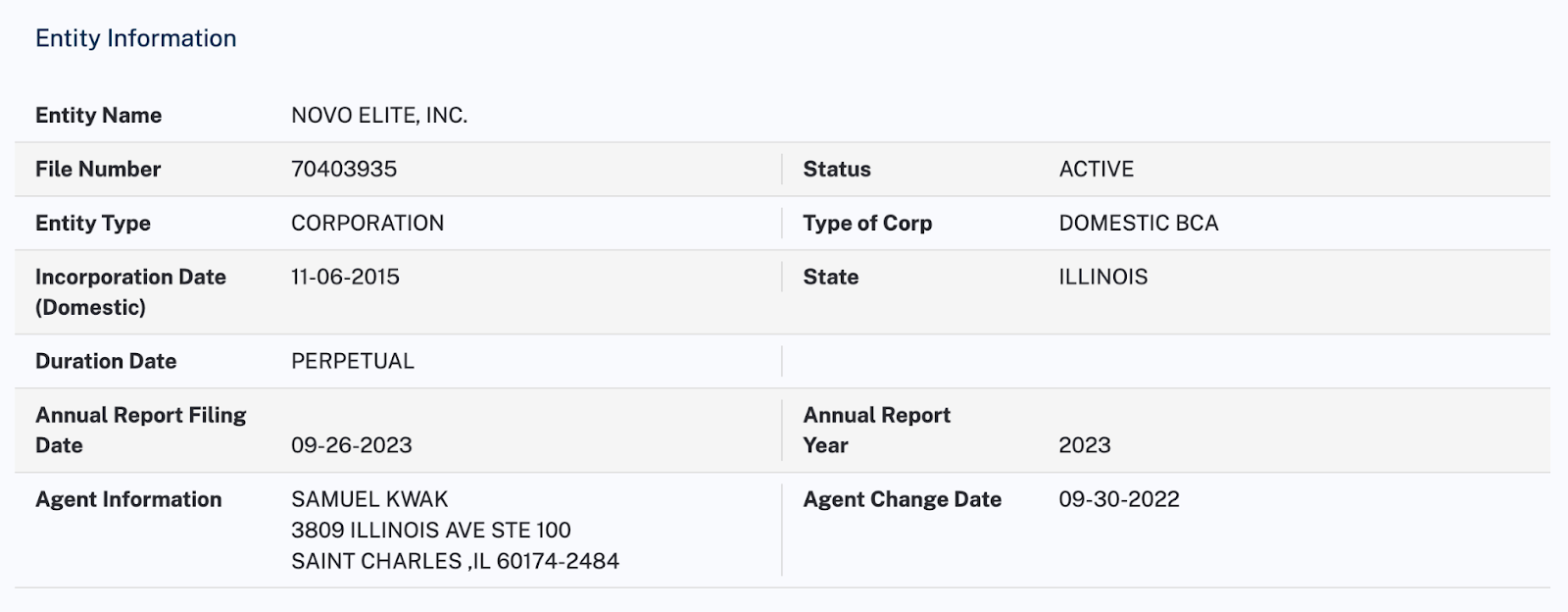
While brothers began their real estate venture over a decade ago, Novo Elite Inc., the company doing business as The Kwak Brothers, is an Illinois-based corporation that’s been around since 2015, and is officially registered to Samuel Kwak. The company is active and in good standing with the Office of the Illinois Secretary of State.

Over the past decade, the business has evolved to offer a range of educational resources and services aimed at aspiring investors—They’ve maintained a strong presence in the real estate field for several years, continuously updating their content and services to reflect current market trends.
Kwak brothers wikipedia

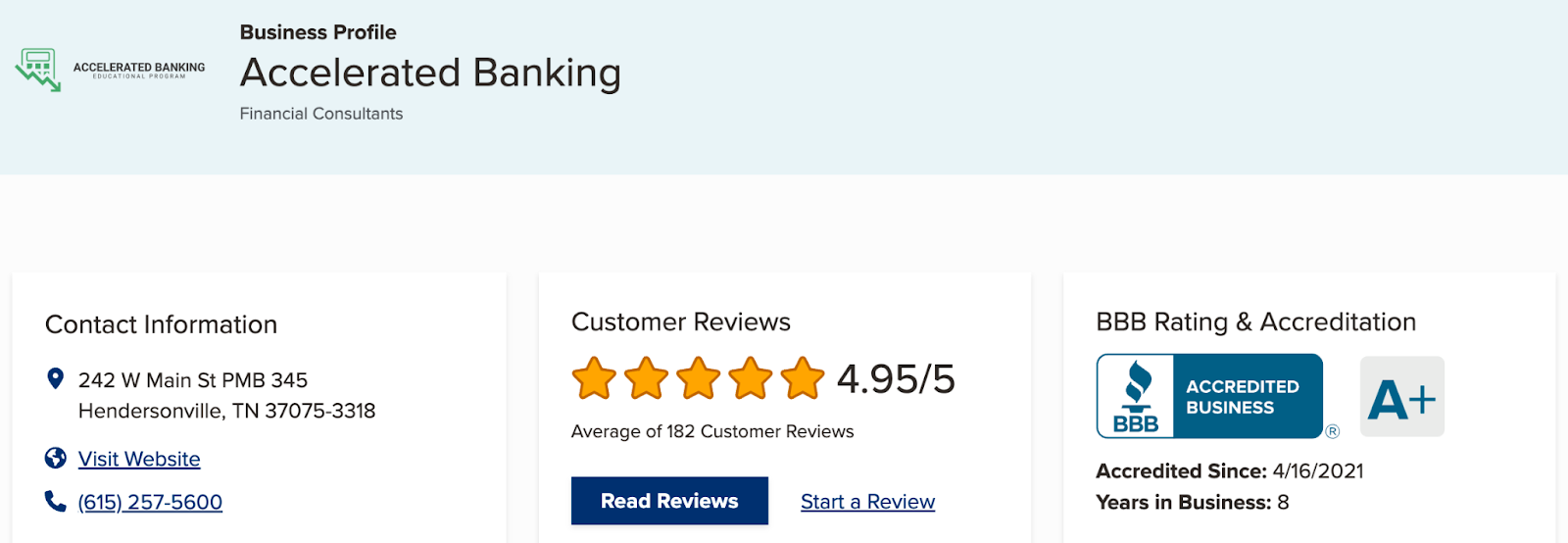
Reviews on sites like the Better Business Bureau (BBB) are mostly positive. A majority of clients find their advice and training beneficial, while a few express concerns about the value and effectiveness of their offerings.

At any rate, they run a real business, registered and in good standing across the board. And, I couldn’t find any major complaints or lawsuits against Novo Elite, which is a good sign.

You might also like: The Ultimate Guide to Fix and Flip Loans: Fund Your Next Venture 

What Do the Kwak Brothers Do?

The Kwak Brothers offer several services designed to help individuals succeed in real estate investing and financial management. Here’s a closer look:

1. Learn to Pay Off Your Mortgage Early

Kwak Brothers Accelerated Banking

The Kwak Brothers’ key offer is a program called Accelerated Banking—the value proposition is that you can pay off your mortgage in five to seven years. Accelerated Banking promises a practical way to pay off your mortgage early using a Home Equity Line of Credit (HELOC). It’s run by Sam and Daniel Kwak and David Bruce (co-author of Break Free From Your Mortgage). Allegedly, the group has a combined 70 years of investment experience. 

According to real user reviews, students seem to learn how to use HELOCs to reduce their mortgage term, manage their finances better, and save significantly on interest payments—Reviewers mention the program’s detailed guidance, personalized strategies, and accessible educational resources. 
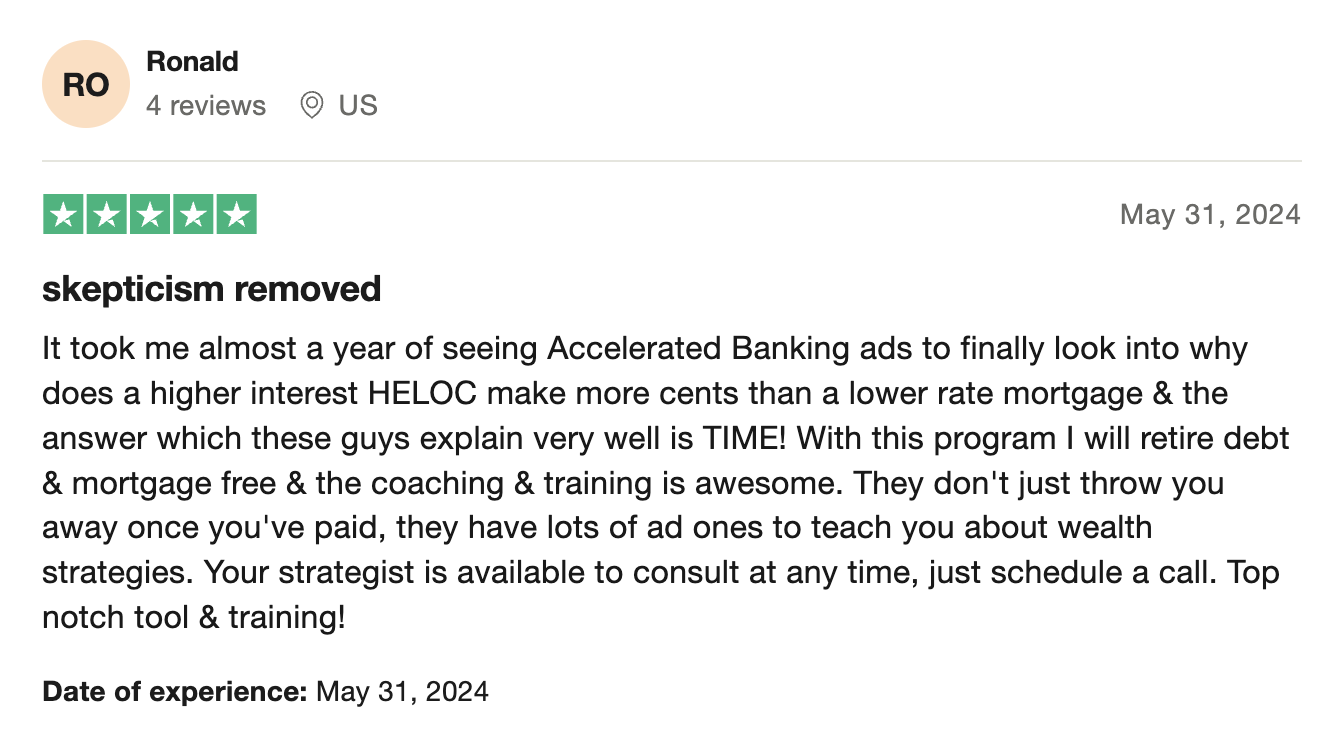
Kwak Brothers reviews

So, you should be able to expect a tailored approach that aligns with your financial goals, ongoing support from knowledgeable advisors, and a community of like-minded individuals all working towards financial freedom.
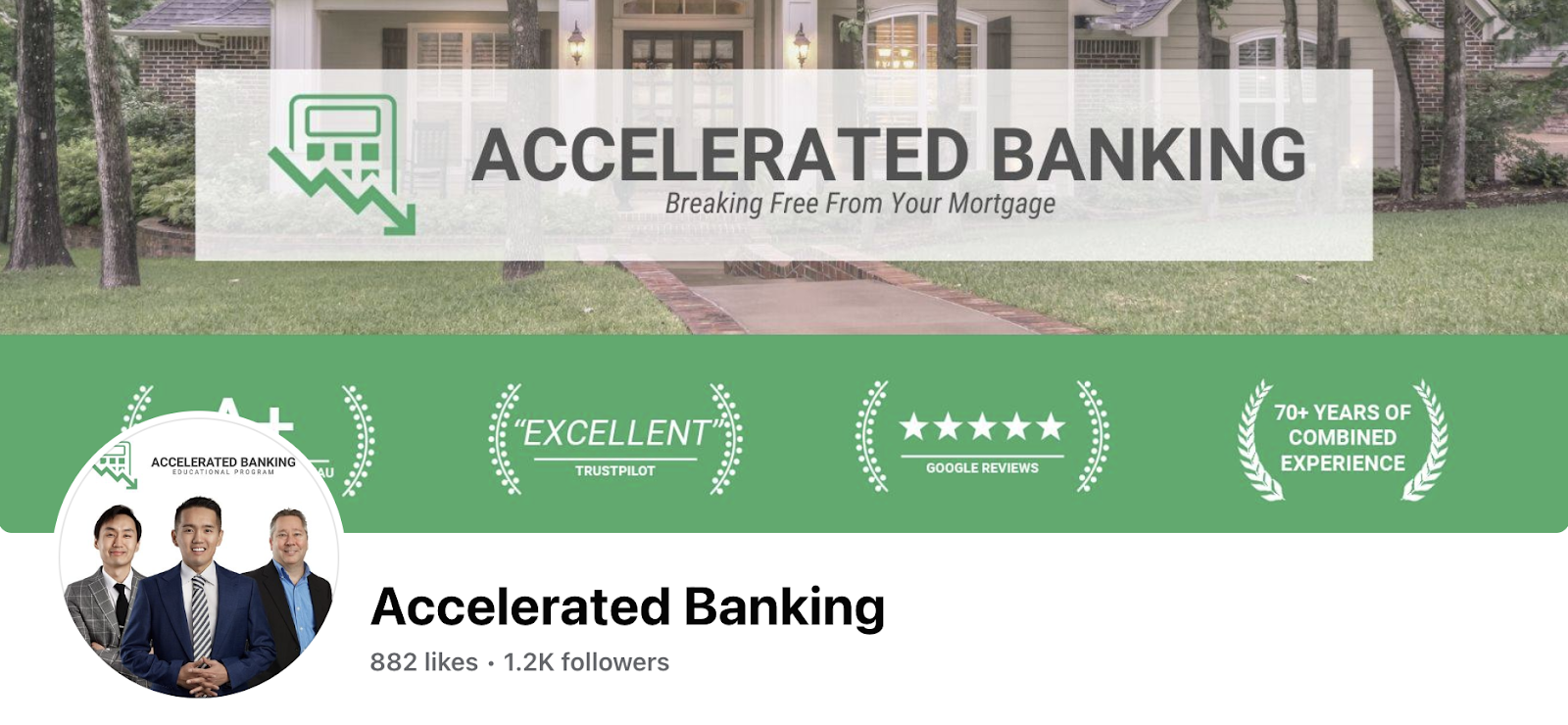
Kwak Brothers Facebook Accelerated Banking

Accelerated Banking’s facebook page has 1.2K followers and a bit of engagement on their posts. Their free webinar introduces what they will teach in their training. And, rather than paying off your mortgage in five to years, the cited results are actually of people who cut five to seven years off their mortgages. 

My first impression in that the offer is a bit misleading, but still could be valuable. 

Recommended: The BRRRR Method: A Real Estate Portfolio-Building Blueprint 

2. Create and Scale Your Passive Income 

Kwak Brothers Passive Income Mastery

Passive Income Mastery promises hands-on coaching, an inspirational community, and virtual education to help you achieve your real estate goals. According to trainee reviews, students find the coaching effective and appreciate the supportive community—They feel empowered by the expert guidance and resources available. 

When you join, as with Accelerated Banking, you can expect personalized coaching, access to proven strategies, and a network of like-minded individuals working toward financial freedom through real estate investing.

The program starts with a free training webinar that covers: 

  • Creative financing ideas
  • How to fund down-payments owner financing
  • How to create your passive income stream

Passive Income Mastery Registration

I popped into the webinar myself, and I didn’t like that it was set up to appear like a “live training” with over 100 viewers (Passive Income Mastery’s Facebook page only has 260 total followers). I could tell the training was pre-recorded and that Alonzo T and Britt P were fake viewers—And, I don’t love a lack of transparency. 

Be that as it may, the webinar did provide a solid intro to what the training should cover, and it was completely free to check out.   

You might also like: Read This Before You Hire a Business Credit Coach [Quick Guide] 

3. Learn the Infinite Banking Concept 

Kwak Brothers IBC Jumpstart

The Kwak Brothers’ IBC Jumpstart is a deep dive into the infinite banking concept (IBC). IBC is a financial strategy that uses whole life insurance policies to create your own personal banking system. 

Originally coined by Nelson Nash, the IBC lets you borrow against the cash value of your life insurance instead of going to a bank for loans—This way, you can finance big expenses, like buying a car or starting a business, while your policy continues to grow. The idea is to build wealth with your policy’s cash value, which you can access tax-free and pay back on your schedule.

IBC Jumpstart Infinite Banking Concept

IBC Jumpstart offers free access to their Infinite Banking Masterclass. This includes a 6-video course to teach you how to manage your finances by becoming your own bank. After completing the course, you can schedule a one-on-one consultation with a wealth coach to set up your IBC policy. 
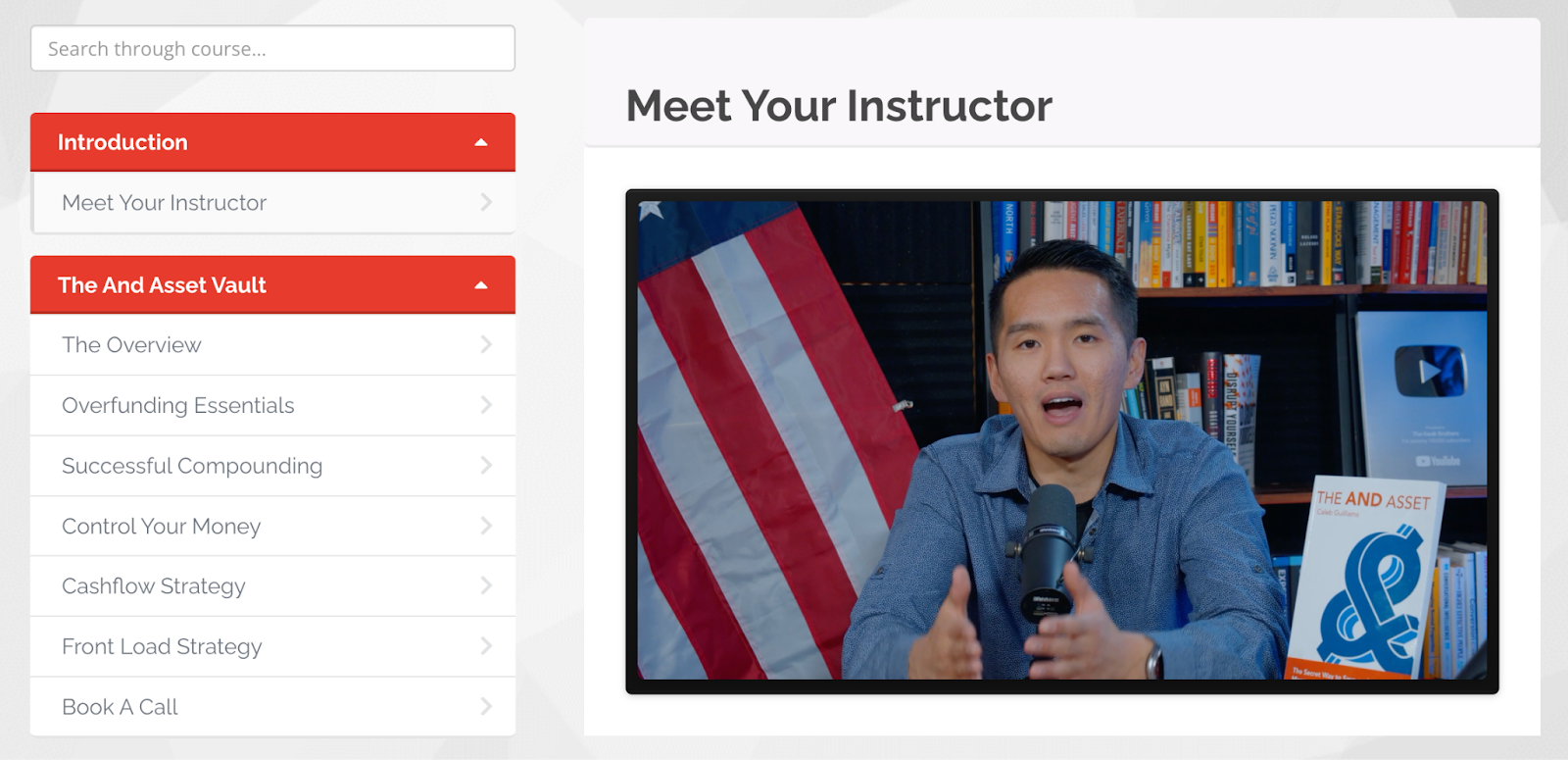
Sam Kwak Infinite Banking

The aim of the masterclass is to help you understand and implement the Infinite Banking Concept for better financial control.

You might also like: Complete Guide to Small Business Insurance in New Jersey 

Frequently Asked Questions

Who are the Kwak Brothers?

Sam and Daniel Kwak are well-known for their work in real estate and financial education. They focus on providing training, coaching, and resources to help individuals achieve financial success through real estate investment.

What is the Kwak Brothers’ net worth?

Exact figures on their net worth are not publicly available. However, they are recognized as successful entrepreneurs in the real estate sector, with at least $4.5 million in combined real estate holdings.

What do the Kwak Brothers reviews say?

Reviews about the Kwak Brothers are mostly positive. Some people appreciate their detailed advice and practical tips, while the minority question their marketing practices and the effectiveness of their programs.

Conclusion: Are the Kwak Brothers Legit?

The first thing I will say that I don’t love about these offers is that it’s very difficult to find the pricing for all of the Kwak Brothers’ offers. Moreover, their training intros are slightly misleading. 

With that said, The Kwak Brothers have made a significant impact in real estate and financial education. They offer a few different resources and services aimed at helping you succeed. While they have a notable online presence and their reviews are resoundingly positive, I’m on the fence with this one. 

If you’re thinking about signing on to one of the Kwak Brothers’ offers, research thoroughly, weigh the feedback from different sources, and determine if their approach aligns with your investment goals.

Do you want to learn how to obtain up to $100K in business credit in as few as 30 days so you can invest in your financial future? Join Business Credit Workshop today! 

How to Get Money for Real Estate Investing: 18 Practical Ideas

By Joe

how to get money for real estate investing

When you want to invest in real estate, there are tons of guides out there to help you learn how to make money in real estate for beginners – and it’s easy to find information on rental income, real estate investment trusts (REITs), and property flipping. What isn’t so readily available is how to fund real estate investment or get money for real estate investing with little money. 

The knowledge is out there, but it’s typically scattered or comes in lists with very few details about how each funding option works. Here, I want to lay out the ways you can actually get money to start investing in real estate as soon as possible.

This is what’s in store: 

  • Do You Need to be Rich to Invest in Real Estate?
    • How Long Does it Take to Make Money From Real Estate Investments?
  • 18 Ways to Get Money for Real Estate Investing
    • 1. Conventional Mortgage
    • 2. Government-Guaranteed Mortgage
    • 3. Business Credit
    • 4. Home Equity Funding
    • 5. Real Estate Investor Line of Credit
    • 6. Installment Sale or Lease to Own (Seller Financing)
    • 7. Private or Hard Money Lender
    • 8. Wholesale
    • 9. Equity Partner
    • 10. Rent, Lease, or Sublet
    • 11. Rent Out Your Assets
    • 12. Renovate Your Budget
    • 13. Ask for a Raise
    • 14. Get a Second Job
    • 15. Save Every Penny
    • 16. Start a Business
    • 17. Network and Learn
    • 18. Research Local Grants
  • Frequently Asked Questions
  • The Bottom Line

Now, let’s get to it! 

Do You Need to be Rich to Invest in Real Estate? 

How to get money for real estate investing online

First things first: It might seem like the wealthy have the real estate investing market cornered. Whether individuals put their “riches” into real estate or they build fortunes by investing in properties isn’t important – there’s money in real estate. 

The good news is that you do not have to be rich to invest in real estate. Actually, the majority of Americans – 65.7% – own a home. And, this doesn’t account for those who have money in real estate investment pools and REITs, which require less investment than an outright property purchase.   

The bottom line is that anyone with a willingness to learn can invest in real estate. 

You might also like: This is How to Leverage Business Credit to Transform Your Life 

How Long Does it Take to Make Money From Real Estate Investments? 

How to get money for real estate investing without a

Real estate investment timelines vary depending on your strategy. If you’re flipping properties, you could see quick profits in a few months to a year—This involves buying distressed properties, renovating them, and then selling them for a profit. 

On the other hand, if you’re pursuing a buy-and-hold strategy, it may take longer to see significant returns. With this approach, you’re renting out properties for passive income and waiting for equity growth over time. You might start seeing positive cash flow within months to a year, but the real appreciation typically happens over years or even decades. 

Wholesaling is another option, where you find off-market deals and assign contracts for a fee—This can have a shorter timeline, sometimes just weeks to months. Lastly, investing in Real Estate Investment Trusts (REITs) offers immediate dividends from publicly traded real estate companies, with potential capital appreciation over time. 

Ultimately, your timeline will depend on your chosen strategy, market conditions, and the type of property you invest in.

You might also like: The BRRRR Method: A Real Estate Portfolio-Building Blueprint 

18 Ways to Get Money for Real Estate Investing

how to invest in real estate with no money

Now, explore the ways you can get more money to invest in real estate. From traditional methods to others you may not have heard of, here’s where you might be able to find the funds. 

Keep in mind that real estate, as with all other investment channels, comes with risks. You should always consult professionals when making investment decisions. 

You might also like: How to Raise Money for Real Estate Investment: A Beginner’s Guide 

1. Conventional Mortgage

A conventional mortgage is a loan offered by traditional financial institutions like banks or credit unions. It’s probably the most common funding option for real estate investing. 

 To qualify, you typically need: 

  • A good credit score
  • Stable income
  • A down payment (up to 20% of the property’s purchase price) 

This option won’t work for those with poor credit or limited savings for a down payment.

You might also like: Can You Pay a Mortgage with a Credit Card? The Answer is… Complicated 

2. Government-Guaranteed Mortgage

Government-guaranteed mortgages, like USDA loans, FHA loans, or VA loans, are backed by government agencies—This makes them more accessible if you have a lower credit score or smaller down payment. 

Qualification criteria vary depending on the specific program, but they generally have less stringent requirements compared to conventional mortgages. 

  • See if you qualify for a USDA loan. 
  • See if you qualify for an FHA loan. 
  • See if you qualify for a VA loan (veterans only). 

These mortgages may not be suitable if your income is on the high side or you don’t meet the criteria.

Another option in this realm worth looking into is Habitat for Humanity’s homeownership program. However, there is the caveat that you must live in the home for a set amount of time and it must be your primary residence—This may not be suitable if you want to invest in multiple properties or implement a short-term investment strategy. 

3. Business Credit

Using business credit to fund real estate investments involves obtaining loans or lines of credit in the name of a business entity. Qualifying often requires a solid business plan, good credit history for the business, and potentially collateral. 

This method won’t be workable if you don’t yet have an established business or you’re unable to meet the credit requirements. But, here at Business Credit Workshop, we teach you how to set up your business to be “credit ready” and how to obtain up to $100K in business credit.

Recommended: How to use Business Credit to Buy Real Estate! 

4. Home Equity Funding

Home equity funding involves borrowing against the equity in your primary residence. Qualifying typically requires sufficient equity in your home and a good credit score. Look into home equity loans and home equity lines of credit (HELOCs). 

If you don’t own a property, you won’t be able to qualify for home equity funding. And, this option may not be suitable if you have little equity or are uncomfortable risking your primary residence as collateral.

5. Real Estate Investor Line of Credit

A real estate investor line of credit provides flexible financing for real estate investments. 

Qualifying may require: 

  • A good credit score
  • A track record of successful real estate investments
  • Possibly collateral

This option might not work for inexperienced investors or those with poor credit. It’s better-suited to seasoned investors. 

6. Installment Sale or Lease to Own (Seller Financing)

An installment sale, also known as seller financing, involves the seller acting as the lender and financing the purchase of the property for the buyer. You may think this is an impossible strategy if you’ve never done it, but you’d be surprised at how often this actually happens.

You’ll typically need to negotiate with the seller and agree on terms—Most sellers would want to see that you can get a conventional mortgage or some other way to make a balloon payment at the end of the terms. 

Related to seller financing, lease-to-own financing allows a buyer to rent a property with the option to purchase it later. In contrast, an installment sale involves buying property through periodic payments, with the buyer gaining ownership gradually. 

The main difference is that in lease-to-own, ownership transfers after the final purchase, while with seller financing, the buyer typically has equitable ownership from the start. These methods may not be feasible if the seller is unwilling or unable to offer an agreement like this or if the buyer cannot negotiate favorable terms.

7. Private or Hard Money Lender

Private money lenders and hard money lenders are typically private companies or individuals that offer short-term loans secured by real estate. 

Qualifying may require: 

  • A solid investment strategy
  • Collateral
  • A realistic plan for repayment

This option might not work when you’re unable to meet the lender’s requirements or if you’re seeking long-term financing.

You might also like: A Review of Alpha Funding Partners – Are Their Solutions Right for You? 

8. Wholesale

Wholesaling involves finding discounted properties and assigning the purchase contract to another buyer for a fee. 

Qualifying doesn’t typically require a large amount of capital but does require finding motivated sellers and buyers—you have to flex your sales muscles. 

This method may not be suitable if you don’t have strong negotiation skills or you’re unable to find profitable deals.

9. Equity Partner

An equity partner is someone who invests capital in a real estate venture in exchange for a share of the profits. You have to find a suitable partner and negotiate terms. 

Think of it like an angel investor or similar situation wherein you do most of the hands-on work and the investor takes a cut of your profit in exchange for an initial payment. 

This option may not work if you’re uncomfortable sharing ownership or decision-making authority.

10. Rent, Lease, or Sublet

Renting, leasing, or subletting property to generate rental income requires being in control of real estate assets. In most cases, you must own the property. But, if the owner or property manager approves, you can lease or rent then sublet for profit. 

You might earn rental income off of: 

  • Residential homes
  • Commercial properties
  • Rooms or office space
  • Empty lots

You’ll need to take control over suitable properties, market them to tenants, and manage the property. 

This option only works if you can access investment properties and you need to be able to manage rental properties effectively.

You might also like: The Best Credit Cards for Landlords: A Comprehensive Guide 

11. Rent Out Your Assets

Renting out assets like a car, truck, trailer, or tool can generate additional income. You can use online platforms and marketplaces to list your assets, or even create your own website. And, you will need to make sure you’re properly insured to cover any damages and licensed if this is required in your location. 

You’ll need suitable assets available for rent and to market them effectively. People might be interested in renting anything from utility trailers to bounce houses and power tools.  

This won’t work if you don’t have assets to rent or you’re uncomfortable with others using your possessions.

12. Renovate Your Budget

Renovating your budget involves cutting unnecessary expenses and reallocating funds toward real estate investments. You just need to assess your current financial situation and make adjustments to prioritize saving and investing. 

If you have limited disposable income or you’re unwilling to make sacrifices to fund investments, this may not help you—In some cases, budget readjustment will only help you get money for real estate investing after you increase your income. 

You might also like: Meet the Ava Card: An Uncut Credit Builder Review 

13. Ask for a Raise

Asking for a raise at your current job can increase your income and potentially provide additional funds for real estate investments. You’ll need to demonstrate your value to your employer and negotiate a salary increase. 

This option may not work if you’re in an industry with limited salary growth potential or you’re too uncomfortable to negotiate with your employer.

14. Get a Second Job

Taking on a second job can provide extra income to fund real estate investments. All you need is a suitable employment opportunity and to balance the demands of multiple jobs. 

This option may not be feasible if you have limited availability or you aren’t able to secure additional employment. But, skills training can help you get there. 

15. Save Every Penny

Saving aggressively by cutting expenses and increasing savings contributions can help accumulate funds for real estate investments over time.You’ll need discipline and commitment to a savings plan. 

This option may not be the best fit if you have high living expenses or you’re not willing to make sacrifices to save money.

16. Start a Business

Starting a business that generates income can provide capital for real estate investments. You’ll have to identify a viable business opportunity and secure funding or investment capital. But, you might be able to start without much initial investment if you leverage assets that are right in front of you. 

The business will need to fit your skill set. But, I’ve seen people create businesses from scratch with nothing. As an idea, you could find free furniture on Craigslist, paint it, and resell it for a profit. Or, you could resell used books or other small items on an online marketplace.  

This option isn’t great if you don’t have entrepreneurial skills or you aren’t able to manage the demands of starting and running a business.

You might also like: How to Create a Business Credit “Entity” 

17. Network and Learn

Networking with experienced real estate investors and learning from their expertise can provide valuable insights and opportunities for partnerships or joint ventures. Look to local real estate investing groups, the Chamber of Commerce, and other related groups to get started. 

To make this work, you’ll need to actively participate in networking events and seek mentorship. You have to be willing to invest time and effort into building relationships and acquiring knowledge.

18. Research Local Grants

Researching local grants or assistance programs for real estate investors can provide funding opportunities or incentives for investment projects. Local nonprofits are a good place to start.

You’ll need to identify relevant grant programs and meet their eligibility criteria. 

This option won’t work out if you or your property is located in areas with limited grant availability or you’re ineligible for the specific programs. But, particularly in low-income or rural areas, you could be pleasantly surprised at what you can unearth—it’s definitely worth looking into. 

You might also like: A Full Skip Review: Business Grants, Funding, + More 

Frequently Asked Questions

What is the smartest way to invest in real estate? 

The smartest way to invest in real estate depends on your financial goals, risk tolerance, and available resources. Generally, strategies like buy-and-hold rental properties, house hacking, or investing in REITs are considered “smart” options to build long-term wealth.

Is it hard to make money in real estate? 

Making money in real estate can be challenging, but it’s not impossible. Success often requires careful planning, market research, and diligence in finding profitable opportunities.

How do you get money from investing in real estate? 

There are several ways to generate income from real estate investing, including rental income from tenants, profits from property appreciation over time, and gains from flipping properties for a profit.

Can I invest $100 dollars in real estate? 

It’s difficult to invest only $100 directly into real estate due to the high costs associated with property ownership. However, you can indirectly invest in real estate through crowdfunding platforms or REITs with a relatively small initial investment.

How to invest in real estate with $1000? 

With a $1000 investment, you might consider starting with real estate crowdfunding platforms, where you can pool your funds with other investors to buy fractional shares of properties. Additionally, you could explore investing in REITs or looking for small, affordable properties in emerging markets.

The Bottom Line 

Getting started in real estate investing doesn’t necessarily require vast wealth. While there’s no get rich quick method to secure funds, there are many avenues to secure funding and begin your journey in the real estate market. 

By exploring options like conventional mortgages, government-guaranteed loans, business credit, or even leveraging your existing assets, you can find a path that suits your financial situation and goals—Whether you’re considering rental properties, flipping houses, or investing in REITs, the key is to educate yourself, network with experienced investors, and remain diligent in your pursuit of opportunities. 

Remember, success in real estate investing is attainable with determination, careful planning, and a willingness to adapt to market conditions. So, take the first step, explore your options, and embark on your journey to financial growth through real estate investment.

Ready to learn how to get up to $100K in business credit that you could use to kickstart your real estate investing? Join Business Credit Workshop today!

How to Raise Money for Real Estate Investment: A Beginner’s Guide

By Joe

How to raise money for real estate

Real estate is filled with lucrative opportunities. But, before you can reap the rewards, you need funds…Sometimes, you can do it all on your own. But, to make sizable investments, most people need to raise money.

The good news is, anyone with the right information can do it. My goal is to make fundraising easy to understand for everyone. Whether you’re a pro or just starting out, here, you’ll find the fundamentals you need to raise money for real estate investing.

Here’s what’s in store: 

  • Real Estate Ventures and Capital
    • Residential Real Estate
    • Commercial Real Estate
    • Real Estate Capital
  • Ways to Raise Real Estate Capital
    • 1. Business Credit
    • 2. Home Equity
    • 3. Peer-to-Peer Loan
    • 4. Private & Hard Money Lenders
    • 5. Self-Directed Accounts
    • 6. Wholesaling
    • 7. Crowdfunding & Syndication
    • 8. FHA & USDA Mortgages
  • Legal Obligations to Keep in Mind
  • Frequently Asked Questions
  • Conclusion

Now, let’s get it! 

Recommended: This is How to Leverage Business Credit to Transform Your Life 

Real Estate Ventures and Capital

Before we delve into the nitty-gritty of raising capital, it’s crucial to understand the fundamentals. 

You can invest in various types of properties, like single-family homes, towering skyscrapers, apartment buildings, senior living communities, medical facilities, shops, factories, and warehouses. 

The two main types of real estate are: 

  • Residential real estate
  • Commercial real estate

Real estate ventures, whether residential or commercial, require significant investment. This capital is essential for property acquisition, development, maintenance, and generating returns.

Residential Real Estate

How to raise money for real estate investment

Residential real estate refers to properties that are designed and used for housing purposes. These properties are where people live, such as houses, apartments, condominiums, townhouses, and vacation homes. Residential real estate is typically divided into four main categories:

  • Single-family homes are stand-alone houses designed for a single family to live in. They come in various sizes and styles, from small cottages to large estates.
  • Multi-family homes include duplexes, triplexes, and apartment buildings. They provide housing for multiple families within a single structure.
  • Condominiums (condos) are individual units within a larger building or complex. Residents own their individual units and share common areas and amenities.
  • Townhouses are usually multi-story properties with shared walls between units. Each unit has its own entrance, and residents own both the interior and exterior of their unit.

Investors in residential real estate often focus on renting or selling these properties to individuals or families for residential purposes. The residential real estate market can be influenced by factors such as location, demand, economic conditions, and interest rates.

Commercial Real Estate

How to raise capital for commercial real estate

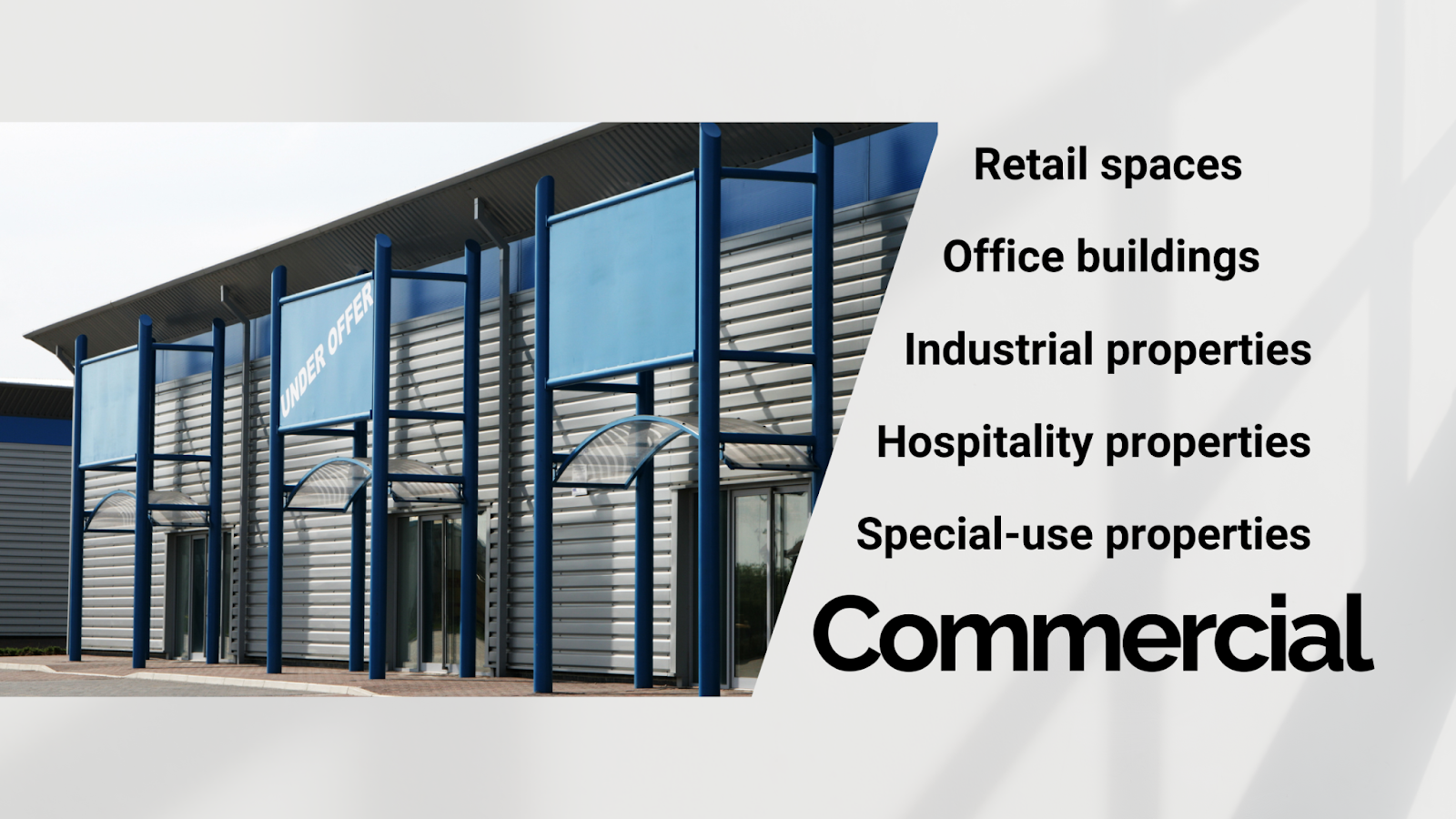
Commercial real estate is what we call the properties that are used for business and commercial purposes – It includes a wide range of property types, catering to various industries and needs. Some common types of commercial real estate include:

  • Office buildings are used for office spaces, ranging from small business offices to large corporate headquarters.
  • Retail spaces are designed for businesses to sell products or services to consumers. They can include shopping centers, malls, standalone stores, and restaurants.
  • Industrial properties include warehouses, manufacturing facilities, distribution centers, and industrial parks. These properties are essential for logistics and production.
  • Hospitality properties are hotels, motels, resorts, and other buildings that provide accommodations and services to travelers and tourists.
  • Special-use properties serve unique purposes – Think healthcare facilities, educational institutions, religious buildings, and entertainment venues.

Investing in commercial real estate often involves leasing properties to businesses or organizations. Commercial property values can be influenced by factors like location, accessibility, lease terms, and economic conditions.

Real Estate Capital

How to raise money for real estate investing

Real estate capital refers to the financial resources needed to invest in real estate properties. Capital is needed to purchase, develop, maintain, and operate real estate assets. 

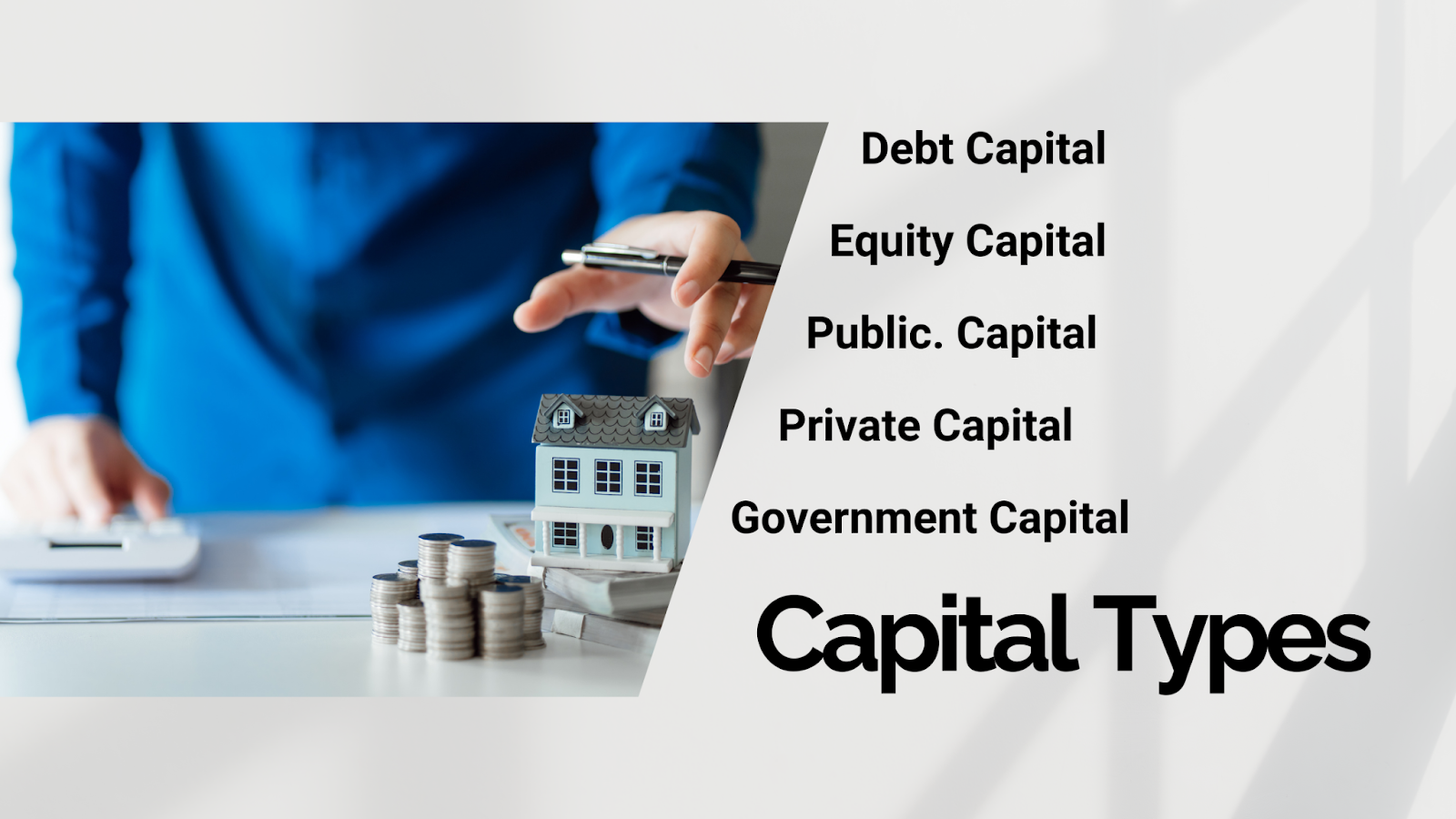
Various sources of real estate capital include:

  1. Equity capital comes from the property owner’s investment or ownership stake. It includes personal savings, investments, or contributions from partners or investors.
  2. Debt capital involves borrowing money to finance real estate investments. Common sources include mortgages, loans, and lines of credit from banks, financial institutions, or private lenders.
  3. Private capital can come from individual investors, family and friends, or private equity firms interested in real estate investments.
  4. Public capital can be raised by real estate companies through initial public offerings (IPOs) or by issuing real estate investment trusts (REITs) in the public market.
  5. Government capital comes from entities that may provide grants, subsidies, or incentives to support real estate development projects that align with public policy objectives.

Effective capital management is the cornerstone of real estate investing because it impacts the ability to acquire and maintain properties, generate rental income, and achieve desired returns on investment (ROI). 

Real estate capital strategies tend to vary depending on your objectives and the type of real estate you target. Let’s take a look at some strategies you can use. 

Recommended: The BRRRR Method: A Real Estate Portfolio-Building Blueprint 

Ways to Raise Real Estate Capital

Are you ready to dive into the world of real estate capital and explore various methods to kickstart your real estate journey? Let’s break down each strategy, providing a succinct definition, highlighting the benefits, outlining the risks, and guiding you on how to obtain each type of real estate capital.

1. Business Credit

How to raise money for real estate investments

Business credit involves using your company’s credit history and financial strength to secure loans or lines of credit for real estate investments using methods.

Benefits:

  • Separates personal and business finances.
  • Can provide significant capital for real estate endeavors.
  • May offer competitive interest rates and terms.

Risks:

  • Requires a strong business credit profile.
  • Defaulting on loans can harm your business credit.
  • Interest rates and terms may vary based on creditworthiness.

How to get business credit:

  1. Establish and build a solid business credit history.
  2. Maintain a good payment history with net 30 vendors and creditors.
  3. Apply for business credit cards and loans.

Recommended: 

  • Best Credit Cards for House Flippers
  • The Best Credit Cards for Landlords
  • How to Convert Credit Cards into Cash 

2. Home Equity

How to raise money for commercial real estate

Home equity represents the portion of your home’s value that you own outright, which can be leveraged as capital for real estate investments.

Benefits:

  • Access to a substantial source of capital.
  • Potential for competitive interest rates.
  • Can be used for various real estate projects.

Risks:

  • Tied to your home’s value, subject to market fluctuations.
  • Defaulting on home equity loans risks foreclosure.
  • Reduces your ownership stake in your primary residence.

How to Unlock Home Equity:

  1. Determine your home’s current value.
  2. Calculate your available equity.
  3. Apply for a home equity loan or line of credit.

Recommended: Should You Use a Real Estate Investor Line of Credit? 

3. Peer-to-Peer Loan

Raising private money for real estate investing

Peer-to-peer lending platforms connect real estate investors with individual or institutional lenders, allowing them to borrow funds for their projects.

Benefits:

  • Access to a wide network of potential lenders.
  • Competitive interest rates.
  • Streamlined application process.

Risks:

  • Varying lending criteria among platforms.
  • Potential higher interest rates for riskier borrowers.
  • Limited control over the selection of lenders.

How to access peer-to-peer loans:

  1. Research peer-to-peer lending platforms.
  2. Create a compelling loan request.
  3. Connect with potential lenders on the platform.

Recommended: Alternative Ways for Entrepreneurs to Raise Capital from Online Lenders

4. Private & Hard Money Lenders

How to raise capital to buy real estate with none of your own money

Private and hard money lenders are individuals or organizations that provide real estate loans, often with less stringent requirements than traditional banks.

Benefits:

  • Faster approval and funding compared to traditional lenders.
  • Flexible lending criteria, making them accessible to investors with lower credit scores.
  • May offer loans for various real estate projects.

Risks:

  • Higher interest rates and fees.
  • Shorter repayment terms.
  • Collateral may be required.

How to get private & hard money loans:

  1. Network with local real estate investment groups.
  2. Research and approach private lenders or hard money lending firms.
  3. Prepare a solid business plan and property details to present to lenders.

Recommended: A Review of Alpha Funding Partners – Are Their Solutions Right for You? 

5. Self-Directed Accounts

How to invest $100 000 dollars in real estate

Self-directed accounts, such as self-directed IRAs and 401(k)s, can enable you to invest your retirement savings into real estate assets. 

Benefits:

  • Potential for tax advantages within retirement accounts.
  • Diversification of retirement portfolio.
  • Control over real estate investment decisions.

Risks:

  • Strict IRS rules and regulations to follow.
  • Potential for penalties if not compliant with tax rules.
  • Limited access to funds until retirement age.

How to use self-directed accounts:

  1. Set up a self-directed IRA or 401(k) with a qualified custodian.
  2. Identify suitable real estate investment opportunities.
  3. Ensure compliance with IRS regulations and rules.

6. Wholesaling

How to make money in real estate with $5000

Wholesaling involves finding real estate deals at a discount and assigning the contract to another buyer for a fee, often requiring minimal upfront capital.

Benefits:

  • Low initial investment is required.
  • Quick turnaround for profits.
  • Opportunity to gain valuable experience in real estate.

Risks:

  • Highly competitive market.
  • Requires strong negotiation and deal-finding skills.
  • Success is not guaranteed for every deal.

How to start wholesaling:

  1. Build a network within the real estate industry and research auction options.
  2. Identify distressed properties or motivated sellers.
  3. Negotiate favorable purchase contracts and assign them to buyers.

7. Crowdfunding & Syndication

Raising money for real estate syndication

Crowdfunding platforms allow multiple investors to pool their capital into a real estate project, while syndication involves pooling funds under the leadership of an experienced sponsor.

Benefits:

  • Access to diverse real estate projects.
  • Lower investment thresholds.
  • Limited liability for individual investors.

Risks:

  • Project success depends on the sponsor’s expertise.
  • May require due diligence on crowdfunding platforms.
  • Returns may vary based on project performance.

How to Use Crowdfunding & Syndication:

  1. Research crowdfunding platforms or syndication opportunities.
  2. Evaluate project details, sponsor track record, and investment terms.
  3. Invest in projects that align with your goals.

8. FHA & USDA Mortgages

FHA & USDA Mortgages for real estate fundraising

FHA loans (3.5% down) and USDA loans (0% down) are government-backed mortgages for residential and agricultural (you don’t necessarily have to buy a farm as long as the location is rural) real estate investments. The kicker is that the down payments are low or non-existent and interest rates are lower than conventional loans. You might hear FHA mortgages referred to as “first-time homebuyer loans.” 

Benefits:

  • Low or no down payment requirements.
  • Accessible to first-time investors.
  • Competitive interest rates.

Risks:

  • Limited to owner-occupied properties (can be used for 1-4 unit properties if you occupy one unit).
  • Mortgage insurance is required.
  • Stricter property condition requirements.

How to qualify for FHA investment loans:

  1. Meet credit score and income requirements for local homebuying programs.
  2. Choose an eligible property type.
  3. Complete the FHA loan application process.

Recommended: Can You Pay a Mortgage with a Credit Card? The Answer is… Complicated 

Legal Obligations to Keep in Mind

How to legally raise private money

You need to comply with all local, state, and federal laws. Not all statutes are common knowledge. If this is where you’re headed, before we wrap up, I want to point out a couple of SEC regulations that might apply to you when you raise funds for real estate. 

Regulation D Rule 506(b) and Regulation D Rule 506(c) are two exemptions provided by the U.S. Securities and Exchange Commission (SEC) that allow private companies to raise capital from investors without having to register their securities offerings with the SEC. 

Both exemptions are commonly used in the world of real estate investing and apply to anyone who offers securities in exchange for investing in a venture – So, if you will offer investors some sort of return on investment, pay attention. 

Here’s a simplified breakdown of what you need to know about Regulation D Rule 506(b) and Regulation D Rule 506(c), so that you can choose the right one for your situation.

Regulation D Rule 506(b):

  • You can raise money from both wealthy and regular investors (up to 35 regular ones).
  • You can’t openly advertise your investment opportunity to the public. You can only share it with people you already know or have a relationship with.
  • You don’t have to do much to check if an investor is wealthy. They can just tell you, and you trust them.

Regulation D Rule 506(c):

  • You can only raise money from wealthy investors (no regular ones).
  • You can openly advertise your investment opportunity to anyone, even on the internet or social media.
  • You must carefully check if investors are truly wealthy by asking for proof like tax returns or statements from their bank or broker.

Under both rules, you need to fill out some paperwork (Form D) and send it to the government.

In simple terms, Rule 506(b) lets you raise money from a mix of rich and regular people but limits how you can advertise. Rule 506(c) is for raising money only from wealthy folks, but you can tell everyone about it. 

Choose the one that fits your needs and follow the rules to stay out of trouble with the government. Always consider seeking legal advice or consulting experts when navigating these regulations in your real estate investment journey.

(If you use your own business credit to invest in real estate, you don’t have to worry about SEC regulations because you’ll be the one to receive all of the profits.)

Recommended: Low-Risk NAICS Codes +Best SIC Codes for Business Credit in 2023 

Frequently Asked Questions

How do you structure raising money for real estate?

Consider partnerships, LLCs, REITs, syndications, private loans, and crowdfunding to structure real estate investments.

Sole Proprietorship VS LLC: How to Choose Your Entity Wisely 

How to raise money to buy real estate with none of your money?

Explore strategies like wholesaling, seller financing, partnerships, hard money loans, and lease options to minimize upfront capital.

What is the fastest way to build wealth in real estate?

Quick wealth in real estate can come from the BRRRR method, flipping, leveraging mortgages, commercial real estate, real estate development, and short-term rentals.

What part of real estate is most profitable?

Commercial real estate, multifamily properties, real estate development, short-term rentals, and real estate syndication tend to offer high profitability.

How does real estate make the most millionaires?

Real estate creates millionaires through property appreciation, rental income, leverage, tax benefits, and portfolio diversification.

Conclusion

Raising money for real estate investment may seem daunting, but armed with the knowledge and strategies from this guide, you’re well on your way to achieving your financial goals. 

These strategies offer various avenues to raise real estate capital, each catering to different investment preferences and financial situations. Choose the approach that aligns with your goals, and always conduct thorough research and due diligence before making any investments.

Remember, the path to real estate success begins with that first step. So, embrace the possibilities, start raising capital, and turn your real estate dreams into reality. Happy investing!

→ Want to learn how to obtain up to $100K in business credit in as few as 30 days? Join Business Credit Workshop today.

Best Credit Cards for House Flippers: The Ultimate Guide 2024 

By Joe

best credit card for house flippers

House flipping is a popular investment strategy for those looking to make profits in the real estate market. To help house flippers manage their finances effectively and make the most of their investments, choosing the right credit card is crucial. 

In this guide, we’ll explore the best credit cards for house flippers, including those for landlords and rental property owners. Whether you’re a seasoned flipper or just getting started, we’ve got you covered.

Here’s what’s in store: 

  • What to Look for in a Credit Card for House Flippers
  • The Best Credit Cards for House Flippers
    • 1. Amex Business Platinum Card
    • 2. Chase Ink Business Unlimited Card
    • 3. Amex Business Gold Card
    • 4. Chase Ink Business Preferred Card
    • 5. Amex Blue Business® Plus Credit Card
  • Consumer Credit Cards for House Flippers
    • 1. Chase Freedom Unlimited® Card
    • 2. Lowe’s Advantage Card
  • Elevate Your House Flipping Venture With Business Credit
  • Frequently Asked Questions
  • Conclusion

Now, let’s roll! 

What to Look for in a Credit Card for House Flippers

Before diving into the best credit cards, you need to know what to look for in a card to meet your needs as a house flipper.

First of all, you should search for the best rewards – Look for cards with rewards or cashback programs tailored to real estate-related expenses.

Next, see what introductory offers are available – Some cards offer attractive sign-up bonuses or introductory APRs, which can be beneficial during the initial stages of a house flip.

Then, make sure you’re getting a card with the lowest fees, or that the rewards offset the fees – Avoid cards with excessive fees that can eat into your profits.

Finally, you’ll want a high credit limit – A higher credit limit can provide more financial flexibility for property renovations and purchases.

Recommended: 6 Best Business Credit Cards for Entrepreneurs: Fuel Your Growth 

The Best Credit Cards for House Flippers

Here are the top five credit cards for house flippers and rental property owners, with a focus on their benefits and drawbacks.

Sure, here’s a summary of each of the credit cards you provided and how a house flipper could potentially use them to their advantage:

1. Amex Business Platinum Card

Best credit card for real estate investors

The Amex Business Platinum card offers extensive travel benefits, rewards on purchases relevant to house flipping, and various insurances that can help manage risks associated with travel and business expenses.

  • Travel Benefits: Earn 5X Membership Rewards® points on flights and prepaid hotels when booked through AmexTravel.com. Access to the Global Lounge Collection with over 1,400 airport lounges.
  • Airline Fee Credit: Up to $200 in statement credits per calendar year for incidental fees charged by a selected qualifying airline.
  • CLEAR Membership Credit: Up to $189 in statement credits per year for CLEAR® membership.
  • Airline Bonus: Get 35% of points back when using Membership Rewards® Pay with Points for eligible flights through American Express Travel.
  • Fine Hotels + Resorts Program: Receive perks and earn 5X points on prepaid stays.
  • Global Entry or TSA PreCheck® Fee Credit: Statement credit for Global Entry or TSA PreCheck® application fees.
  • No Foreign Transaction Fees: No foreign transaction fees on purchases made outside the U.S.
  • Rewards: Earn 1.5X points on eligible purchases at U.S. construction material & hardware suppliers, electronics, software & cloud providers, and shipping providers, plus on purchases of $5,000 or more elsewhere.
  • Other Benefits: Premium Private Jet program, premium car rental privileges, Business Platinum travel service, trip delay and cancellation insurance, and more.

Recommended: Amex Business Checking Review: What You Need to Know…Really 

2. Chase Ink Business Unlimited Card

Credit cards for real estate agents

The Chase Ink Business Unlimited card provides straightforward cash back on all purchases, which can help offset various expenses related to house flipping, including supplies, renovations, and transportation.

  • Unlimited Cash Back: Earn 1.5% cash back on all purchases.
  • Intro APR: 0% intro APR for 12 months on purchases.
  • Bonus: $750 bonus cash back after spending $6,000 in the first 3 months.
  • Other Benefits: Employee cards at no additional cost, 5% cash back on Lyft rides.

3. Amex Business Gold Card

Credit cards for real estate investors

The Amex Business Gold card’s bonus categories cover a wide range of business expenses, making it useful for various aspects of house flipping. The Pay Over Time option provides flexibility in managing cash flow.

  • Rewards: Earn 4X Membership Rewards® points on the top 2 categories where your business spends the most each billing cycle from a list of options.
  • Cash Flow Flexibility: Pay Over Time option, No Preset Spending Limit.
  • Other Benefits: Expense management tools, Employee cards, Connect to QuickBooks®, Vendor Pay by Bill.com, and more.

4. Chase Ink Business Preferred Card

Best credit card for landlords

Chase Ink Business Preferred’s bonus categories and high point value for travel redemption can be beneficial for a house flipper’s various expenses and travel needs.

  • Rewards: Earn 3X points on shipping and select business categories, 1X on other purchases.
  • Bonus: 100,000 bonus points after spending $8,000 in the first 3 months.
  • Redemption: Points are worth 25% more when redeemed for travel through Chase Ultimate Rewards.
  • Other Benefits: Employee cards, 5X points on Lyft rides.

Learn more: Chase Ink Business Preferred Credit Card: A Deep Dive Analysis 

5. Amex Blue Business® Plus Credit Card

Best business credit cards for landlords

The Amex Blue Business Plus card offers simple rewards on all purchases, and its expense management tools can help house flippers efficiently manage their business finances.

  • Rewards: Earn 2X Membership Rewards® points on the first $50,000 spent in purchases each year, 1X points thereafter.
  • Cash Flow Flexibility: Expanded Buying Power, No Preset Spending Limit.
  • Expense Management Tools: Employee cards, Connect to QuickBooks®, Vendor Pay by Bill.com, and more.

Note that these offers can change over time – check the official website for each card to see the most accurate information about each offer. 

Consumer Credit Cards for House Flippers

In addition to the top five business credit cards, here are two alternative credit cards worth taking a look at as you start on your house flipping journey – These cards aren’t categorically for business owners, but they provide relevant offers.

1. Chase Freedom Unlimited® Card

Best credit card for short term rental business
  • Cash Back Rewards: Earn unlimited 1.5% cash back on all purchases. Get 3% cash back on dining and drugstore purchases, and 5% cash back on travel booked through Chase.
  • Intro APR: Enjoy a 0% intro APR for 15 months on purchases and balance transfers. After the intro period, a variable APR of 20.49%–29.24% applies.
  • Annual Fee: There is no annual fee for this card.
  • Bonus Offer: Earn a $200 bonus after spending $500 on purchases within the first 3 months of account opening. Additionally, earn 5% cash back on combined gas station and grocery store purchases (excluding Target and Walmart) up to $12,000 spent in the first year.
  • Special Features: Cash back rewards don’t expire as long as your account is open. No minimum redemption requirement.

2. Lowe’s Advantage Card

Flipping houses with credit cards
  • 5% Off: Enjoy a 5% discount on eligible purchases with the Lowe’s Advantage Card.
  • Special Financing: Get 6 months special financing on purchases of $299 or more. Also, avail of 12 months special financing on appliances and installed heating, ventilation, and air conditioning.
  • 84 Fixed Monthly Payments: For purchases of $2,000 or more, take advantage of reduced APR financing with 84 fixed monthly payments.
  • Lease to Own Option: Choose a no-credit-needed purchase option with a 90-day purchase period, early purchase option, or a 12-month standard lease agreement.
  • Additional Offers: Receive 20% off your purchase when opening and using a new account, and various other special financing options for different purchases.
  • Advantages Explained: The Lowe’s Advantage Card offers 5% off eligible purchases, special financing for larger purchases, and fixed monthly payments at a reduced APR for even bigger investments.
  • Online Account Management: Conveniently manage your Lowe’s Advantage Credit Card through an online portal, with options for AutoPay and customer service support.
  • Progressive Leasing: Lease-to-own service provided by Progressive Leasing, offering options for select items at participating locations.

Recommended: Is a Floor & Decor Business Credit Card Still Worth It? 

Elevate Your House Flipping Venture With Business Credit

Establishing solid business credit is an invaluable asset for a thriving house flipping venture. Let’s look at key steps to build business credit fast so you can open doors to enhanced funding opportunities and favorable insurance rates.

  • Step 1: Set a Strong Foundation – Select a business name and category that allow diverse funding options, maintaining consistency over time. Decide on your preferred method of business entity establishment, considering legal services, online platforms, or local government channels.

Learn more: Low-Risk NAICS Codes +Best SIC Codes for Business Credit

  • Step 2: Ready Your Business for Credit – Secure a physical address, acquire essential business insurance, and obtain required licenses. Create a professional online presence, list your business in relevant directories, and establish a local landline number and business checking account.

Learn more: What is a Virtual Address for Business? (+Do You Need One?) 

  • Step 3: Forge Financial Relationships – Attend local Chamber of Commerce events or network online to connect with potential financial partners. Identify local banks and credit unions, researching their financing programs and underwriting processes to gain insights into securing business credit.

Learn more: How to Network with Local Banks to Get Business Credit

  • Step 4: Set up Strong Business Credit Profiles – Obtain a DUNS number from Dun & Bradstreet and monitor Equifax and Experian business credit scores. Utilize Nav for free business credit monitoring, ensuring a robust credit profile to access favorable financing options.

Learn more: Everything You Need to Know About a DUNS Number

  • Step 5: Establish Effective Trade Lines – Utilize trade lines of credit, like gas and store cards, to embellish your business credit profile. Begin with tradelines before exploring revolving lines of credit, fostering stability and growth in your house flipping journey.

Learn more: 41 Companies That Help Build Business Credit [Beyond Net 30 Vendors] 

By following these steps, you’ll be equipped with essential business credit to propel your house flipping endeavor to new heights, securing funding and resources for a successful venture.

→ We teach the full, 7-step process in Business Credit Workshop. 

Frequently Asked Questions

Which home improvement credit card is easiest to get?

The Home Depot Consumer Credit Card is often considered one of the easiest home improvement credit cards to get due to its lenient approval requirements. Lowes has some great offers too. 

What is the average income of a home flipper?

The average income of a home flipper can vary widely depending on location and market conditions. However, successful flippers typically earn at least six-figure incomes.

Can you use business credit to flip houses?

Yes, you can use business credit cards to finance house flips by converting your credit into cash. Many business credit cards offer rewards and benefits tailored to real estate expenses. I recommend the BRRRR method, as its what I used to start my portfolio. 

How successful are house flippers on average?

House flipping success rates vary, but according to industry data, successful flips can generate profits that range from 20% to 50% of the property’s purchase price.

What is the easiest credit card to get approved for?

The Capital One Spark Cash for Business card is often regarded as one of the easiest business credit cards to get approved for, especially if you have good personal credit.

Conclusion

Choosing the right credit card can significantly impact your success as a house flipper. By understanding the best credit cards for house flippers and considering factors like rewards, fees, and credit requirements, you can make informed decisions that boost your profitability. 

Amex and Chase tend to have the best offer, in my opinion – but don’t forget to see what Lowe’s and Floor & Decor have to offer. 

Remember to build and maintain good credit habits to ensure a bright future in the real estate market. Happy flipping!Are you interested in learning how to obtain up to $150K in business credit in as few as 30 days? Join Business Credit Workshop today!

Should You Use a Real Estate Investor Line of Credit to Buy or Renovate Property?

By Joe

Real Estate Investor Line of Credit

One of the best ways to build net worth is through investing in real estate. Whether you buy and flip or buy and hold, real property can generate tremendous profits for individuals and businesses. The average ROI on real estate investment is in the 12-16% range, which is quite a bit higher than the stock market.

Once you get serious about your real estate investment strategy, you need to explore all of your financing options. Here, I want to talk specifically about real estate investor lines of credit. 

Here’s what we’ll cover: 

  • What is a Real Estate Investor Line of Credit?
    • Credit Cards vs Loans vs Lines of Credit vs Hard Money
  • Frequently Asked Questions
  • Conclusion

What is a Real Estate Investor Line of Credit? 

A real estate investor line of credit is a revolving credit line dedicated to the purchase, repair, and renovation of investment property. This type of financing is extended based on equity in a real estate investment and can be used much like a credit card, which means that an investor can tap into the funds multiple times. 

These credit lines are extended from banks and credit unions to individuals and businesses for the purpose of funding new investments or rehabilitating or updating an existing investment. The process is fairly straightforward and similar to a HELOC loan on an owner-occupied home. 

And, here’s how these dedicated credit lines stack up against some of the most common real estate (RE) investment financing options. 

Credit Cards vs Loans vs Lines of Credit vs Hard Money

Let’s quickly clarify the differences between credit cards, loans, lines of credit, and hard money as they can apply to real estate investing. 

First, a credit card is a revolving line of credit that can be used for various purposes. Visa, Mastercard, American Expresss, and Discover cards can be used universally to pay for almost anything, as long as the seller accepts these payment forms. While most home sales channels don’t accept credit cards, you can convert credit cards into cash to pay for investments. Credit card interest is around 15% on average. 

Next, a loan is usually extended with set terms. This means that you will be given a certain amount of cash to be used at one time then paid back by a given date. In Real Estate terms, a loan typically refers to a mortgage and can be taken in the full amount of the property, less any down payment. Typical repayment terms are 15, 20, and 30 years. Right now, the average interest rate on a mortgage is between 2.3 to 2.9%.

Then, lines of credit can be used like credit cards with revolving terms, yet typically have interest rates akin to mortgages. In a sense, it may seem like they provide the best of both worlds. However, lines of credit typically can’t be used to fund an entire home purchase and instead provide a short term solution to an immediate real estate investment need. 

Finally, hard money loans are usually reserved for investors with less than ideal credit as a short-term funding option since the average interest rates are between 11 and 18%. A hard money loan is usually extended to a buyer by a private party like an investor, business, or the seller of the property. 

Frequently Asked Questions

Here are answers to some of the most common questions I hear when discussing real estate investing with both BCW members and colleagues. 

Can you get a line of credit on an investment property?

Yes. As long as a property has equity in it, whether it is used as your primary residence or place of business or solely as an investment, it can be leveraged to obtain a line of credit. 

How do real estate investors get financing?

Real estate investors fund their home purchases and renovations through a variety of financing options including loans, credit cards, lines of credit, and other less common channels. 

What is an investment line of credit?

An investment line of credit is a short-term financing solution that provides the borrower with a revolving line of credit on either a property that is not occupied by the owner or another investment. 

Can you take out a line of credit on a rental property?

Yes. You can take out a home equity line of credit (HELOC) for a property that you rent the same way you can a home that you occupy. 

Can you get a 30-year mortgage on an investment property?

Yes. 30-year mortgages are available for investment properties and owner-occupied properties. 

How can I invest in real estate with no money and bad credit?

The most common way that people with bad credit can get started with real estate investing is through hard money lenders. These situations are usually short-term (until the buyer can improve their credit) and used as a last resort. 

Can I use a business line of credit to buy a house?

If you have a large enough business line of credit, you can use it to buy a house, but you should not treat it as a 30-year mortgage because this would incur much higher costs than necessary. Learn more about the BRRR method of real estate investing. 

Is it smart to use home equity to buy an investment property?

If an investment can generate more income for you, it can often be a smart move to use your home equity to buy another property. 

Conclusion

If you’re looking for a line of credit that you can tap into repeatedly on your real estate journey, you will use the funds solely for real estate, and you already have equity in property along with a good credit score, a real estate investor line of credit may help you make your next move to secure your future. I find that it’s best to diversify your funding options. 

If you’re interested, here I explain how to use business credit to buy real estate.  And, if you want to get up to $100K in business credit in 30 days, join Business Credit Workshop today.

The BRRRR Method: A Real Estate Portfolio-Building Blueprint

By Joe

BRRRR method

You already know that real estate investing is a surefire way to generate a substantial income. And, you’ve been wondering how you can start building a real estate portfolio now so that you can reap the rewards and retire early. Maybe the BRRRR Method is just the springboard you need to reach your goals. 

When I first published this post, mortgage rates were at a historical low, and it was one of the best times since the 70’s to hold real estate with financing. Now, we’re faced with much higher rates (though they are decreasing 🎉). So, I’ve updated this post to reflect how to successfully break into real estate investing given the current associated costs.   

Today, find out whether BRRRR (Buy, Renovate, Rent, Refinance, Repeat) is the right real estate investment strategy for you, and get ideas to help you profit in today’s market. 

Here’s what you’ll learn: 

  • What is the BRRRR Method?
  • Does the BRRRR Method Work?
    • How Does the BRRRR Method Work?
    • BRRRR Method Risks
  • This is How to Do the BRRRR Method
    • Step 1: Buy a Home at a Price Below Market Value
    • Step 2: Renovate to Make Repairs or Update the Home
    • Step 3: Rent Out Your Property to Generate Cash Flow
    • Step 4: Refinance to Get Funds for Your Next Investment
    • Step 5: Repeat the Process
  • Frequently Asked Questions
  • Final Thoughts

Are you intrigued? Good — you should be. Now, keep reading. 

What is the BRRRR Method? 

What is the BRRRR method in real estate?

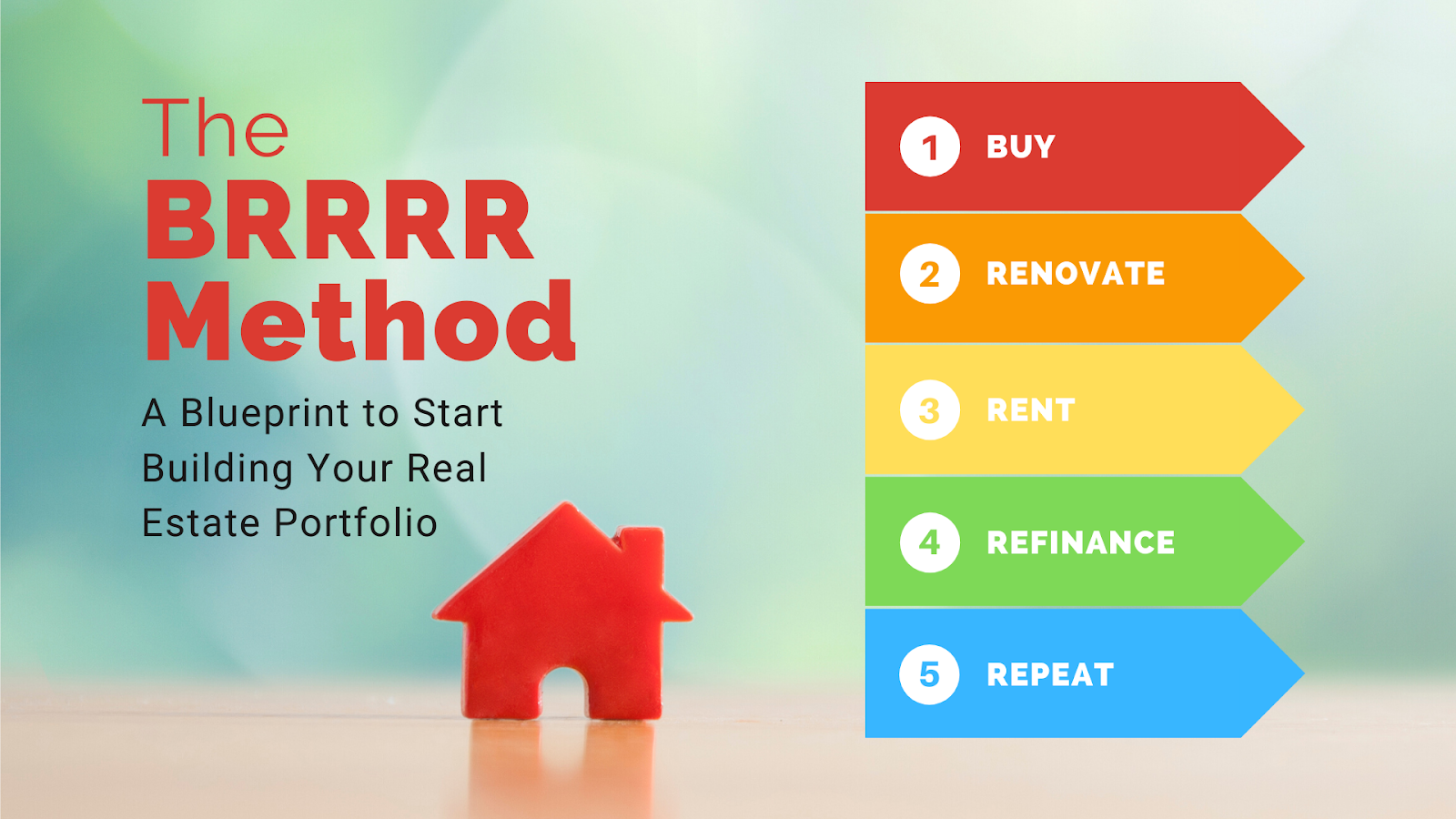
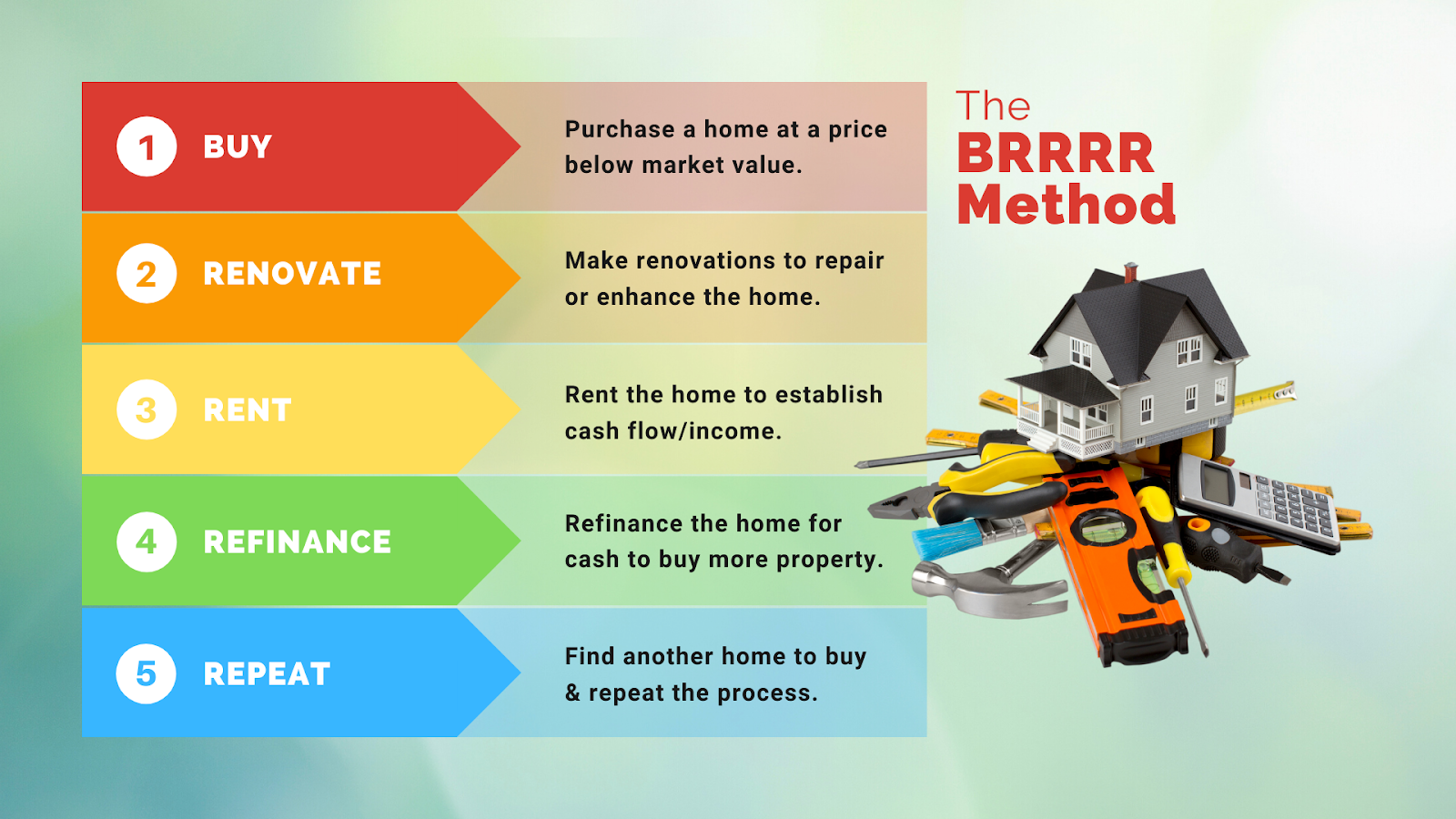
Despite how it may sound, the BRRR strategy has nothing to do with the weather – It is an acronym that breaks down a complex real estate investment strategy into five easy-to-digest steps. 

  1. Buy – Purchase a home at a price below market value.
  2. Renovate – Make renovations to repair or upgrade the home. 
  3. Rent – Rent out the home to establish cash flow/income. 
  4. Refinance – Refinance the home for capital to purchase more property. 
  5. Repeat – Find another home to buy and repeat the process. 

Using this method, investors can purchase real estate to build out their investment portfolios. Here’s everything you need to know to implement the system for yourself. 

You might also like: Can You Pay a Mortgage with a Credit Card?

Does the BRRRR Method Work? 

BRRRR method Reddit

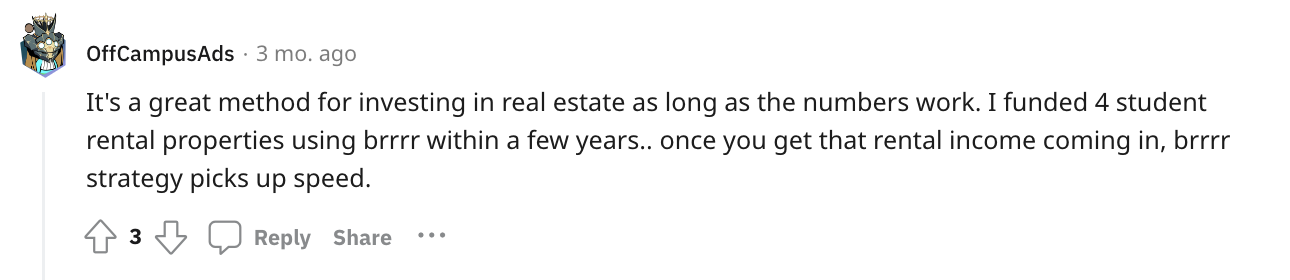
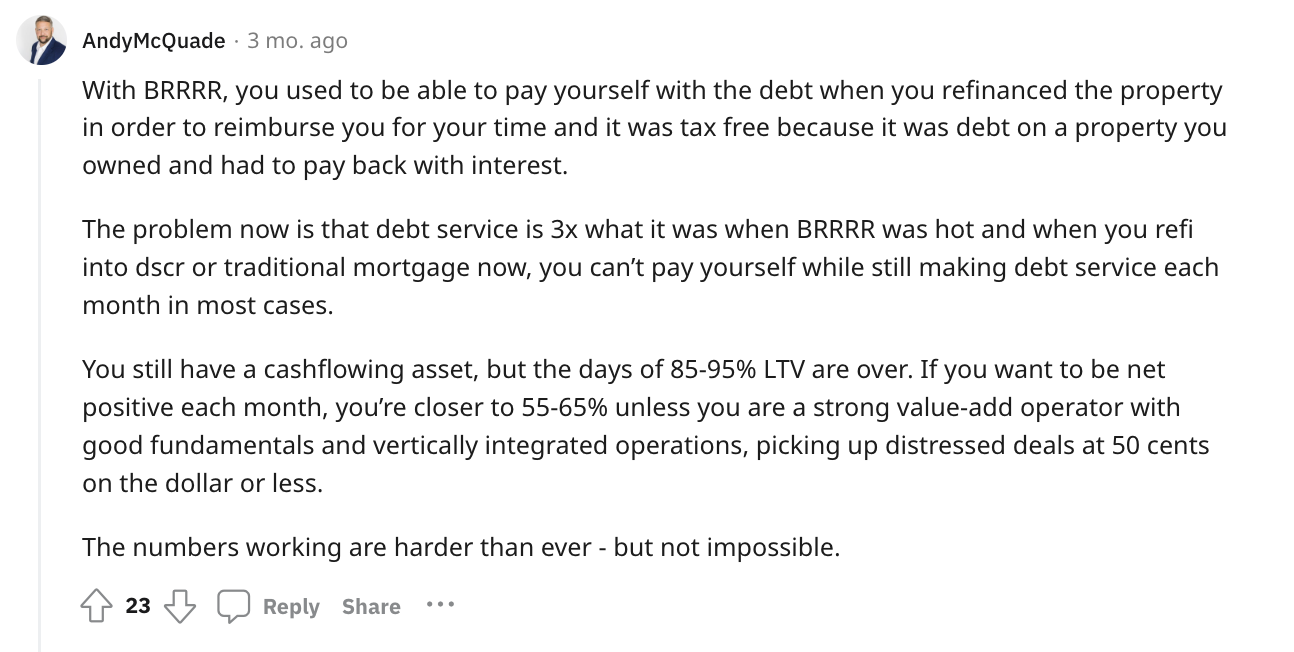
Yes, the buy, renovate, rent, refinance, and repeat strategy is a legitimate and lucrative way to invest in and profit from the real estate market. Many people use it to start or expand their holding portfolio or to generate cash flow.  

In fact, BRRRR has been used since before there was an acronym for it. And, if you check out Reddit or Quora, you’ll find countless anecdotes from countless investors who have successfully used the method to generate cash flow.   

However, don’t expect thousands in monthly profits for a single property. After the cost of repairs and considering vacancy rates, you are more likely to be looking at $100 to $300 per month in profits per unit or property. 

How Does the BRRRR Method Work? 

The BRRRR method works by enabling you to leverage property you purchase to pay for new real estate and grow your portfolio. 

Moreover, this strategy can be altered based on your financial situation and personal preferences. Moreover, rather than buy, renovate, rent, refinance, then repeat, you may choose to go another route. 

Some investors opt for slightly different strategies: 

  • BRRSR (buy, renovate, rent, sell, repeat) or “buy and sell”
  • BRRHR (buy, renovate, rent, hold, repeat) or “buy and hold” 

These systems can help you generate hefty returns on your investment, sometimes more profitable over time as you hold. 

Furthermore, BRRRR doesn’t only work for residential homes – You may opt to buy single or multi-family homes, but commercial real estate is another option. You might even consider investing in land that can be rented for livestock, farming, RV parking, or recreation. 

In sum, you can alter the strategy to your liking. 

BRRRR Method Risks

Is flipping houses still profitable in 2024?

As with all investment opportunities, there are perils with the BRRRR method. Costs, value, timeframes, and refinancing details are constantly fluctuating in real estate. 

The BRRRR method comes with all of the usual real estate investment risks:  

  • Financing shortfall on first property
  • Unanticipated renovation problems
  • Difficulty finding reliable contractors
  • Tenant issues or difficulty renting (factor in a 5% vacancy rate when calculating)
  • Refinancing falls short of funding next property
  • Market fluctuations
  • Interest rate changes
  • Regulatory changes
  • Construction and renovation delays
  • Overestimating after repair valueM (ARV)
  • Unexpected expenses
  • Property management challenges
  • Economic downturn
  • Liquidity risks
  • Market saturation

You need to be aware of and address these risks when implementing the BRRRR method. But, you may have a smooth experience and be impacted by none of these issues. And, the more you understand about the process, the more likely you are to succeed.

Now, let’s take a more in-depth look at each step of the process so you can learn to implement the BRRRR method process. 

Recommended: This is How to Leverage Business Credit to Transform Your Life 

This is How to Do the BRRRR Method

You already have the basic idea, but real estate investing is not a simple process. Let me give you my best advice for every step of the BRRRR process. 

Learn where to find money to purchase property, how to find the best properties, and considerations to make with renovations and renting. 

Step 1: Buy a Home at a Price Below Market Value

BRRRR method with no money

Before you start on this journey, you need to set your budget. How much money can you invest into your first property? And, this means more than 

Keep in mind that you’ll need funding for a handful of items: 

  1. The full cost of the property (for cash payment) or about 20% for a down payment (for a traditional mortgage)
  2. Closing costs and fees associated with title transfer
  3. Homeowner insurance and property taxes
  4. Renovations to the home
  5. Travel costs if purchasing out of state 
  6. An emergency fund for future home repairs 

In determining your budget, here’s where you might be able to get funds:

  • Mortgage (most traditional option)
  • Personal loans
  • Personal savings
  • Partnerships
  • Private investors
  • Seller financing
  • Business credit cards
  • Self-directed IRA withdrawal
  • Government grants or programs (rare)
  • Home Equity Investment Platforms
  • Crowdfunding platforms

If you already own property, you could consider Home Equity Line of Credit (HELOC) aka ”home equity loan”, real estate investor line of credit or a cash-out refinance. Since this is your first purchase, I’m assuming you don’t have this option. 

Carefully assess risks to choose the most suitable funding option for your BRRRR project, then research market trends to get an understanding of the current market.

BRRRR method example

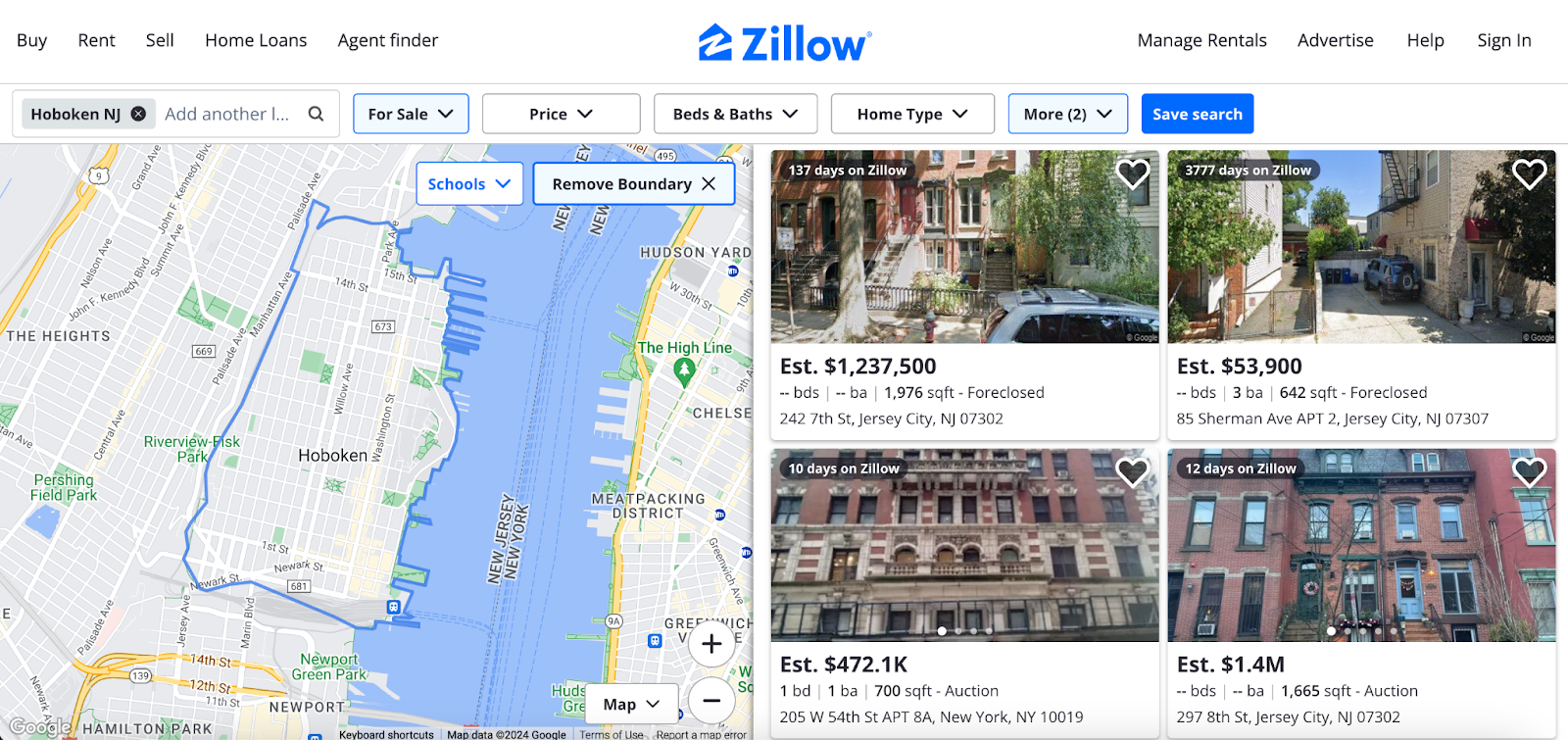
You can’t typically just shop Zillow or Trulia and purchase any home to implement this strategy – The key is to purchase property at a price below market value. This means that you need to get a good deal so that you can turn a profit. 

So some home purchase situations that might help you get your foot in the door include: 

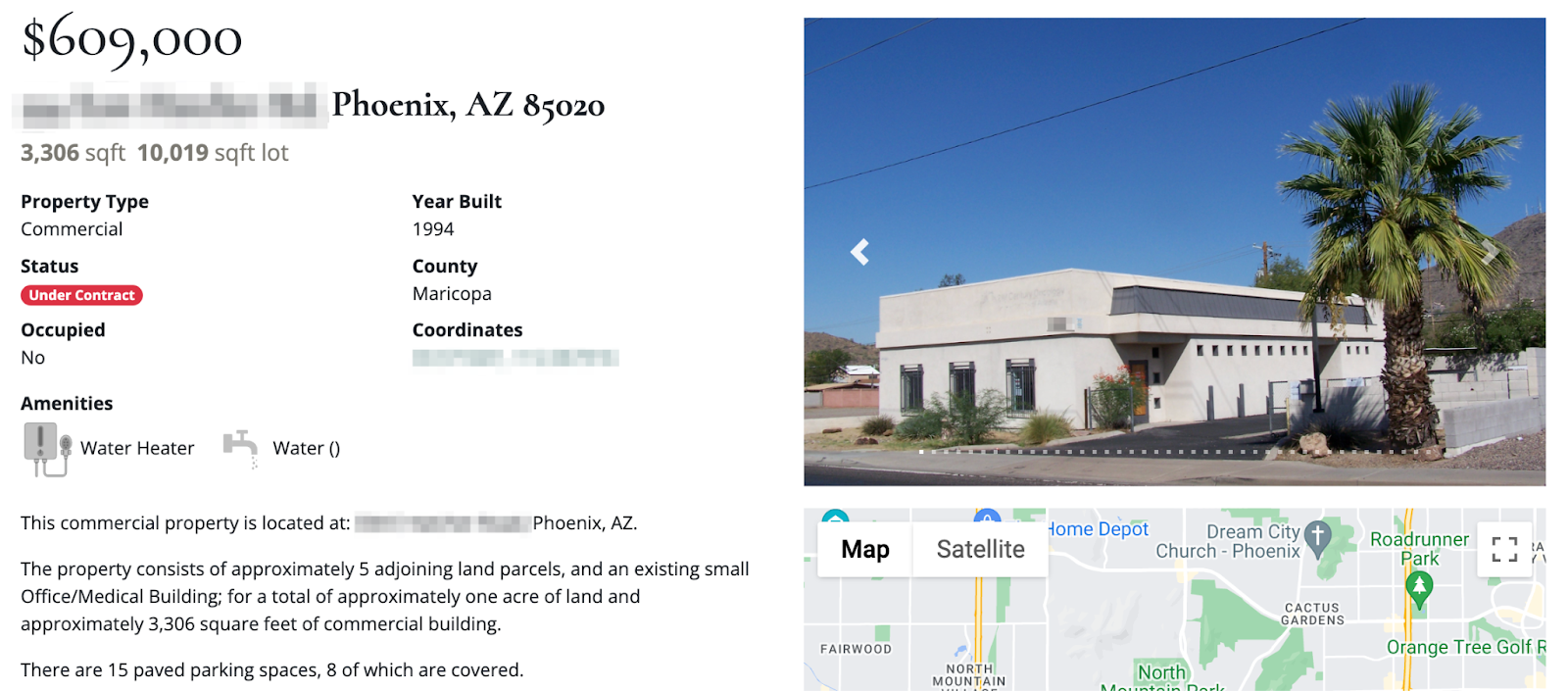
  • Auctions and government repossessions 
  • Bank foreclosures
  • Unlisted opportunities

You’ll hear stories of people purchasing homes for as little as $15K. When these anecdotes are sometimes true, any property priced this low was likely picked up at an auction. You never know what the prices will be on these properties. While this is usually where investors find the best deals, auctions are usually cash-only, so you can’t use a mortgage to bid. 

BRRRR method for beginners
Log in to your Business Credit Workshop account to access a list of five legitimate real estate auction websites.

Now, the median cost of a foreclosed home is about 15% less than market value, according to Money.com. So, while you may pick up a home for 40-50% less than the average traditional listing (this is a diamond in the rough), foreclosed homes are typically on the lower end of the value scale to start with. 

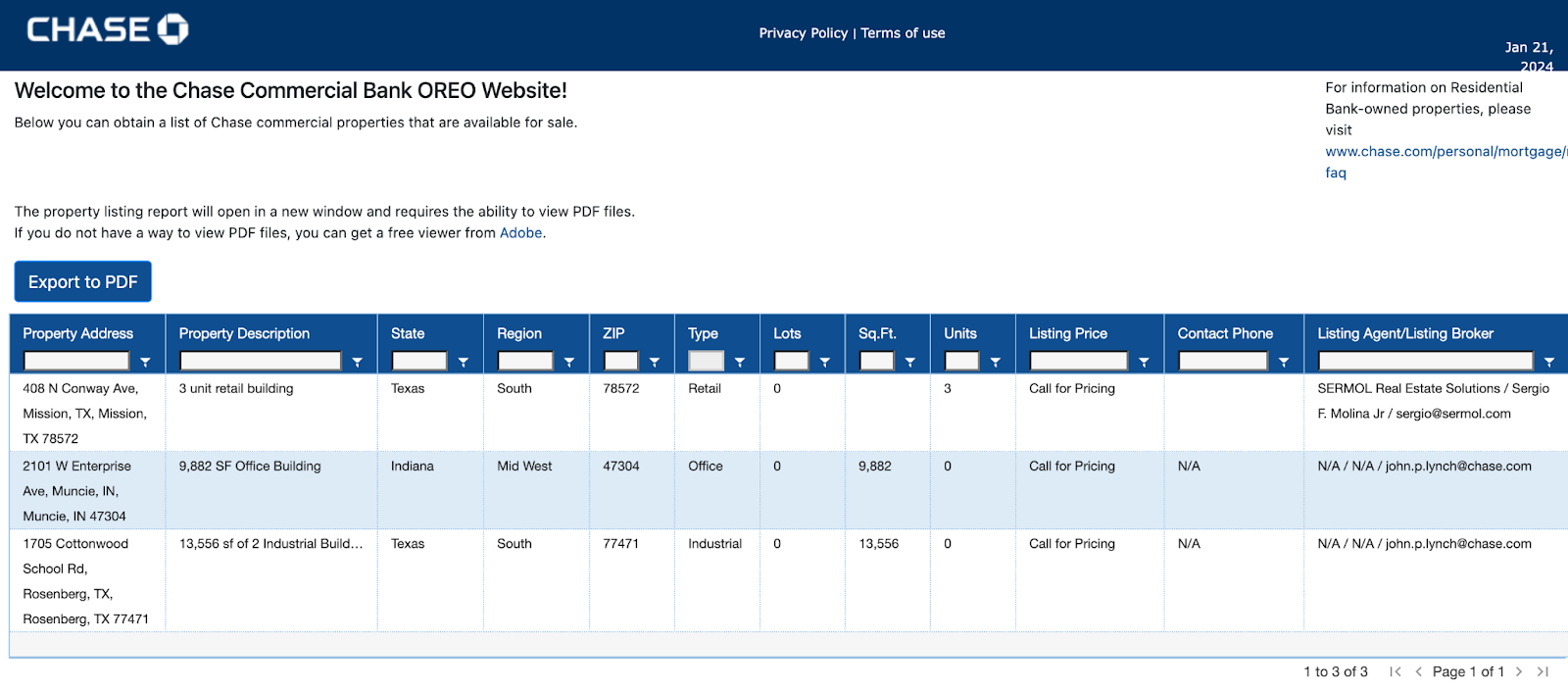
This doesn’t mean foreclosures aren’t worth looking into. Search bank websites for “Real Estate Owned (REO)” pages. Some REO properties are available on conventional listing sites like Zillow®, Trulia®, and Realtor.com®, but the comprehensive lists are more likely to be found with the banks.     

BRRRR method in California

And, you’re only going to hear about unlisted opportunities if you get out there and network. Some people think of these as unicorn investments, but they’re very real. Make friends with real estate professionals and stay open to opportunities. 

Here are the places you can look to find legitimate real estate auctions: 

[Login to your Business Credit Workshop account for a directory of legitimate real estate auction websites in the US.]

Recommended: How to Raise Money for Real Estate Investment: A Beginner’s Guide 

Step 2: Renovate to Make Repairs or Update the Home

BRRRR method calculator

Once you’ve purchased a home and it’s in your possession, it’s time to renovate. You will take a chunk of cash, say $10-20K, and put it back into the home. If the home needs repairs, start there. 

You need the house to be “habitable” according to the state’s housing standards.  And, some updates can instantly increase the value of the home, giving you a chance to rent it for a higher price. 

Here are some of the most valuable uses of your money: 

  • Increase curb appeal with landscaping
  • Fence in the yard or update the fencing
  • Upgrade the front door
  • Paint the exterior and interior
  • Add new carpet or refinish flooring
  • Update fixtures, switches, and outlets
  • Add shutters or curtains or replace windows
  • Get a new garage door 
  • Replace old countertops 

Omnicalculator® has a handy after-renovation value (ARV) calculator that might help you determine which repairs or updates can help you get the most bang for your buck. 

If the home you purchase is already in excellent condition, you could get into some eco-friendly updates like alternative energy or luxury add-ons like jacuzzi bathtubs. But, keep in mind that you will not be living in the home and the more you provide, the more you will be required to help maintain. 

And, sometimes the simplest fixes (painting the cabinets or the bathroom tile) can have the most impact on home value for the lowest cost. So, as a landlord, it’s typically best to keep it simple. 

You might also like: Best Credit Cards for House Flippers: The Ultimate Guide

Step 3: Rent Out Your Property to Generate Cash Flow 

BRRRR method book

Now, you have another decision to make: Will you act as a landlord or hire a property management company to rent your home? Depending on where you live, property management might cost $100-150 or around 10% of the monthly rental price. 

For this monthly fee, someone else will do the following tasks: 

  • Price your rent
  • Advertise your home
  • Find a tenant to live in your home
  • Protect you from lawsuits
  • Manage emergency repairs
  • Provide tax documents
  • Create income and expenditure reports
  • Perform house visits/ inspections 

You need to rent your home at a price that generates enough cash flow to enable you to easily get refinanced — you must show a profit. So, if the fees associated with outsourcing property management take up most of your cash flow, you may want to manage the home yourself. 

If you decide to take matters into your own hands, first and foremost, be sure to update yourself on the landlord-tenant laws in your state – The last thing you want is to end up in a courtroom over a dispute because you’re ill-informed. 

Here are some resources to help you learn the ropes: 

  • State Landlord-Tenant Laws | Nolo
  • How Much Should I Charge for Rent? | Zillow 
  • Advertise Your Rental Property | RentPrep 
  • How to Screen Potential Tenants | Money Crashers
  • How Quickly Must Landlords Make Repairs? | The Balance SMB
  • Tips on Rental Real Estate Income, Deductions, and Record-Keeping | IRS

If you make it through the reading list above and you’re still interested in managing your own rentals, then you’re probably good to go. If you decide to hire out, many people consider $100 or 10% of the total home price to be a great deal with everything that goes into the job of managing property. 

Recommended: Buildium Property Management Software: An Extensive Review 

Step 4: Refinance to Get Funds for Your Next Investment

BRRRR method real estate

Now, it’s time for you to get the home refinanced so you can do it again. You want some money for a down payment on your next home. In addition, refinancing can help you out in a couple of other ways. For example, if you already have traditional financing, you may be able to move from a variable to a fixed interest rate. And, you may get rid of an existing PMI for a lower monthly payment. These details should be discussed with your mortgage broker or lender. 

If you used low or zero-interest credit cards to fund the home purchase, refinancing can give you the ability to pay them off before your interest rates spike at the end of the introductory period.   

Ultimately, to qualify for refinancing, you’ll need to be in a good financial situation and have the documents to prove it. Before you submit an application for refinancing on your rental, you need to be able to show that you have the ability to pay back the new loan. 

You will be asked to prove the following: 

  • A steady income 
  • Positive credit standing and FICO score above 620
  • At least 25% equity in the home or a 75% loan to value (LTV) ratio
  • The payment will be less than 30% of your monthly income
  • Your total household debt is less than 40% of your income

In the case that you purchase and refinance the home as a business, the lender may consider your business credit profile. 

Once it’s time to apply, you will want to gather the appropriate documents in advance for a quick and smooth process. Your lender will want to see the following: 

  • Rental lease and proof of rent deposit paid by the tenant
  • HOA agreement and payment amount (if applicable)
  • Proof of homeowner’s insurance 
  • Two months of recent pay stubs (if applicable) and bank statements
  • Investment and retirement account statements (if applicable)
  • Two years of tax returns 
  • Your current mortgage statement with payment information
  • An official payoff amount from your original lender
  • Property appraisal documentation

If you gather all of the required documents in advance, you’ll streamline the process. In the instance of any obstacles, your lender or broker will help you learn how to remedy them. 

You might also like: Should You Use a Real Estate Investor Line of Credit to Buy or Renovate Property? 

Step 5: Repeat the Process! 

Now that you’ve made it this far, you’re ready to do it again. When refinancing is complete, you should have enough money to reinvest in a down payment on your second home. Rinse, repeat, then do it a third time. Eventually, you could have enough rental cash flow to live on and even retire early. 

Frequently Asked Questions

What is the 70% rule for BRRRR?

The 70% rule in BRRRR suggests that you should aim to buy a property for 70% of its after-repair value (ARV), factoring in purchase, renovation, and holding costs. This leaves room for a profitable exit.

What is the 1% rule in BRRRR?

The 1% rule is a quick guideline in BRRRR, stating that your monthly rental income should ideally be at least 1% of the property’s total cost. It helps assess whether the property has income potential.

Is BRRRR better than flipping?

It depends on your goals. BRRRR focuses on long-term wealth through rental income and appreciation, while flipping aims for quick profits by buying, renovating, and selling. Choose based on your preferences and risk tolerance.

What are the disadvantages of BRRRR?

BRRRR risks include potential financing challenges, renovation setbacks, finding reliable contractors, tenant issues, market fluctuations, and uncertainties in refinancing. Thorough research and planning are crucial.

How many times can you BRRRR in a year?

There’s no strict limit on how many times you can BRRRR in a year. It depends on factors like market conditions, financing availability, and your ability to manage multiple projects efficiently. Quality over quantity is key.

Final Thoughts

The BRRRR method is not a new strategy – it’s simply a way to break down real estate investing into a  system that’s easy to remember. As you can see, there’s a lot that goes into investing in real property, and it’s not for the faint of heart. 

There are many things that can go wrong, but that goes for all things in life. If you go into it with an optimistic mindset and the commitment to learn, real estate investing can be one of the most viable ventures you’ll ever partake in…Plus, you can start investing with business credit and lay the first brick to build your empire. 

Ready to learn how to obtain up to $100K in business credit in as few as 30 days? Join Business Credit Workshop today!

Business Credit Blog

· Recommended Resources
· Using 30 Day Net Vendors to Build Your Business Credit Score
· How to Create a Business Credit “Entity” – Tutorial

Recent Posts

  • How To Get Business Credit With Bad Personal Credit!
  • I got $25K from a Credit Union No One Talks About
  • Hot Seat – Application Received
  • Email
  • Facebook
  • Instagram
  • LinkedIn
  • YouTube

· Sign Up for Business Credit Workshop Online!
· Login – Business Credit Workshop Online
· Forgot Password?
· Latest Posts
· Affiliates

Copyright © 2025 · All Rights Reserved · Privacy Policy · Terms · About · Contact Us

  • Home
  • Free Funding Guide
  • What We Offer
    • Products
    • Services
    • Free Guide
    • Back
  • About Us
  • Contact
  • Sign Up