• Home
  • Free Funding Guide
  • What We Offer
    • Products
    • Services
    • Free Guide
  • About Us
  • Contact
  • Sign Up

  • Ask Joe Any Question!
  • Business Credit Cards
  • Business Line of Credit
  • Topics

Cred AI Review: Are You Really Better Than Your Bank? 

By Joe

Cred.ai review

One of my students came across Cred.ai when researching business credit cards, and the flashy website stopped us both in our tracks. And, the offer is buzzing right now, so I wanted to write about it…for fun. 

In short, Cred.ai is a fintech company that offers a premium, 100% mobile, fee-free credit card with a metal design, along with cutting-edge technology that helps you manage your finances, build credit, and protect against fraud. You can use it to spend like a debit card while building your credit score “like a pro.” With Cred.ai, you can also access your paycheck up to two days early, get cash from ATMs, make instant deposits and mobile check deposits at no fee, and all deposits are FDIC insured.

This all sounds exciting, but it leaves a lot of questions unanswered. 

So, let’s find out what this offer is really all about — the company, the card, and more. 

Here’s what’s in store: 

  • What is Cred.ai?
  • The Unicorn Card™ (Metal Credit Card)
    • Fee-Free ATM Network
    • Early Access to Paychecks
    • Minimum Deposit, Credit Limit, & Fees
    • How Does Cred.ai Help You Build Credit?
  • The Stealth Card™ (Virtual Card)
    • What is High-Security™  Mode?
  • Is Cred.ai Good for Businesses?
  • Cred.ai vs Chime
  • Frequently Asked Questions
  • Conclusion: Are You Better Than Your Bank?

So, let’s go! 

What is Cred.ai? 

A couple of years ago, when they revealed their ai-powered credit card, Forbes called Cred.ai “the Tesla of Banking.” But, with all of the chatter, that still doesn’t tell you what the offer can do for you in comparison to other cards on the market. 

So basically, Cred.ai is a high-tech and premium everyday spending experience that offers a free metal card — They guarantee that you’ll never pay fees or interest and never overspend. Plus, they offer cutting-edge technology like Check Please™ and Flux Capacitor to help you optimize your credit utilization and even get your paycheck up to two days early. 

Cred.ai is touted to be “100% mobile” and offers 24/7 support, real-time control, and virtual Stealth Cards™ that activate instantly upon approval. The company offers exclusive features like High-Security Mode™ and a Friend & Foe List™ to keep users safe and protected. 

The metal card (this is why ‘100% mobile’ might not be the right word choice) is free and it’s heavier than those other fancy black cards, but you don’t have to pay a fee to get it. You can use it like a debit card and build your credit (“because it’s a real credit card,” according to their website). 

Cred.ai also offers original content through Crednews™ (where they produce documentaries about important topics like UBI and psilocybin…seriously). 

With Cred.ai, you can get the spending power of your paycheck and other automatic deposits up to two days before they hit your bank account. And, you can get cash at free ATMs within their network, make instant deposits, and mobile check deposits with no fees. All, as previously mentioned, deposits are FDIC-insured up to $250K. 

There are also some really cool features like Flux Capacitor, which gives you early access to future deposits and helps you budget for future charges before they happen. There’s also Stealth Card™ (virtual card), which is helpful for risky transactions like ordering tacos over the phone or signing up for free trials. You can regenerate your Stealth Card when you feel like you’re at risk or use it in High-Security Mode™ for ultimate protection. 

So, in summary, Cred.ai is a high-tech, mobile spending experience that offers a free metal card and exclusive features like Check Please™, Flux Capacitor, and Stealth Card™. Cred.ai guarantees you’ll never pay fees or interest and you’ll never overspend.

The Unicorn Card™ (Metal Credit Card)

How does Cred.ai card work?

Cred.ai’s Unicorn Card is not your typical credit card. With a sleek black metal design and a unicorn image, it’s definitely eye-catching. But the real magic happens when you start using it. 

Unlike traditional credit cards, you need to deposit cash upfront, similar to a secured card. But don’t worry, your money isn’t just sitting there as a hostage to your good behavior. Instead, cred.ai uses your deposit to pay off your monthly statement balance as you make purchases, effectively extending your credit without requiring cash on hand to cover each transaction.

WSFS Bank — a member of the FDIC — provides the Deposit Account for cred.ai. Additionally, WSFS Bank has issued the Unicorn Card credit card under the license from Visa® U.S.A. Inc. The credit card can be used wherever Visa® credit cards are accepted.

Fee-Free ATM Network

Cred.ai has a cool feature where you can find free ATMs using their mobile app. 

When you withdraw cash from an ATM, it’s considered a cash advance against your Unicorn Card credit card. But the good news is, you won’t have to pay any interest on those cash advances as long as you enable the Cred.ai service to manage your Unicorn Card payments automatically in the background. 

Plus, they have a huge network of over 55K ATMs, so you’ll have plenty of options to choose from.

Early Access to Paychecks

If you’re a Cred.ai user and have set up direct deposit, there’s a way to access those funds earlier than your scheduled payment date — Cred.ai allows you to access the spending power of your direct deposit funds as soon as they receive the deposit file from your payer! 

This could be up to two days before your scheduled payment date, depending on when your payer submits the deposit. Just keep in mind that the timing and schedule of your direct deposit depend on the payer, so it’s always a good idea to check with them first.

Minimum Deposit, Credit Limit, & Fees

So here’s the deal with Cred.ai: it’s kind of like a secured card, so you’ll need to put some cash onto the card to start using it. The smallest amount you can deposit is $100, and unfortunately, you can’t add any authorized users to the account. 

Here’s the cool part though — Cred.ai reports to credit bureaus each cycle with a $1.5K credit limit and a 2-3% credit utilization rate (0% if you have a $0 balance), which can help boost your credit score. Plus, they have an auto-reload function to make sure you have enough funds to cover your transactions. 

Now, while they say they have “no fees,” there is an APR and interest rate of 17.76% on spending and 24.99% on cash advances. But don’t worry, they won’t charge you unless you turn off their automated system. 

Some folks suggest using the card more as an emergency fund, and instead using a secured credit card from a credit union for regular spending. But hey, everyone’s financial situation is different, so it’s up to you to figure out what’s best for you!

How Does Cred.ai Help You Build Credit?

First of all, Cred.ai reports to the three main credit reporting agencies, showing a $1500 revolving line of credit and your utilization every month. The best part? It doesn’t require a hard credit pull or an initial credit score, making it accessible to a wide range of consumers.

Let’s say you have one credit card with an $800 limit and you’re using 80% of that limit ($640). That’s not so great for your credit score because it looks like you’re relying too much on credit. But if you get the cred.ai card and deposit, say, $1.5K onto it — now you have a total credit limit of $2.3K and only use 27% of it. That’s a big improvement! 

When you apply for credit in the future, having a higher credit limit and lower usage percentage looks really good to lenders. It shows them that you’re responsible with credit and can handle having more available to you. Plus, since the cred.ai card doesn’t require a hard credit check, applying for it won’t hurt your credit score.

Furthermore, the AI technology behind the card also learns your spending patterns and helps prevent you from overspending. If you try to make a purchase that would leave you overdrawn, the card will decline the transaction, acting like a protective parent. 

How does Cred.ai build credit?

Think of the cred.ai card as a helpful friend who gives you some money to use, but keeps an eye on you so you don’t overspend and get into trouble. You can only use the money that you deposit onto the card, but it still helps your credit score because it looks like a regular credit card to the credit bureaus. 

On the contrary, if you turn off this feature, you can charge up to your cash limit and even beyond, though there’s a somewhat high APR for unpaid balances (17.76%+ on cash purchases).

So, what if your deposits are unpredictable? 

If you get paid in cash, or you don’t use Cred.ai’s deposit account as your main cash flow account, the system will still attempt to predict your income, likely unsuccessfully — in which case you will essentially be able to use it like a debit card and spend your deposits, dollar-for-dollar. You would still be able to use it as a credit card, though (you won’t have to walk inside to pay for gas at stations where only credit cards are accepted at the pump). 

The bottom line is that it always reports to credit bureaus as a $1,500 line of credit. 

Recommended: Credit Secrets Book Review: Can You Erase Bad Credit History? 

The Stealth Card™ (Virtual Card)

Is Cred.ai secured credit card?

One neat feature of the Unicorn Card is the virtual card number for risk mitigation — Cred.ai just calls theirs a Stealth Card™. If you’re hesitant to make a purchase on a sketchy website, or you don’t want to commit to recurring monthly charges, you can use a virtual card number that won’t work for anything else, minimizing the risk of fraud.

In general terms, a virtual card is a digital version of a physical credit or debit card that is used for a single transaction or for a limited period of time. It typically consists of a randomly generated number, expiration date, and security code, which can be used for online or phone purchases where the actual card is not present.

The idea behind virtual cards is to provide an additional layer of security for online transactions, as the virtual number is typically different from the actual card number and can be easily deactivated if compromised. This makes it less risky to use your credit or debit card for online shopping or on unfamiliar websites, as your actual card number is not shared and the virtual card can be easily canceled if there is any suspicious activity.

Several banks and credit card issuers also offer virtual cards as a separate feature that can be generated and managed through their mobile apps or online banking portals.

Recommended: In-Depth Divvy Credit Card Review: Read This Before You Apply 

What is High-Security™  Mode?

Cred.ai’s High-Security mode is a feature that adds an extra layer of security to your transactions. By enabling High-Security mode, the authorization window for each transaction becomes very small, usually only a few seconds, and expires automatically — This means that even if someone were to gain access to your card information, they would not be able to use it for fraudulent transactions because the authorization window would have expired by the time they tried to make a purchase. 

Essentially, this feature is controlled by you and minimizes the risk of unauthorized transactions on your Cred.ai card. It is available for both physical and virtual Stealth cards.

Is Cred.ai Good for Businesses? 

Cred.ai’s features are mainly geared towards individual consumers, such as access to early direct deposit, free ATM network, and virtual card capabilities. While businesses may be able to use the service, there are no specific features or benefits designed for business use. 

Additionally, Cred.ai is not currently set up to handle business accounts or multiple authorized users, so it may not be the most practical option for businesses. Therefore, it may be better for businesses to look into alternative banking solutions that offer features specifically tailored to their needs.

Business owners who are curious about Cred.ai might want to look into a (more relevant) corporate offer like Brex or Divvy.

Recommended: Brex Card Review: Is This Corporate Card Offer Too Good to be True? 

Cred.ai vs Chime

Cred.ai is most often compared to Chime, but these are two very different offers — let’s see how they stack up side by side: 

What is similar to Cred.ai?

*Please note that this information is subject to change, and you should always refer to the official websites of Cred.ai and Chime for the latest and most accurate information.

Frequently Asked Questions

What credit score is required for Cred.ai?

According to the information available on the Cred.ai website, there is no minimum credit score required to apply for an account. However, they may perform a soft credit check during the application process to verify your identity and determine your initial credit limit.

Does Cred.ai do a hard pull?

No. Cred.ai does not do a hard pull to approve your account. 

Is Cred.ai a secured credit card?

Sort of… you do have to deposit money to use a Cred.ai card, but your money isn’t subject to the same terms as traditional secured credit card accounts. 

How does Cred.ai affect your credit score?

The cred.ai card requires you to deposit money before you can use it. Your spending on the card is reported to credit agencies as a credit card with a $1500 limit and 3% usage. This increases your available credit and decreases your overall credit usage, which can improve your credit score. 

For example, if you previously had one credit card with high usage, adding the cred.ai card would increase your available credit to $1800 with a 30% usage rate, which looks better to lenders.

Conclusion: Are You Better Than Your Bank? 

Yeah, you are better than your bank, but that doesn’t mean you need to apply for a Cred.ai card. The tech is certainly cool for a certain demographic. If you need to improve your consumer credit utilization ratio, this might do the trick — The offer is fun and users seem to like it. 

If you’re a business owner, however, you might want to look into a credit card designed specifically for business operations. 

If you want to learn how to get up to $100K in business credit in as few as 30 days, join Business Credit Workshop today.

Ty Crandall’s Story: A Quick Look at the Mind Behind CreditSuite 

By Joe

Ty Crandall

When it comes to building business credit, Ty Crandall’s name stands out. As the founder of Credit Suite, Ty has helped thousands of entrepreneurs obtain business credit that’s not linked to their personal social security numbers.

With nearly two decades of experience in the financial services industry, Ty has become an authority in business credit building, scoring, and financing…plus he’s been featured in publications like Forbes, Entrepreneur, and Inc. 

So, are you curious about how Ty became the go-to guy for business credit or whether or not you can trust him? Keep reading to learn more about his story, his net worth, and his approach to business credit.

Here’s what’s in store: 

  • Ty’s Career Story
  • Ty’s Approach to Business Credit
    • Website: TyCrandall.com
    • CreditSuite YouTube Channel
    • The Business Credit and Financing Show (Podcast)
    • Consumer & Business Credit Books
    • Business Credit Course on Udemy
    • Media Appearances/Guest Contributions
  • Final Takeaway

Now, let’s get to it! 

Ty’s Career Story

Ty Crandall, a Tampa-based entrepreneur, founded Credit Suite (a company that helps entrepreneurs get business credit and financing) over 12 years ago. He is a business credit-building and business loan specialist and fundability expert. Before Credit Suite, Ty founded Elite Credit Inc. (a credit repair offer) and worked as a CEO for TLC Jumbo Mortgage Services for 7 years. 

Ty Crandall Net Worth

He served in the US Air Force for four years, from 1994 to 1998 before he studied Psychology at the University of South Florida. At this point, Ty has helped over 100,000 entrepreneurs build business credit and access financing with his extensive knowledge of the industry. 

Ty’s experience, education, and dedication to helping entrepreneurs expand their business credit options show me that he’s legit. 

Ty’s Approach to Business Credit

If you want to learn more about Ty’s approach to business credit, the best place to start is his content — he’s created a myriad of resources worth checking out. 

Website: TyCrandall.com 

Ty Crandall Website & Coaching

TyCrandall.com is where Ty promotes his most up-to-date speaking, coaching, and retail offers (books).  Here, you can get his up-to-date Multiple Uses Model for free, which is a marketing guide that spells out how you can create up to 20 brand assets from one piece of content. 

He also promotes a coaching offer — for a very small group of elite entrepreneurs — where he guides business owners to scale their companies to $10K+ in revenue. 

CreditSuite YouTube Channel

Ty Crandall on YouTube

CreditSuite’s YouTube channel offers solutions for small businesses looking to improve their fundability, build business credit, and obtain loans and credit lines. 

The channel emphasizes the importance of meeting lending guidelines and building credit in the business name with an EIN to avoid personal guaranteeing of finances. Credit Suite aims to give businesses the competitive advantage and capital they need to succeed and grow with confidence.

The Business Credit and Financing Show (Podcast)

Ty Crandall Podcast

A few years ago, I actually had the opportunity to meet Ty when he reached out and invited me to speak on his Podcast, The Business Credit & Financing Show — he was super knowledgeable (we could have chatted about this stuff all day). If you want to hear how that went, you can access the full episode here. 

The Business Credit and Financing Show covers a wide range of topics related to obtaining business credit and financing for starting and expanding your business. We feature insightful discussions with prominent influencers and industry experts on marketing and growth strategies, aimed at assisting you in establishing and growing a successful business.

Consumer & Business Credit Books

Ty Crandall Books

Ty has written two bestselling books on consumer credit — Perfect Credit and Business Credit Decoded. And, he’s attributed to seven books, most recently business credit titles like Business Credit: The Complete Step-By-Step Guide (most popular) and Business Credit Decoded (newest). 

Most of Ty’s books get rave reviews, though some of them didn’t get a ton of traction…all are available in paperback and most in Kindle formats. 

Business Credit Course on Udemy

Ty Crandall Business Credit Course

Ty’s Udemy course — How to Get Credit for Your EIN That’s Not Linked to Your SSN — aims to help students set up their business in a credible way to meet lender and credit issuer guidelines. 

By the end of the course, students will be able to navigate their business credit reports, build initial business credit reports using vendor accounts, and obtain high-limit revolving store and fleet credit cards. 

The course includes 1.5 hours of on-demand video, 1 downloadable resource, and a certificate of completion. 

While the course content was good, it hasn’t been updated since 2016, and I can safely tell you that a lot has changed in the industry since then. 

Media Appearances/Guest Contributions

Ty Crandall on Inc.com

You’ll find Ty’s contributions around the web on various business, finance, and even legal publications. For example, at one point, he was a regular contributor to Inc. Masters. His advice has been mentioned in Entrepreneur as well as Forbes. 

And, if you do a quick search for articles by Ty Crandall, you’ll see that he’s been hard at work, over the years, making his rounds with hundreds of blogs and business websites. 

Final Takeaway

And there you have it! That’s a quick look at the man behind CreditSuite, Ty Crandall. From his early career in finance to his success as an entrepreneur, Ty’s story is truly inspiring. His approach to business credit has helped countless entrepreneurs build and grow their businesses, and his legacy is one of innovation and success.

If you’re interested in learning more about Ty and his work, be sure to check out TyCrandall.com and the CreditSuite YouTube channel. You can also tune in to The Business Credit and Financing Show podcast or read any of Ty’s consumer and business credit books.

If there’s one thing to take away from Ty’s story, it’s that with hard work, determination, and the right tools and knowledge, you can achieve success. So, go out there, build your business, and make your mark on the world!

If you’re interested in learning how to get up to $100K in business credit in as few as 30 days, join Business Credit Workshop today.

A Credit Stacking Breakdown: What it is & How it Works

By Joe

Credit stacking is one of the latest catchphrases in the credit card realm. Naturally, as a business credit coach and expert, I had to check it out. I did a ton of research into the system (everything shy of hopping on a strategy call and joining the community) to see what I could find out. 

As usual, I want to share what I’ve learned with you. 

At first glance, credit stacking seemed a lot like what we teach at Business Credit Workshop…but it’s not — there are some fundamental differences. I’ll summarize the most glaring distinctions before I wrap up. 

If you’re thinking about hopping on a call with the Credit Stacking team to become a member, read this first. 

Here’s what’s in store: 

  • What is Credit Stacking, Exactly?
    • What is the Credit Card Stacking Strategy?
  • Frequently Asked Questions
  • The Credit Stacking Book by Jack McColl
    • Chapter 1: Where Do You Want to Go?
    • Chapter 2: Personal Credit
    • Chapter 3: Credit Cards and Calculated Risk
    • Chapter 4: Using Business Credit to Gain Momentum
    • Chapter 5: Money
    • Chapter 6: Traveling on Credit
    • Chapter 7: The Road to Independence
  • The Takeaway — Is Credit Stacking Legit?

Now, let’s hop to it! 

What is Credit Stacking, Exactly? 

When I first heard the expression, I thought credit stacking might be akin to credit piggybacking, but I was wrong. 

Credit stacking is a popular buzz phrase (pretty catchy, really!) coined by Jack McColl — it refers to building multiple lines of credit in an alleged specific order to obtain large lines of credit. Essentially, it is a framework to apply for multiple cards at once with the least negative impact on your credit. 

With credit stacking, you can get up to hundreds of thousands of dollars in funding by applying for multiple credit cards and taking advantage of business credit (which is separate from personal credit). 

credit stacking course

McColl teaches about the system through a credit stacking course, online membership, and a Facebook group. Through these channels, members allegedly learn how to maximize their credit limits to grow businesses from the ground up with tens of thousands of dollars in credit. 

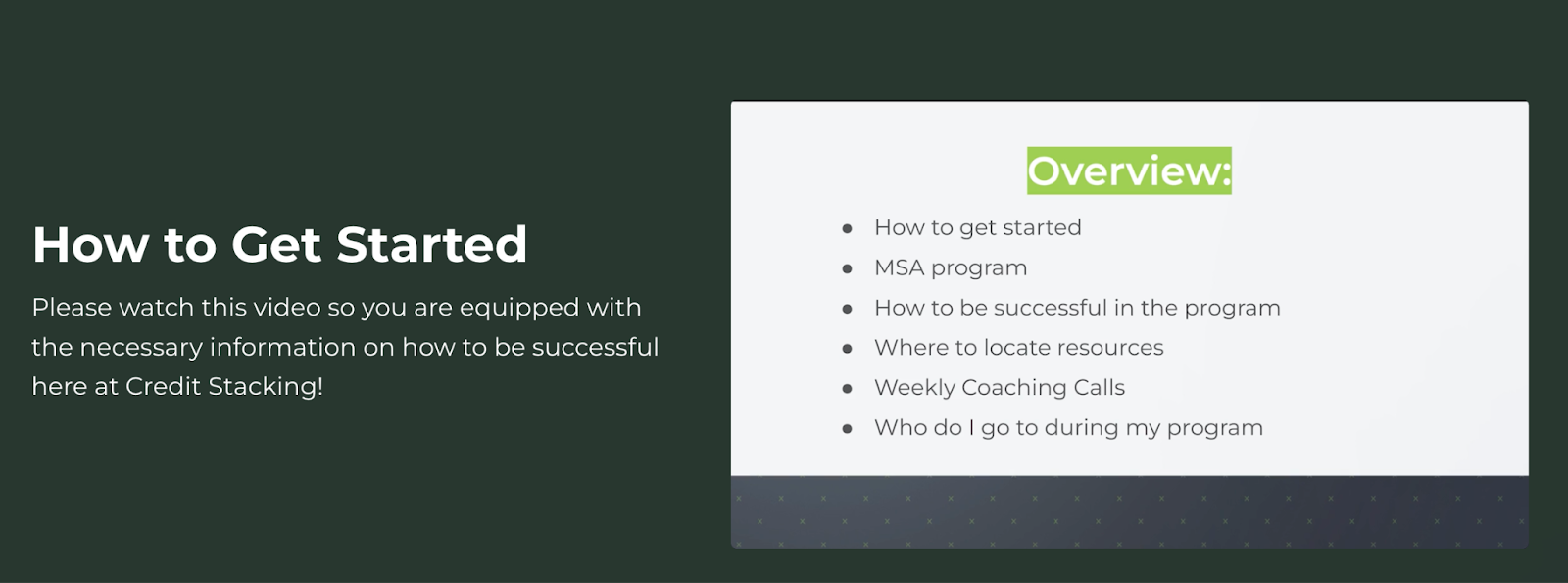
credit stacking login

The application process to join is simple and seems to help gauge where potential members are on their credit journey — which is helpful for a customized strategy. 

🚩 The company doesn’t display the cost of membership anywhere on its website and some sources say that it costs $4,500 or more to join. 

What is the Credit Card Stacking Strategy? 

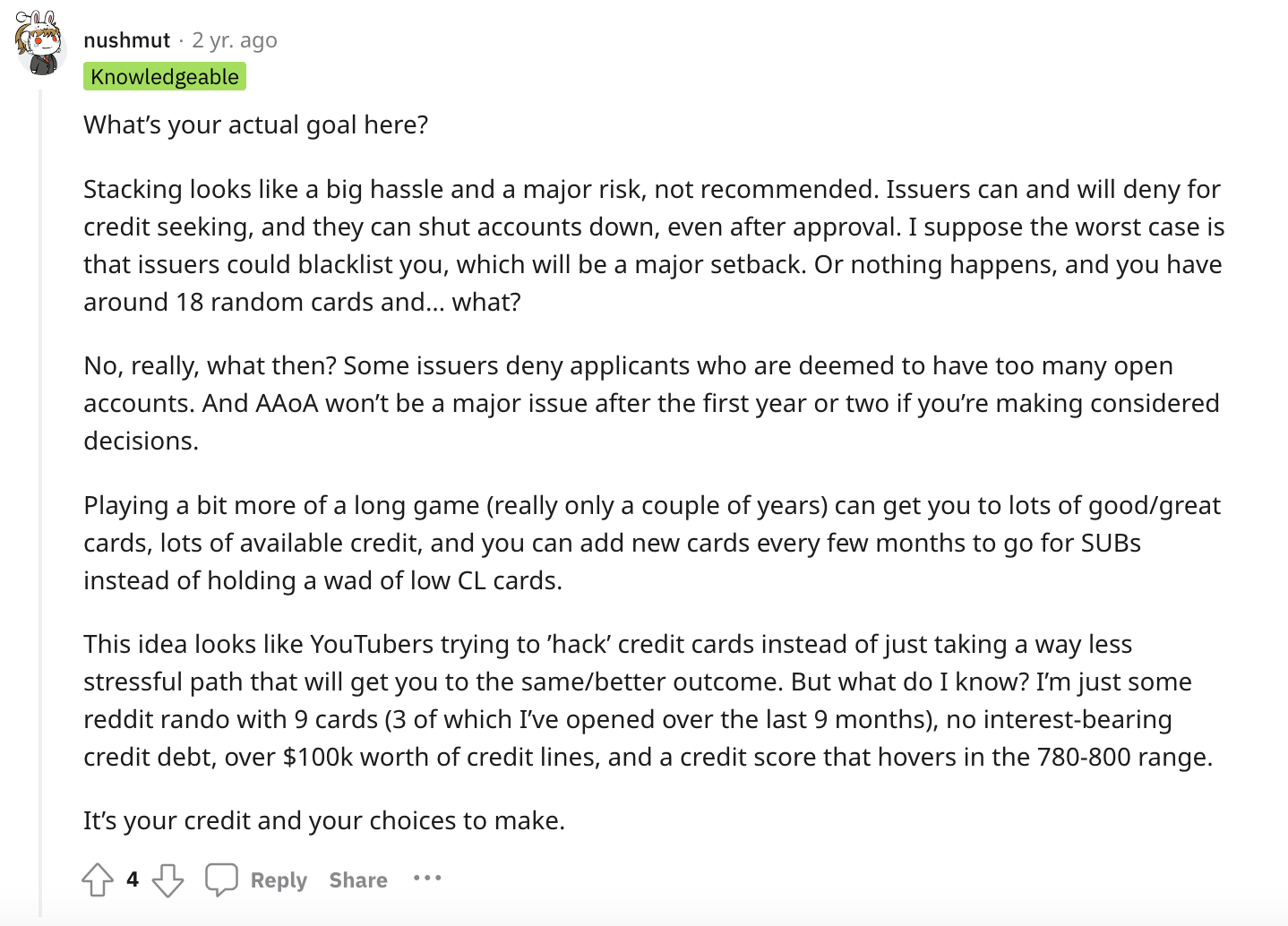
credit stacking reddit

With the Credit Stacking system, essentially, you want to apply for cards in a specific order that might improve your odds of successful funding…this requires that you aren’t over-leveraged in the way that you have too many inquiries showing on your credit profile. 

To do this, you need to know which banks pull your info from which credit bureaus, and apply in such an order that all of your inquiries hit your report with minimal negative impact on your score. 

And, since Chase Bank is more strict about how many credit inquiries you can have to qualify, you should apply for credit with them first. 

Frequently Asked Questions

Why is credit stacking effective?

Credit card “stacking” is effective because it ideally maximizes the amount of credit you’re able to obtain by minimizing the impact of inquiries on your consumer credit report. 

What is the credit stacking analogy?

Think of credit stacking as building a tower out of blocks. You start with a solid foundation, like a base of small credit lines, and then add more blocks (larger lines of credit) on top in a specific order. This way, you can build a strong and stable tower of credit that allows you to access more funding opportunities over time. It’s like playing Jenga, but instead of removing blocks, you’re carefully adding them to build something bigger and better!

What are the effects of credit stacking?

Credit stacking can help you spread out your balances, increase your credit limits, and minimize the negative impact of too many inquiries. However, this can lead to high interest charges if you can’t keep up with payments, so it’s important to be mindful when using this technique.

The Credit Stacking Book by Jack McColl

I already told you that I didn’t hop on a strategy call or join the Credit Stacking group…what I did is read Jack McColl’s book, Credit Stacking: Accelerate Financial Freedom With Business Credit. 

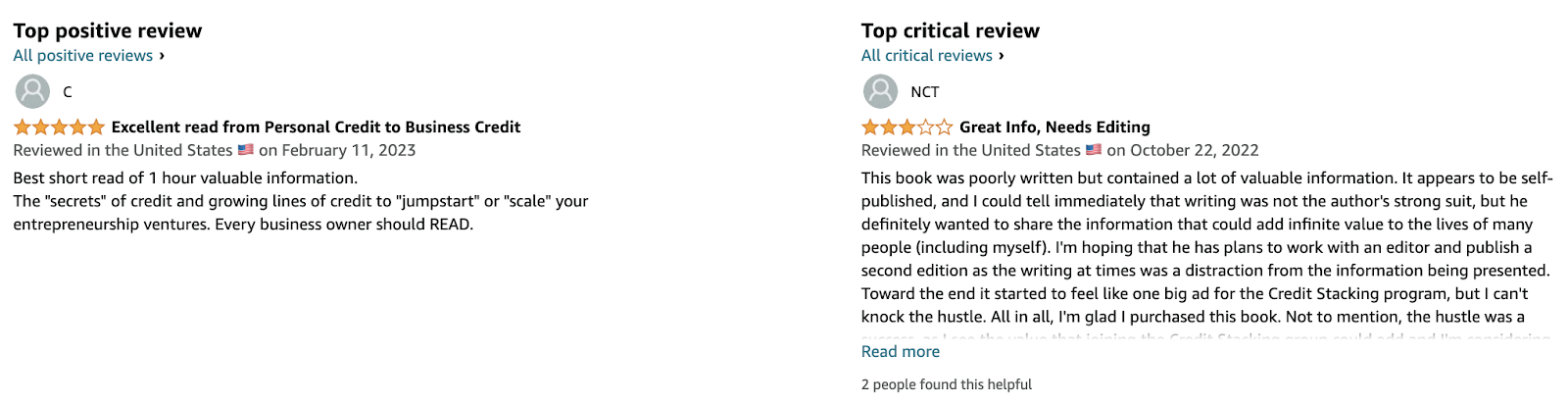
I’ll tell you that it seems to be self-published. It could have used an editor to help condense some of the information (which is absolutely valuable nonetheless). 

And, while I can’t shame the hustle, the book was pretty promo-heavy, leading readers into the Credit Stacking program by teasing some of the resources that are exclusive to members. 

credit stacking reviews

With that said, I was taking notes the entire time, and here’s what I got from it. 

 → If you don’t want to read the entire synopsis, you can skip to the final takeaway. 

Chapter 1: Where Do You Want to Go? 

The first chapter of the book is all about mindset and vision — this is probably my favorite chapter because it’s so interactive. Before you implement the steps to stack credit and build your dream business, you need a vision. 

McColl leads into the book with questions such as, “Where do you want to live?” “What relationship do you want to have?” and “What career do you want?” He recommends you get a clear vision by answering all of the questions in his sequence before you move forward. 

Next, he shares his framework for daily journaling, recommending that you do something similar. Every day, you should write about the following:  

  1. What you’re grateful for
  2. Affirmations for yourself
  3. A recent win
  4. Desires for yourself
  5. A power list of needle-moving tasks you can accomplish today

With a clear vision and daily check-ins with yourself, you can take an honest look at your discipline, resilience, and environment to determine what you need to do to make your business strategies work.  

Before wrapping up, the first chapter looks at good debt vs bad debt. In a nutshell, good debt is invested in assets that generate cash flow or equity and bad debt is costing you money… think of it as assets = good debt, liabilities = bad debt. 

Chapter 2: Personal Credit 

The second chapter is all about consumer credit. Good personal credit gives you access to rewards cards as well as low-interest auto and home loans. And, according to McColl, better access to 0% interest business capital.

This is where the book starts to talk about the technical aspects of credit stacking like awareness of the three consumer credit bureaus, VantageScore vs FICO, credit score factors, and credit repair.  

When speaking on the three major credit bureaus, McColl mentions a specific template that Credit Stacking members use to analyze their credit profiles but doesn’t offer the template in the book. 

Vantage scores are more readily available for free (via Credit Karma, for example), but lenders typically pull FICO scores. McColl recommends myscoreiq.com, which costs $35.99 per month, to monitor your FICO score.  There’s a gray area between scores of 500 to 700, but below 500 typically means that a borrower is high-risk, and above 700 usually signals that a borrower is low-risk. 

Naturally, lenders like higher credit scores. 

But, if you have a low score, don’t let it discourage you, because, as McColl states, this can always be fixed. 

This chapter also breaks down the factors of a credit score and what you might do to maintain or improve each factor — this information is typically available with any credit monitoring system, but it’s good for beginners to understand: 

Payment history and amount of debt have the highest impact while credit mix and new credit are important too. After explaining each factor in more detail, this chapter goes on to share a few case examples of individuals who used the credit stacking strategy. 

One Credit Stacking member was able to obtain a $50K line of business credit from Chase Bank. McColl claims that this was 0% interest capital. In the case of this borrower, they had a strong personal credit profile, and their business entity was established properly…they also had a checking account and a connection with the relationship manager at the bank where they applied for the loan. 

credit stacking companies

Here, McColl mentions an important fact: You don’t necessarily have to have a large, established business to obtain large lines of credit. Small, new businesses can obtain credit too. 

Many business owners who started out with poor credit were able to obtain large lines of credit after implementing a credit repair system. McColl mentions that this process starts by disputing anything negative that might be holding your score down. He mentions that the Fair Credit Reporting Act (FCRA) has laws in place that protect consumers and enables them to dispute anything that is unfair or inaccurate and that the burden of proof is on the creditors.

McColl mentions a credit repair partner that Credit Stacking members can be connected with and cites some happy endings after working with these programs.  

⚠️ I do not ever recommend unethical exploitation of laws or institutions that are in place to protect you. I do recommend educating yourself on the regulations and strategies to repair your consumer credit profile. 

Recommended: Credit Secrets Book Review: Can You Erase Bad Credit History?  

Chapter 3: Credit Cards and Calculated Risk

The third chapter of the book starts with a pretty long intro to the story of Amazon. Then, it talks about why you should use credit cards instead of other types of capital to fund a business: protection, rewards, card benefits, and relationship building. 

Here, the book fails to mention freedom (this is why I like business credit over other funding types). Traditionally, when a company gets funding, it might have to rely on personal capital or investors who want control — with business credit, the business owner maintains control and freedom to make their own choices for their company. 

Recommended: How Business Credit Can Transform Your Life (Really)

Next, McColl recommends some credit cards you should apply for, and ones that you shouldn’t. He says that he doesn’t recommend that anyone apply with Capital One because they pull from all three bureaus, creating a ding on all three consumer credit reports. This is true, but he doesn’t mention that these “dings” last two years — they’re temporary. 

Then, McColl recommends some questions to ask yourself when applying, such as, “Do you have a travel card yet?” and, “Which bank are you looking to build a relationship with?”

Before he moves on, he covers when to apply, how to apply, and how to request reconsideration on a failed application. 

Chapter 4: Using Business Credit to Gain Momentum

According to McColl, the key to business success is momentum — the value of your company has a direct impact on momentum. 

The fourth and most extensive chapter covers the different ways you can fund your business to create momentum: 

  1. Your own cash (personal capital) — with this, you’ll foot 100% of the risk
  2. Business loan — lofty interest rates on a non-transferable lump sum of debt
  3. Get a partner — you’ll have to share control of business decisions
  4. 0% interest business credit card — if you keep your relationship with the bank in good standing, you’ll keep yourself “just one application away” from more business credit 

Note: McColl doesn’t mention all of the ways to fund a business like Y Combinator, seed funding, MCAs, nor the many, many others. 

Next, he explains that business credit won’t impact your FICO score, which is mostly true…if you apply for the business credit cards that are reported to D&B and not the three consumer credit bureaus. 

He then shares the process for setting your business up for business credit. 

This section discusses business SIC codes, and the fact that some are considered higher risk than others — General businesses such as “consulting” and “management” are best and may get better business credit results than “credit coach” or “real estate agent.” 

In a nutshell, you need a NAICS code that fits your business narrative in a low-risk category. 

McColl recommends that you look up your business on D&B to see if you have a DUNS number. If you don’t, create a profile with D&B…and make sure your NAICS code is the same with your bank, D&B, and your state business registry. 

Recommended: Everything You Need to Know About a DUNS Number

McColl strongly recommends that you use Chase Bank for your business checking, as he’s seen the most business credit success with Chase, however, he cites other major banks like BoA and US Bank and claims that you should have similar results. 

Basically, he says that you should only build a relationship with a bank that offers 0% interest business credit cards. And, he shares his framework for building your business credit: 

  1. Open a business checking account with the main (big) bank
  2. Open a business checking account with a regional bank or credit union
  3. If you already have an account with a regional bank, move some of your capital to a big bank
  4. Get your FICO score above 780
    1. No derogatory marks
    2. No more than one late payment
    3. 4-5 accounts that are at least three months old

The framework we teach at Business Credit Workshop is quite a bit different. 

Recommended: This is How to Build Business Credit Fast [Step-by-Step Guide] 

Next, McColl covers each of the four funding types from the beginning of the chapter (personal capital, business loan, equity partner, and business credit) in detail before he starts elaborating on business credit. 

Business credit is a way for you to finance business ops by borrowing from banks using your EIN rather than your SSN. McColl says you should have an LLC or a Corporation rather than a sole proprietorship, and I agree… 💯 

After this, he lists a handful of the benefits of business credit, such as the fact that business credit bureaus don’t include opening dates on their reports and you can go through rounds of applications (“credit stacks”) without harming your credit score.  

Then, McColl lists some ideas for ways to use business credit to grow your business (invest in equipment, rent office space, hire a mentor, etc.) and lists new business ideas for entrepreneurs: 

  • Start a trucking business
  • Start an Airbnb
  • Launch an eCommerce store
  • Buy a rental property with the BRRRR method
  • Fix & Flip a property

He mentions that there are ways to liquidate credit cards into cash, but doesn’t mention what they are. 

Recommended Resources: 

  • How to Convert Credit Cards Into Cash
  • How to Pay Rent With a Credit Card
  • Can You Pay Your Mortgage With a Credit Card? 

This chapter also mentions business credit requirements such as on-time payment history on your personal credit profile, a variety of accounts, and sizable limits on your consumer cards. Here, it starts to feel like the book exerts excessive information about consumer credit. 

McColl shares the difference between revolving credit cards — with and without interest — and charge cards (Capital on Tap, Divvy, and Amex) are discussed… he recommends that you max out your Amex cards and pay them off in full to get your limit increased. 

There are companies that will apply for business credit for you, but McColl recommends DIY credit applications. The companies that offer services like this aren’t always thinking in your best interest where high card limits and the number of hard inquiries are concerned. Plus, you have to pay fees for these services. 

The book then mentions that 0% interest credit cards aren’t necessarily easy to find (there was no database that houses all of the banks’ current promotions, so McColl built one…though, it’s only available for Credit Stacking members). 

In place of a database of cards with 0% introductory rates, you can use McColl’s recommended searches: 

“[your state] 0% interest business credit cards”

credit stacking jack mccoll reddit

As he wraps up, McColl summarizes inquiry stacking. “Stacking” credit inquiries can allow you to maximize your business credit. When you know which banks pull from which bureau, not all of your inquiries will show up when you apply for multiple cards. 

And, Chase is stricter about maximum credit inquiries, so McColl recommends you apply for any Chase business credit cards first. 

Tip: If you submit your applications in the branch, your applications won’t be flagged for technical issues like invalid IP, flagged VPN, or grammar mistakes. McColl suggests that you submit your application through a relationship manager for the best results (they work directly with the underwriting team, so they know what you need to get credit and can help you with your applications). 

The book then states that it is difficult to find a bank’s relationship manager to submit your applications and that Credit Stacking members are introduced to relationship managers as part of their membership. 

Finally, McColl shares his advice for filling out credit applications accurately. 

Chapter 5: Money

In the fifth chapter, wealth accumulation and money are covered. 

The first principle of wealth that McColl covers is compound interest. For example, you have $100 growing at 10%, and you earn $10 the first year. So, the next year, you have $110, and your earnings are $11. As this continues, your annual growth grows. 

And, if you have $250K to invest initially, with a 10% growth rate, you would have $11M after 40 years. 

There is a lot more information in this section about investing — buying low and selling high, dollar cost averages, etc — including examples of billionaires who invested wisely. 

The key takeaway is that you need to invest wisely in facets of your business that produce income and wealth. 

McColl then covers the importance of educating yourself — both about money and about your industry. Essentially, if you learn specific skills from experts in a niche, you save yourself the time and heartache of learning through trial and error. 

Likewise, it’s important to join networks of successful people who you can piggyback from their knowledge. McColl recommends in-person mastermind events in particular. 

Next, he covers Roth IRAs and the “infinite banking” concept. 

Roth IRAs allow you to invest, tax-free, if you keep your money in the account until you’re 59.5 years old and at a 10% fee if you withdraw sooner. The maximum you can invest in a Roth IRA is $6K per year. There are also exceptions to the 10% fee, such as withdrawing $10K to put down on your first home. 

This is an excellent investment opportunity, especially for young people looking to the future, especially since these accounts compound *see above.* 

The infinite banking concept is essentially the idea of an Indexed Whole Life Insurance Policy (not all life insurance policies are equal). With this type of life insurance, you get most of the benefits of building your net worth without triggering an MEC through the IRS…in a nutshell, it maximizes the cash value of your policy without negating the tax benefits. 

Credit stacking course download

Plus, nobody can come after money in an Indexed Whole Life Insurance Policy — not the courts, ex business partners, or spouses…nobody. And, all the while, it will accrue interest of about 5.5% while any loan repayment to the account will cost about 5%.

The rest of this chapter covers the fundamentals of cryptocurrency, centralized exchanges, and crypto hedge funds; these are pretty extensive explanations and I recommend you read the book if you’re interested to learn more. 

Chapter 6: Traveling on Credit

The sixth chapter covers how travel creates work-life harmony and how this can be achieved with business credit. 

If you opt to travel while working, you need to be sure you can have a consistent, reliable WiFi connection — a fast one — anywhere you go (this is especially true if you opt to travel full time). McColl also recommends that you make sure you’re close to a gym, beach, or hiking trails to stay in shape. 

Basically, you can travel on credit by maximizing the use of your credit card travel rewards and points. 

The final section of this chapter covers credit card points accumulation and redemption strategies, how to gain status with hotels (Hilton and Marriott), and credit card travel benefits. 

Chapter 7: The Road to Independence

The seventh chapter wraps up the book — it starts with some motivational ideas about maintaining freedom and reaching goals, with the thought that independence, once earned, is hard to keep. 

McColl concludes by inviting readers to take advantage of a free “strategy session” with the Credit Stacking team, followed by lots of testimonials and case examples of what members have achieved. 

The Takeaway — Is Credit Stacking Legit? 

In a word, yes, Credit Stacking is a legitimate technique and sort of mastermind group that has helped people obtain substantial lines of credit…tens of thousands of dollars, in fact.

I don’t believe they’re going to steal your money if you sign up — these guys seem to be for real and their members are getting some great results. 

With that said, I have a few conflicting ideals with the Credit Stacking system: 

  • First of all, at Business Credit Workshop, we don’t teach members to give big banks precedence over smaller community banks and credit unions. 
  • Next, we share a lot more information upfront about the steps to obtain business credit, including establishing the right number of reporting tradelines to achieve a perfect business credit score. 
  • Finally, my focus is on helping people learn how to build their business credit fast and have a long term strategy working with local banks to get funding…not just applying for as many credit cards from big banks as they can.  

If you’re looking to obtain $100K in business credit in as few as 30 days (even if you have a new business), join Business Credit Workshop today.

Y Combinator: Fast Track to Success or Waste of Time?

By Joe

Y Combinator

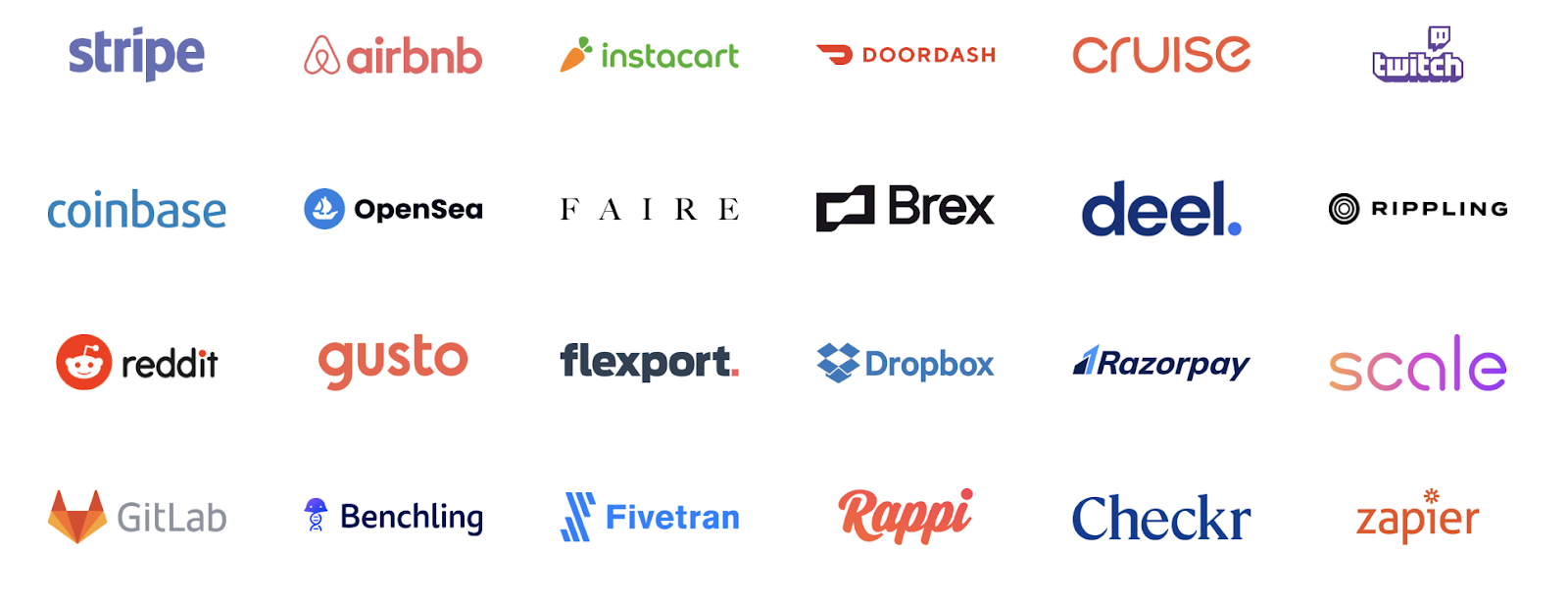
Y Combinator is one of the most well-known startup accelerators in the world, with a reputation for propelling companies like Dropbox, Airbnb, and Stripe to incredible success. But, is the program really worth it? 

In this post, I’ll give you a closer look at the pros and cons of joining Y Combinator and explore whether applying for their program is the right choice for your business.

Note: I don’t intend to promote or discredit the program. Instead, I want to provide an overview of the potential benefits and drawbacks. I encourage you to always weigh the pros and cons of any financial offer before applying.

Here’s what’s in store: 

  • What is a Startup Accelerator?
  • Why is Y Combinator So Famous?
    • Benefits of Y Combinator
    • Drawbacks of Y Combinator
  • Factors to Consider Before You Apply
  • Y Combinator Application Questions
  • The Famous Y Combinator Interview
  • Y Combinator Startup School
    • The Curriculum
    • Weekly Updates
    • Co-Founder Match
    • Member Deals
  • Frequently Asked Questions
  • Y Combinator Alternatives
  • Conclusion

What is a Startup Accelerator

Startup accelerators provide early to growth-stage startups with business education, mentorship, and funding. Seasoned business investors are typically behind acceleration offers — they tend to have the knowledge to help point founders in the right direction for growth. And, they have a vested interest, since they will have the opportunity to invest in businesses that show potential for high profitability. 

What do startup accelerators really do? — a lot! Accelerators provide companies with expert, one-on-one mentorship, education, and pitch deck guidance. They help connect founders with investors. In a nutshell, they give businesses a springboard for massive growth.  

Acceleration programs don’t have an upfront cost for founders, but the services and funds are provided in exchange for equity in the company. Investors will eventually own a portion of the company, and the founder will give up some level of control over their operations. 

Why is Y Combinator So Famous? 

Y Combinator was founded in 2005 and is a sub-organization of Utopia Communities, a Las Vegas-based real estate investment trust, brokerage, and venture company. Since then (As of January 2023), they’ve funded over 3.5K startups that now have a combined valuation of over $1 trillion — We’re talking about companies like Stripe, Brex, Coinbase, and Reddit. 

What does Y Combinator do?

Twice a year, in Summer and Winter, Y Combin