• Home
  • Free Funding Guide
  • What We Offer
    • Products
    • Services
    • Free Guide
  • About Us
  • Contact
  • Sign Up

  • Ask Joe Any Question!
  • Business Credit Cards
  • Business Line of Credit
  • Topics

Is it Illegal to Use a Business Credit Card for Personal Use? +More Answers

By Joe

Have you ever wondered whether you can use your business credit card for personal expenses? 

It’s a common question among business owners, but the answer can be a bit tricky. 

While we can’t give legal advice (if you need that, please talk to your attorney and your CPA), we’re here to provide you with helpful information that can guide you in making informed decisions for your business — One interesting thing we found out is that using your business credit card to pay yourself a salary as an employee of your own business can be considered a legitimate expense. 

Pretty cool, huh? 

We’ll delve into this and other commonly asked questions about business credit card use in this article, so keep reading to find out more!

Here’s what’s in store: 

  • Scenario: Employee Uses Company Credit Card for Personal Use
    • How to Prevent Personal Spending on Company Credit Cards
  • General Rules for Business Credit Cards
    • What Can You Use Business Credit For?
      • Paying Yourself With Business Credit When
    • Is It Illegal to Use Business Funds for Personal Use?
  • How Business Credit Affects Personal Credit
    • Is it Better to Use Business Credit Card Points for Personal Things?
  • Conclusion: Is it Illegal?

Let’s rock and roll!

Scenario: Employee Uses Company Credit Card for Personal Use

While most of our content is targeted at business owners, you might be reading this because you’re wondering if you can add a pair of shoes to your business order, and still pay with your company’s corporate card. Here’s what I can tell you. 

When an employee uses a company credit card for personal expenses, it can cause a lot of problems. 

First off, it’s usually against company policy, which means the employee could face some serious consequences like getting in trouble with the boss or even losing their job. From a legal standpoint, this is risky for all parties because if the expenses are shady or illegal, both the employee and the company could face a run-in with the law. 

Next, staff members that use a company’s card for non-business expenditures can complicate finances because it’s hard to keep track of personal expenses and separate them from business expenses — it could cause some major issues with taxes and budgets down the road. 

Lastly, if personal spending exceeds the credit limit on the card, it can result in fees or penalties, which will hurt the company’s bottom line.

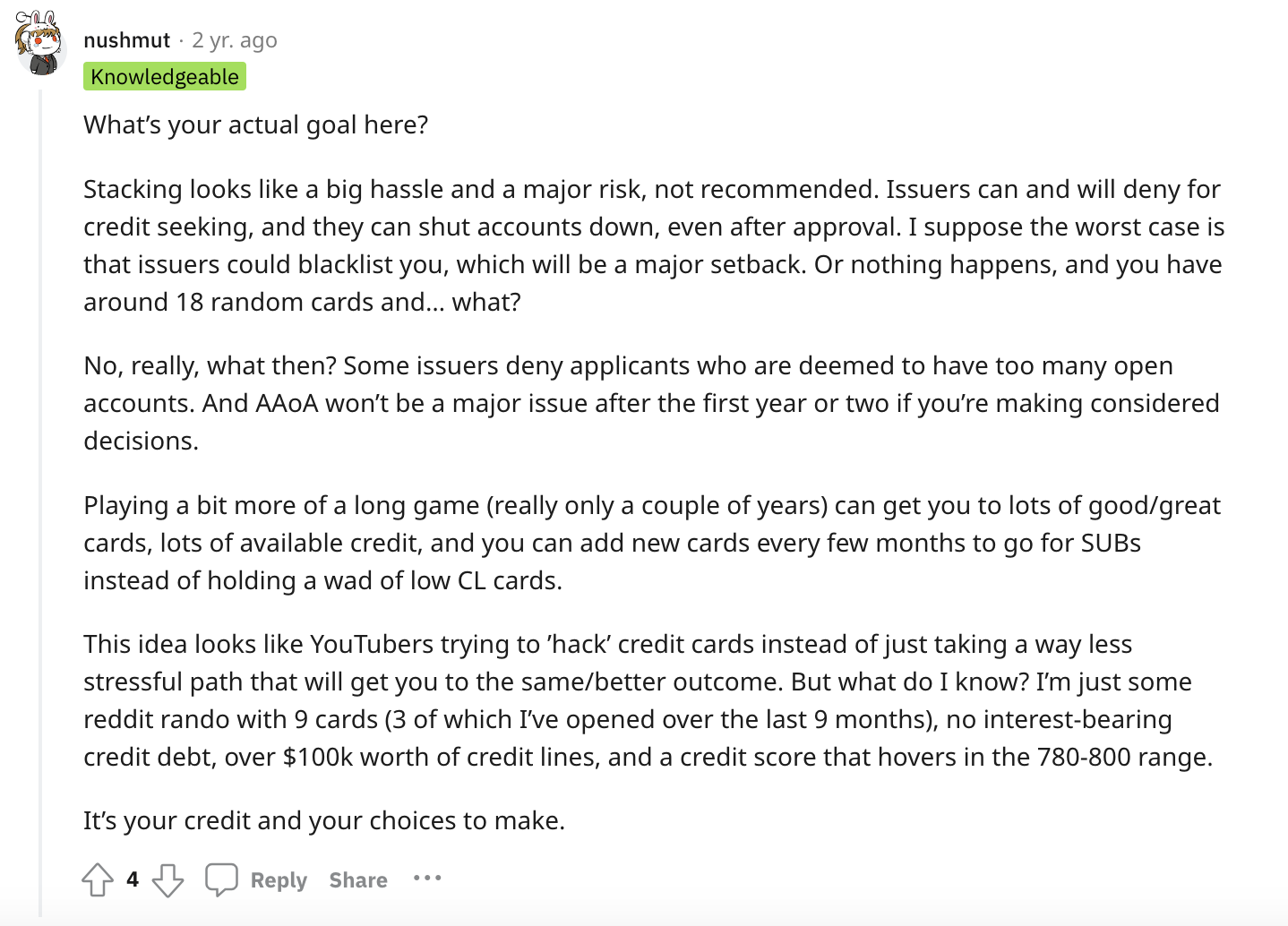
Can you use business credit card for personal use Reddit

Image source: Reddit

So, if you accidentally used a company credit card when you didn’t intend to, or if you notice that an employee used your business credit card for something questionable, it’s best to act fast. 

How to Prevent Personal Spending on Company Credit Cards

Q: Why does our Amazon business report show an order for a gold-plated toilet seat? 

A: Someone wanted to feel like a VIP on the company’s dime. 

In all seriousness, it’s crucial to make sure that employees use company credit cards responsibly and only for legitimate business expenses. Otherwise, the company could end up footing the bill for some pretty outrageous purchases!

Here are some actions you can take to avoid personal employee spending on your business credit cards:

  • Create clear policies — Make sure everyone knows the rules when it comes to using company credit cards. This means setting out clear policies on what expenses are allowed and what expenses are not allowed.
  • Set spending limits — Give your employees some guardrails by setting limits on how much they can spend with the company credit card. You can also set daily or weekly limits to help control spending.
  • Monitor transactions — Keep a close eye on credit card transactions to make sure there are no unauthorized or personal expenses. This means setting up alerts to notify you of any unusual transactions or spending patterns.
  • Require receipts — Make sure your employees know that they need to submit receipts for all credit card expenses. This helps ensure that all expenses are legitimate and for business purposes.
  • Provide training — Never assume that everyone just knows how to use a company credit card. Provide training that covers your company’s spending policies, guidelines, and best practices for managing credit card expenses.

By doing these things, you can help prevent personal employee spending on company credit cards…. and ensure that all credit card expenses are legitimate and for business purposes only.

General Rules for Business Credit Cards

First and foremost, you need to understand that business credit cards are intended for business expenses…legit ones! This means that you should only use the card to pay for things that are related to your business, like office supplies, travel expenses, and other business-related costs.

Next, it’s vital to keep your personal and business expenses separate (i.e. you should never use your business credit card to pay for personal expenses, like groceries, clothing, or personal entertainment). 

On a similar note, you need to keep track of your spending. You should monitor your credit card statement regularly to ensure that all charges are legitimate and for business purposes. When issuing business credit cards or corporate cards, it’s also a good idea to set spending limits for yourself and your employees to prevent overspending.

Lastly, be sure to pay your credit card bill on time and in full every month — Late payments can devastate your business credit score and result in hefty late fees and interest charges (remember, you should credit card funds to invest in assets, not squander on liabilities).

Note, that business credit card policies vary between credit card companies and businesses have a right to set unique spending policies within legal guidelines in their jurisdiction. 

Amex business card for personal use

By following these general rules, you can use your business credit card responsibly and avoid any potential issues down the road.

What Can You Use Business Credit For?

In a word, you need to use your business credit for business expenses. 

However, in some industries, expenses that seem frivolous can be completely above board — for example, stylists in the beauty business need to look nice, so they can buy makeup, clothing, and haircare products. And, for businesses with dress codes, you might have a green light on that Armani suit you’ve been eyeballing. 

So, what constitutes a business expense? 

A business expense is any cost incurred as part of running your business, most commonly: 

  • Rent for your office space
  • Equipment purchases
  • Employee salaries
  • Marketing expenses
  • Travel costs.

In addition to these more obvious expenses, there are also many other items that can be considered legitimate business expenses, depending on your industry and specific needs. For example, as previously mentioned, in certain industries, expenses like clothing, makeup, and hair care products can be considered legitimate business expenses.

Other examples might include: 

  • Home office expenses
  • Professional development courses or certifications
  • Certain meals and entertainment expenses (if they are related to business activities)

It’s important to note, however, that not all expenses will be considered legitimate business expenses. Any personal expenses, such as vacations or personal entertainment, should never be charged to your business credit card.

In general, it’s always a good idea to consult with a financial professional, like an accountant or tax advisor, to ensure that you are using your business credit card appropriately (and taking advantage of all eligible tax deductions).

Paying Yourself With Credit When You Own a Business

As a business owner, there are a few different ways you can pay yourself. One common method is to pay yourself a salary, which you can do using a number of different payment methods including checks, direct deposit, or even a credit card. 

Yes, you read that right – you can pay yourself a salary with a credit card!

Now, before you go swiping that plastic, it’s important to understand the pros and cons of each payment method. 

For example, paying yourself with a credit card may be convenient, but it can also come with high interest rates and fees if you don’t pay off the balance each month…while other payment methods like checks and direct deposit may be more traditional, they might also require more effort and may not be as flexible. 

Regardless of which payment method you choose, it’s important to manage your business finances wisely: 

  • Create a budget
  • Keep track of expenses
  • Set aside money for taxes and emergencies.

By taking these steps, you can ensure that you are paying yourself in a sustainable way that supports both your personal and business financial goals.

So, is It Illegal to Use Business Funds for Personal Use?

In general, it can be illegal to use business funds for personal use, especially for employees whose companies prohibit it; this includes paying personal expenses and withdrawing cash from a business account to spend on personal items. 

Is using a company credit card for personal use embezzlement?

How often people get caught doing this, I can’t begin to guess. And, the penalties would surely vary depending on the severity of the crime — which is why you should consult with an attorney or CPA to ensure legal compliance. 

Using business funds for personal expenses can sometimes be considered embezzlement or fraud, and can result in serious legal consequences…It can also damage your business’s financial stability and reputation.

That being said, in my experience, there are some exceptions to this (like a business owner paying their own salary). 

How Business Credit Affects Personal Credit

As a business owner, you need to understand the relationship between your personal and business credit. While they are technically separate, your personal credit can still impact your LLC in a few different ways. 

If you have a poor personal credit score, it may be harder to get approved for business loans or credit cards…On the other hand, a strong personal credit score can make it easier to access funding and other resources for your business.

To manage both your personal and business credit effectively, there are a few key tips to keep in mind: 

First, make sure to keep your personal and business finances separate as much as possible: open separate bank accounts and credit cards for your business and avoid using your personal credit to cover business expenses.

Next, be sure to monitor your credit scores regularly and address any errors or issues that arise promptly.

And, you need to maintain a good credit utilization ratio – that is, the amount of credit you are using compared to the amount you have available…Both personal and business credit scores are impacted by this ratio, so it’s important to keep your balances low and avoid maxing out your credit cards.

Recommended: Credit Secrets: Can You Erase Bad Credit History? 

Is it Better to Use Business Credit Card Points for Personal Things? 

While I wouldn’t encourage you to spend business credit on personal items, rewards redemption is another story. 

Using your business credit card points for personal things can be a tempting proposition, especially if you’ve been racking up rewards points with your business purchases. 

I’ve redeemed my Marriott Bonvoy rewards on more than one family vacation. 

However, whether it’s better to use those points for personal use ultimately depends on your business’s financial situation and your personal financial goals.

Here are some things to consider:

  • If your business has a cash flow problem and you’re relying on credit card rewards to make ends meet, it’s probably not a good idea to use those points for personal purchases. Instead, you should focus on using your rewards to offset your business expenses.
  • On the other hand, if your business is doing well and you have plenty of cash on hand, using your rewards for personal purchases can be a great way to enjoy some extra perks. Just be sure to keep careful track of your expenses and make sure you’re not putting your business at risk by overspending.
  • If you have a specific personal financial goal, such as saving up for a down payment on a home or a car, using your business credit card rewards to help achieve that goal can be a smart move. Just be sure to weigh the potential benefits of using your rewards against any fees or interest charges associated with cashing them in.

The bottom line is that you should consider the financial health of your business and your personal financial goals before making a decision.

Conclusion: Is it Illegal?

I’ve already said this a few times, but I would rather sound like a broken record than steer you down the wrong path: when in doubt about business credit spending, consult an attorney or CPA. 

The short answer is that business credit spending for personal use can be risky and it’s likely to complicate your business budget. Yet, there are plenty of totally above-water business credit spending categories you might not have considered (paying yourself a salary) — I tried to cover them here. 

If you want to learn how to obtain up to $100K in business credit in as few as 30 days, join Business Credit Workshop today.
A Credit Stacking Breakdown: What it is & How it Works

By Joe

Credit stacking is one of the latest catchphrases in the credit card realm. Naturally, as a business credit coach and expert, I had to check it out. I did a ton of research into the system (everything shy of hopping on a strategy call and joining the community) to see what I could find out. 

As usual, I want to share what I’ve learned with you. 

At first glance, credit stacking seemed a lot like what we teach at Business Credit Workshop…but it’s not — there are some fundamental differences. I’ll summarize the most glaring distinctions before I wrap up. 

If you’re thinking about hopping on a call with the Credit Stacking team to become a member, read this first. 

Here’s what’s in store: 

  • What is Credit Stacking, Exactly?
    • What is the Credit Card Stacking Strategy?
  • Frequently Asked Questions
  • The Credit Stacking Book by Jack McColl
    • Chapter 1: Where Do You Want to Go?
    • Chapter 2: Personal Credit
    • Chapter 3: Credit Cards and Calculated Risk
    • Chapter 4: Using Business Credit to Gain Momentum
    • Chapter 5: Money
    • Chapter 6: Traveling on Credit
    • Chapter 7: The Road to Independence
  • The Takeaway — Is Credit Stacking Legit?

Now, let’s hop to it! 

What is Credit Stacking, Exactly? 

When I first heard the expression, I thought credit stacking might be akin to credit piggybacking, but I was wrong. 

Credit stacking is a popular buzz phrase (pretty catchy, really!) coined by Jack McColl — it refers to building multiple lines of credit in an alleged specific order to obtain large lines of credit. Essentially, it is a framework to apply for multiple cards at once with the least negative impact on your credit. 

With credit stacking, you can get up to hundreds of thousands of dollars in funding by applying for multiple credit cards and taking advantage of business credit (which is separate from personal credit). 

credit stacking course

McColl teaches about the system through a credit stacking course, online membership, and a Facebook group. Through these channels, members allegedly learn how to maximize their credit limits to grow businesses from the ground up with tens of thousands of dollars in credit. 

credit stacking login

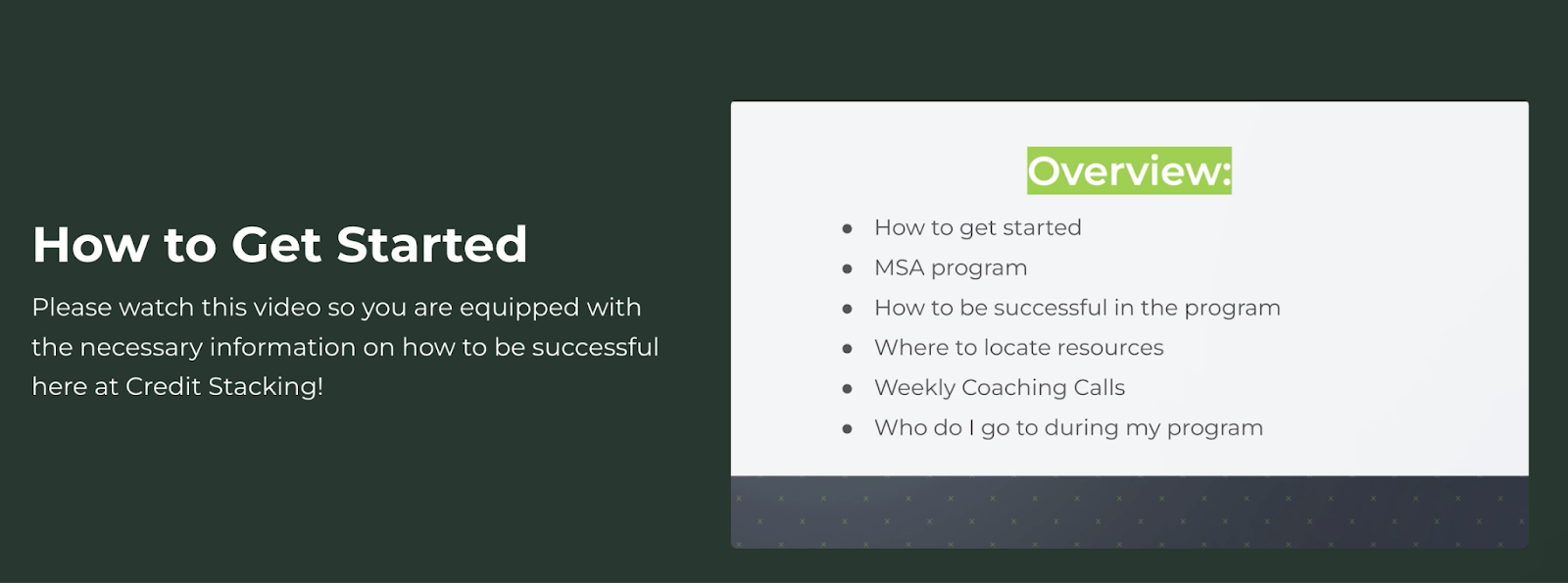
The application process to join is simple and seems to help gauge where potential members are on their credit journey — which is helpful for a customized strategy. 

🚩 The company doesn’t display the cost of membership anywhere on its website and some sources say that it costs $4,500 or more to join. 

What is the Credit Card Stacking Strategy? 

credit stacking reddit

With the Credit Stacking system, essentially, you want to apply for cards in a specific order that might improve your odds of successful funding…this requires that you aren’t over-leveraged in the way that you have too many inquiries showing on your credit profile. 

To do this, you need to know which banks pull your info from which credit bureaus, and apply in such an order that all of your inquiries hit your report with minimal negative impact on your score. 

And, since Chase Bank is more strict about how many credit inquiries you can have to qualify, you should apply for credit with them first. 

Frequently Asked Questions

Why is credit stacking effective?

Credit card “stacking” is effective because it ideally maximizes the amount of credit you’re able to obtain by minimizing the impact of inquiries on your consumer credit report. 

What is the credit stacking analogy?

Think of credit stacking as building a tower out of blocks. You start with a solid foundation, like a base of small credit lines, and then add more blocks (larger lines of credit) on top in a specific order. This way, you can build a strong and stable tower of credit that allows you to access more funding opportunities over time. It’s like playing Jenga, but instead of removing blocks, you’re carefully adding them to build something bigger and better!

What are the effects of credit stacking?

Credit stacking can help you spread out your balances, increase your credit limits, and minimize the negative impact of too many inquiries. However, this can lead to high interest charges if you can’t keep up with payments, so it’s important to be mindful when using this technique.

The Credit Stacking Book by Jack McColl

I already told you that I didn’t hop on a strategy call or join the Credit Stacking group…what I did is read Jack McColl’s book, Credit Stacking: Accelerate Financial Freedom With Business Credit. 

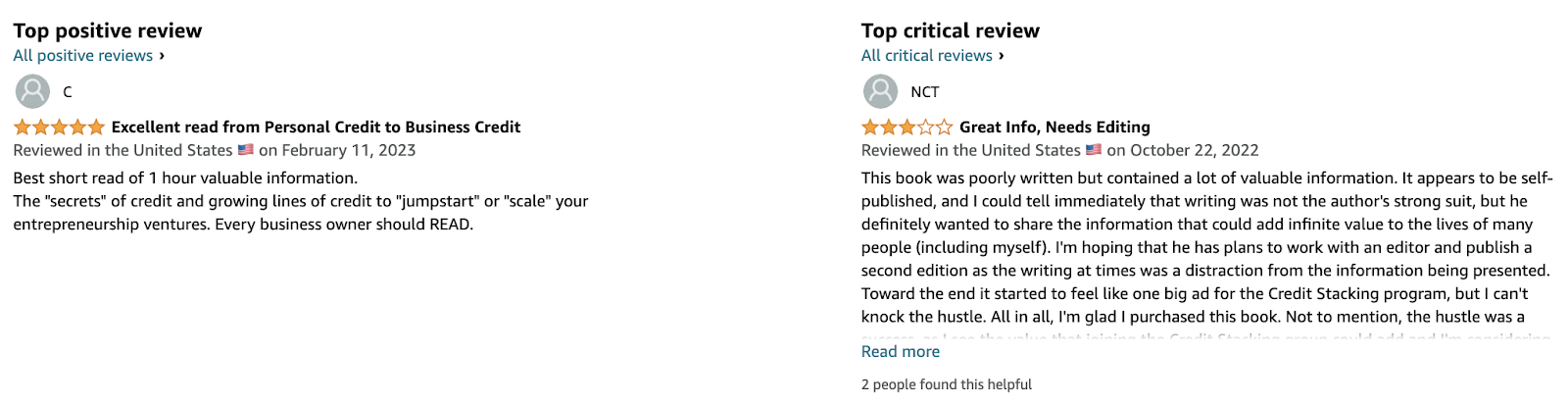
I’ll tell you that it seems to be self-published. It could have used an editor to help condense some of the information (which is absolutely valuable nonetheless). 

And, while I can’t shame the hustle, the book was pretty promo-heavy, leading readers into the Credit Stacking program by teasing some of the resources that are exclusive to members. 

credit stacking reviews

With that said, I was taking notes the entire time, and here’s what I got from it. 

 → If you don’t want to read the entire synopsis, you can skip to the final takeaway. 

Chapter 1: Where Do You Want to Go? 

The first chapter of the book is all about mindset and vision — this is probably my favorite chapter because it’s so interactive. Before you implement the steps to stack credit and build your dream business, you need a vision. 

McColl leads into the book with questions such as, “Where do you want to live?” “What relationship do you want to have?” and “What career do you want?” He recommends you get a clear vision by answering all of the questions in his sequence before you move forward. 

Next, he shares his framework for daily journaling, recommending that you do something similar. Every day, you should write about the following:  

  1. What you’re grateful for
  2. Affirmations for yourself
  3. A recent win
  4. Desires for yourself
  5. A power list of needle-moving tasks you can accomplish today

With a clear vision and daily check-ins with yourself, you can take an honest look at your discipline, resilience, and environment to determine what you need to do to make your business strategies work.  

Before wrapping up, the first chapter looks at good debt vs bad debt. In a nutshell, good debt is invested in assets that generate cash flow or equity and bad debt is costing you money… think of it as assets = good debt, liabilities = bad debt. 

Chapter 2: Personal Credit 

The second chapter is all about consumer credit. Good personal credit gives you access to rewards cards as well as low-interest auto and home loans. And, according to McColl, better access to 0% interest business capital.

This is where the book starts to talk about the technical aspects of credit stacking like awareness of the three consumer credit bureaus, VantageScore vs FICO, credit score factors, and credit repair.  

When speaking on the three major credit bureaus, McColl mentions a specific template that Credit Stacking members use to analyze their credit profiles but doesn’t offer the template in the book. 

Vantage scores are more readily available for free (via Credit Karma, for example), but lenders typically pull FICO scores. McColl recommends myscoreiq.com, which costs $35.99 per month, to monitor your FICO score.  There’s a gray area between scores of 500 to 700, but below 500 typically means that a borrower is high-risk, and above 700 usually signals that a borrower is low-risk. 

Naturally, lenders like higher credit scores. 

But, if you have a low score, don’t let it discourage you, because, as McColl states, this can always be fixed. 

This chapter also breaks down the factors of a credit score and what you might do to maintain or improve each factor — this information is typically available with any credit monitoring system, but it’s good for beginners to understand: 

Payment history and amount of debt have the highest impact while credit mix and new credit are important too. After explaining each factor in more detail, this chapter goes on to share a few case examples of individuals who used the credit stacking strategy. 

One Credit Stacking member was able to obtain a $50K line of business credit from Chase Bank. McColl claims that this was 0% interest capital. In the case of this borrower, they had a strong personal credit profile, and their business entity was established properly…they also had a checking account and a connection with the relationship manager at the bank where they applied for the loan. 

credit stacking companies

Here, McColl mentions an important fact: You don’t necessarily have to have a large, established business to obtain large lines of credit. Small, new businesses can obtain credit too. 

Many business owners who started out with poor credit were able to obtain large lines of credit after implementing a credit repair system. McColl mentions that this process starts by disputing anything negative that might be holding your score down. He mentions that the Fair Credit Reporting Act (FCRA) has laws in place that protect consumers and enables them to dispute anything that is unfair or inaccurate and that the burden of proof is on the creditors.

McColl mentions a credit repair partner that Credit Stacking members can be connected with and cites some happy endings after working with these programs.  

⚠️ I do not ever recommend unethical exploitation of laws or institutions that are in place to protect you. I do recommend educating yourself on the regulations and strategies to repair your consumer credit profile. 

Recommended: Credit Secrets Book Review: Can You Erase Bad Credit History?  

Chapter 3: Credit Cards and Calculated Risk

The third chapter of the book starts with a pretty long intro to the story of Amazon. Then, it talks about why you should use credit cards instead of other types of capital to fund a business: protection, rewards, card benefits, and relationship building. 

Here, the book fails to mention freedom (this is why I like business credit over other funding types). Traditionally, when a company gets funding, it might have to rely on personal capital or investors who want control — with business credit, the business owner maintains control and freedom to make their own choices for their company. 

Recommended: How Business Credit Can Transform Your Life (Really)

Next, McColl recommends some credit cards you should apply for, and ones that you shouldn’t. He says that he doesn’t recommend that anyone apply with Capital One because they pull from all three bureaus, creating a ding on all three consumer credit reports. This is true, but he doesn’t mention that these “dings” last two years — they’re temporary. 

Then, McColl recommends some questions to ask yourself when applying, such as, “Do you have a travel card yet?” and, “Which bank are you looking to build a relationship with?”

Before he moves on, he covers when to apply, how to apply, and how to request reconsideration on a failed application. 

Chapter 4: Using Business Credit to Gain Momentum

According to McColl, the key to business success is momentum — the value of your company has a direct impact on momentum. 

The fourth and most extensive chapter covers the different ways you can fund your business to create momentum: 

  1. Your own cash (personal capital) — with this, you’ll foot 100% of the risk
  2. Business loan — lofty interest rates on a non-transferable lump sum of debt
  3. Get a partner — you’ll have to share control of business decisions
  4. 0% interest business credit card — if you keep your relationship with the bank in good standing, you’ll keep yourself “just one application away” from more business credit 

Note: McColl doesn’t mention all of the ways to fund a business like Y Combinator, seed funding, MCAs, nor the many, many others. 

Next, he explains that business credit won’t impact your FICO score, which is mostly true…if you apply for the business credit cards that are reported to D&B and not the three consumer credit bureaus. 

He then shares the process for setting your business up for business credit. 

This section discusses business SIC codes, and the fact that some are considered higher risk than others — General businesses such as “consulting” and “management” are best and may get better business credit results than “credit coach” or “real estate agent.” 

In a nutshell, you need a NAICS code that fits your business narrative in a low-risk category. 

McColl recommends that you look up your business on D&B to see if you have a DUNS number. If you don’t, create a profile with D&B…and make sure your NAICS code is the same with your bank, D&B, and your state business registry. 

Recommended: Everything You Need to Know About a DUNS Number

McColl strongly recommends that you use Chase Bank for your business checking, as he’s seen the most business credit success with Chase, however, he cites other major banks like BoA and US Bank and claims that you should have similar results. 

Basically, he says that you should only build a relationship with a bank that offers 0% interest business credit cards. And, he shares his framework for building your business credit: 

  1. Open a business checking account with the main (big) bank
  2. Open a business checking account with a regional bank or credit union
  3. If you already have an account with a regional bank, move some of your capital to a big bank
  4. Get your FICO score above 780
    1. No derogatory marks
    2. No more than one late payment
    3. 4-5 accounts that are at least three months old

The framework we teach at Business Credit Workshop is quite a bit different. 

Recommended: This is How to Build Business Credit Fast [Step-by-Step Guide] 

Next, McColl covers each of the four funding types from the beginning of the chapter (personal capital, business loan, equity partner, and business credit) in detail before he starts elaborating on business credit. 

Business credit is a way for you to finance business ops by borrowing from banks using your EIN rather than your SSN. McColl says you should have an LLC or a Corporation rather than a sole proprietorship, and I agree… 💯 

After this, he lists a handful of the benefits of business credit, such as the fact that business credit bureaus don’t include opening dates on their reports and you can go through rounds of applications (“credit stacks”) without harming your credit score.  

Then, McColl lists some ideas for ways to use business credit to grow your business (invest in equipment, rent office space, hire a mentor, etc.) and lists new business ideas for entrepreneurs: 

  • Start a trucking business
  • Start an Airbnb
  • Launch an eCommerce store
  • Buy a rental property with the BRRRR method
  • Fix & Flip a property

He mentions that there are ways to liquidate credit cards into cash, but doesn’t mention what they are. 

Recommended Resources: 

  • How to Convert Credit Cards Into Cash
  • How to Pay Rent With a Credit Card
  • Can You Pay Your Mortgage With a Credit Card? 

This chapter also mentions business credit requirements such as on-time payment history on your personal credit profile, a variety of accounts, and sizable limits on your consumer cards. Here, it starts to feel like the book exerts excessive information about consumer credit. 

McColl shares the difference between revolving credit cards — with and without interest — and charge cards (Capital on Tap, Divvy, and Amex) are discussed… he recommends that you max out your Amex cards and pay them off in full to get your limit increased. 

There are companies that will apply for business credit for you, but McColl recommends DIY credit applications. The companies that offer services like this aren’t always thinking in your best interest where high card limits and the number of hard inquiries are concerned. Plus, you have to pay fees for these services. 

The book then mentions that 0% interest credit cards aren’t necessarily easy to find (there was no database that houses all of the banks’ current promotions, so McColl built one…though, it’s only available for Credit Stacking members). 

In place of a database of cards with 0% introductory rates, you can use McColl’s recommended searches: 

“[your state] 0% interest business credit cards”

credit stacking jack mccoll reddit

As he wraps up, McColl summarizes inquiry stacking. “Stacking” credit inquiries can allow you to maximize your business credit. When you know which banks pull from which bureau, not all of your inquiries will show up when you apply for multiple cards. 

And, Chase is stricter about maximum credit inquiries, so McColl recommends you apply for any Chase business credit cards first. 

Tip: If you submit your applications in the branch, your applications won’t be flagged for technical issues like invalid IP, flagged VPN, or grammar mistakes. McColl suggests that you submit your application through a relationship manager for the best results (they work directly with the underwriting team, so they know what you need to get credit and can help you with your applications). 

The book then states that it is difficult to find a bank’s relationship manager to submit your applications and that Credit Stacking members are introduced to relationship managers as part of their membership. 

Finally, McColl shares his advice for filling out credit applications accurately. 

Chapter 5: Money

In the fifth chapter, wealth accumulation and money are covered. 

The first principle of wealth that McColl covers is compound interest. For example, you have $100 growing at 10%, and you earn $10 the first year. So, the next year, you have $110, and your earnings are $11. As this continues, your annual growth grows. 

And, if you have $250K to invest initially, with a 10% growth rate, you would have $11M after 40 years. 

There is a lot more information in this section about investing — buying low and selling high, dollar cost averages, etc — including examples of billionaires who invested wisely. 

The key takeaway is that you need to invest wisely in facets of your business that produce income and wealth. 

McColl then covers the importance of educating yourself — both about money and about your industry. Essentially, if you learn specific skills from experts in a niche, you save yourself the time and heartache of learning through trial and error. 

Likewise, it’s important to join networks of successful people who you can piggyback from their knowledge. McColl recommends in-person mastermind events in particular. 

Next, he covers Roth IRAs and the “infinite banking” concept. 

Roth IRAs allow you to invest, tax-free, if you keep your money in the account until you’re 59.5 years old and at a 10% fee if you withdraw sooner. The maximum you can invest in a Roth IRA is $6K per year. There are also exceptions to the 10% fee, such as withdrawing $10K to put down on your first home. 

This is an excellent investment opportunity, especially for young people looking to the future, especially since these accounts compound *see above.* 

The infinite banking concept is essentially the idea of an Indexed Whole Life Insurance Policy (not all life insurance policies are equal). With this type of life insurance, you get most of the benefits of building your net worth without triggering an MEC through the IRS…in a nutshell, it maximizes the cash value of your policy without negating the tax benefits. 

Credit stacking course download

Plus, nobody can come after money in an Indexed Whole Life Insurance Policy — not the courts, ex business partners, or spouses…nobody. And, all the while, it will accrue interest of about 5.5% while any loan repayment to the account will cost about 5%.

The rest of this chapter covers the fundamentals of cryptocurrency, centralized exchanges, and crypto hedge funds; these are pretty extensive explanations and I recommend you read the book if you’re interested to learn more. 

Chapter 6: Traveling on Credit

The sixth chapter covers how travel creates work-life harmony and how this can be achieved with business credit. 

If you opt to travel while working, you need to be sure you can have a consistent, reliable WiFi connection — a fast one — anywhere you go (this is especially true if you opt to travel full time). McColl also recommends that you make sure you’re close to a gym, beach, or hiking trails to stay in shape. 

Basically, you can travel on credit by maximizing the use of your credit card travel rewards and points. 

The final section of this chapter covers credit card points accumulation and redemption strategies, how to gain status with hotels (Hilton and Marriott), and credit card travel benefits. 

Chapter 7: The Road to Independence

The seventh chapter wraps up the book — it starts with some motivational ideas about maintaining freedom and reaching goals, with the thought that independence, once earned, is hard to keep. 

McColl concludes by inviting readers to take advantage of a free “strategy session” with the Credit Stacking team, followed by lots of testimonials and case examples of what members have achieved. 

The Takeaway — Is Credit Stacking Legit? 

In a word, yes, Credit Stacking is a legitimate technique and sort of mastermind group that has helped people obtain substantial lines of credit…tens of thousands of dollars, in fact.

I don’t believe they’re going to steal your money if you sign up — these guys seem to be for real and their members are getting some great results. 

With that said, I have a few conflicting ideals with the Credit Stacking system: 

  • First of all, at Business Credit Workshop, we don’t teach members to give big banks precedence over smaller community banks and credit unions. 
  • Next, we share a lot more information upfront about the steps to obtain business credit, including establishing the right number of reporting tradelines to achieve a perfect business credit score. 
  • Finally, my focus is on helping people learn how to build their business credit fast and have a long term strategy working with local banks to get funding…not just applying for as many credit cards from big banks as they can.  

If you’re looking to obtain $100K in business credit in as few as 30 days (even if you have a new business), join Business Credit Workshop today.
The Ultimate Business Credit Deep Dive: 130+ Statistics & FAQs

By Joe

business credit

We work personally with thousands of business owners (and interact with tens of thousands online) to help people build business credit and improve their credit scores so they can obtain substantial lines of credit to grow their companies.

Over the years, we’ve answered and kept records of the top questions people ask when embarking on their business credit-building journey. Today, we’ve decided to share our exclusive insights here, so anyone can access them. 

First, we will share the most interesting takeaways from 3,988 surveyed business owners, and explain how we respond to their queries. We’ll answer the top questions entrepreneurs have about business credit. Keep in mind, we always recommend that you consult with an attorney and a CPA before making legal or financial decisions regarding your business.

Here’s your in-depth exploration into the realm of business credit: 

  • What Motivates People to Seek Out Business Credit Education?
    • 1. Help With Their Credit Scores
    • 2. Lack of Business Credit Knowledge
    • 3. Locate Business Credit Offers
    • 4. Hone Their Expertise
    • 5. Obtain Specific Types of Funding
    • 6. Solve Work-Related Challenges
    • 7. Increase Their Existing Credit Lines
    • 8. Learn About “Credit Piggybacking”
  • Final Takeaway

Now, let’s dive in!

What Motivates People to Seek Out Business Credit Education? 

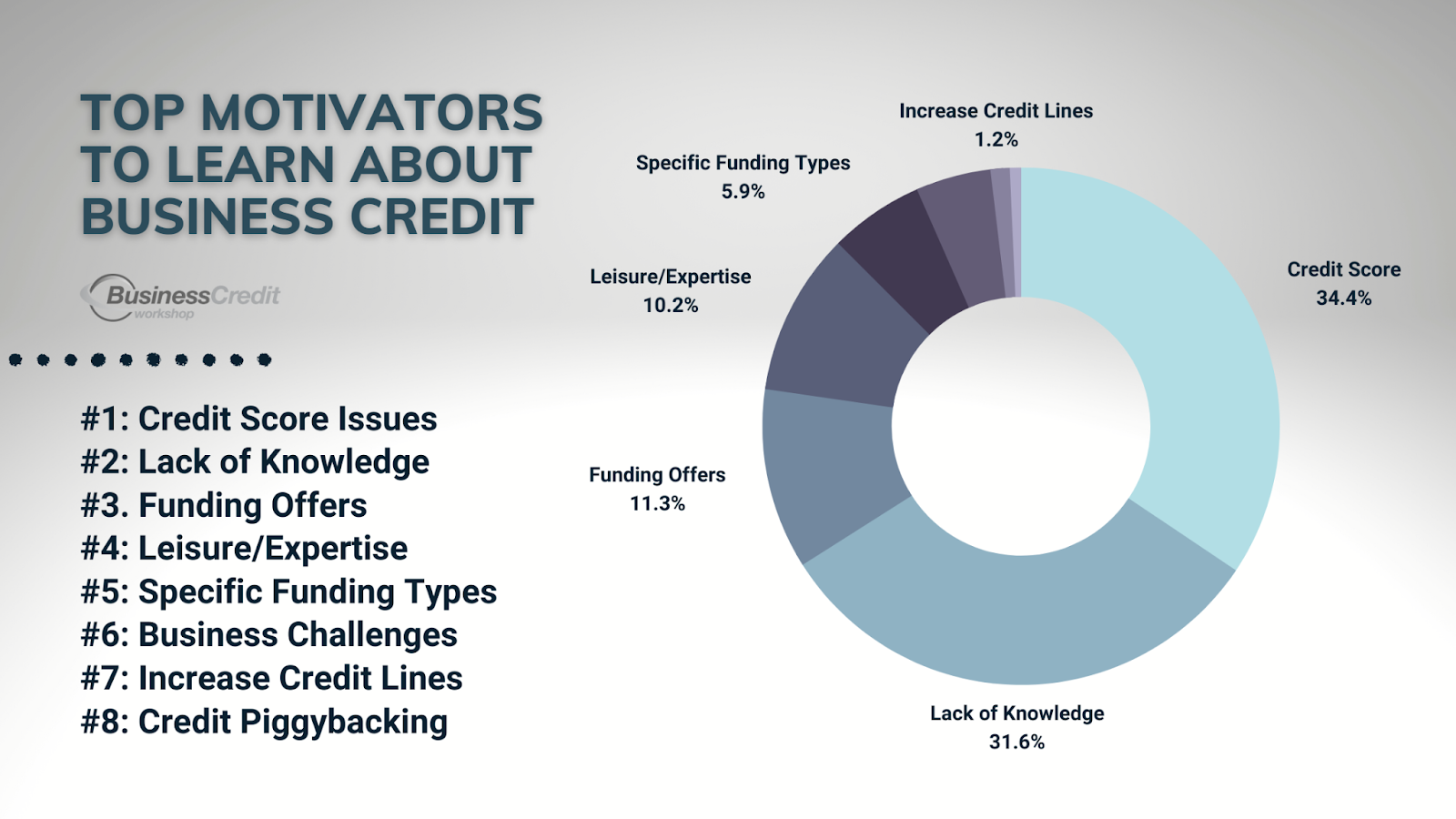
The top 8 motivators to learn about business credit are credit score issues, lack of knowledge, funding offers, leisure/expertise, specific funding types, business challenges, increasing credit lines, and credit piggybacking

Credit is a crucial factor that lenders, suppliers, and other businesses consider when evaluating a company’s creditworthiness and financial stability. A strong business credit score can help a small business or larger company secure favorable loan terms, negotiate better payment terms with suppliers, and potentially even attract new customers. On the other hand, a poor credit score can make it difficult for a business to secure the funding it needs to operate and grow.

While each situation is unique, business owners have various reasons for seeking business credit education that I’ve broken down into eight categories: credit scores, general business credit knowledge, interest in current offers, curiosity, information about specific funding types, business-related challenges, increasing existing credit lines, and even selling credit. 

Here, we examine the top questions people have about business credit, then read answers to those queries. 

1. Most Business Owners Need Help With Their Credit Scores

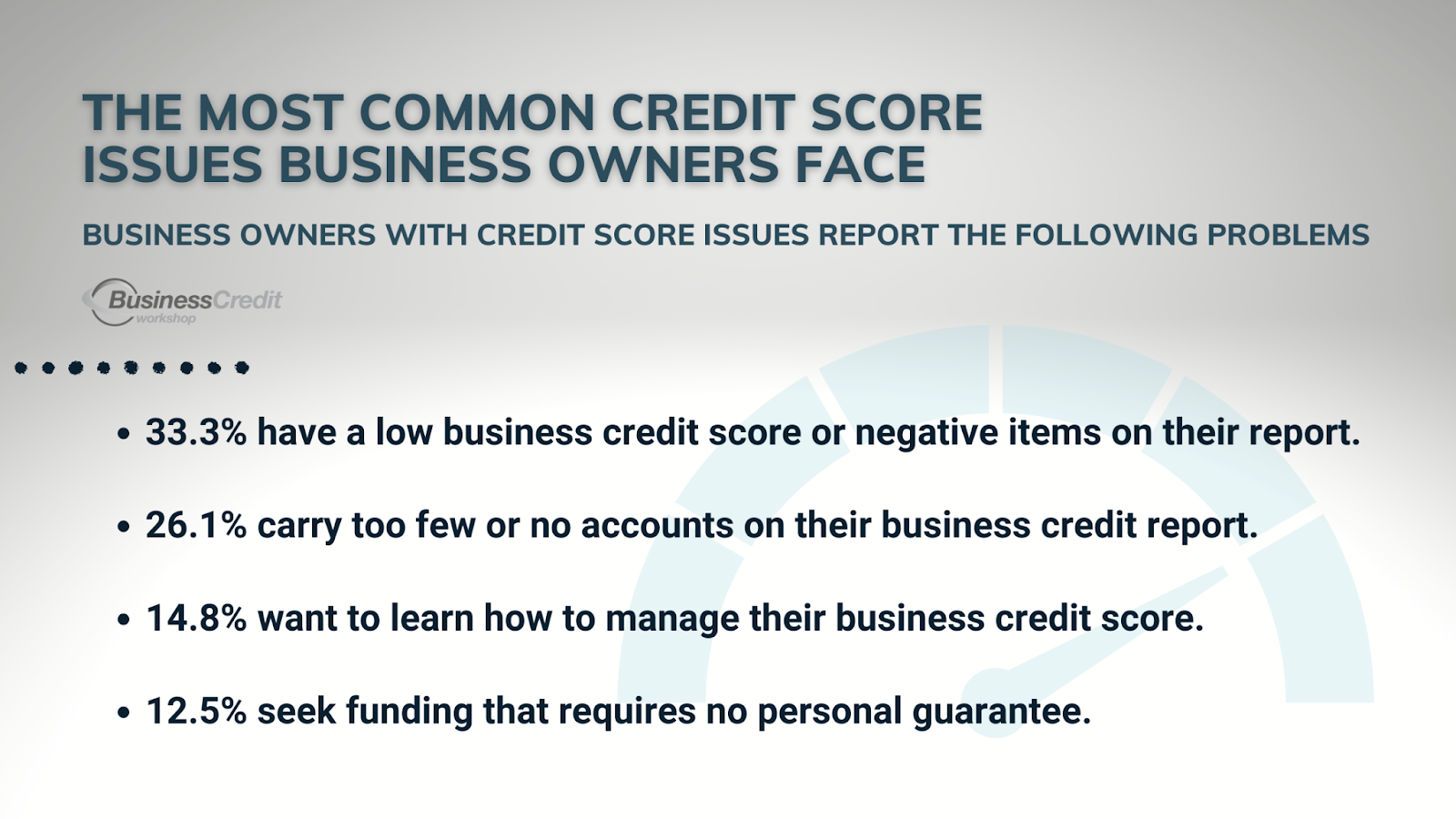
The most common credit score issues business owners face are low credit score, too few or no accounts reporting, no idea how to manage their business credit score, and a lack of no-PG funding options.

The top reason people come to us is for help with their credit scores. Sometimes this pertains to business credit, while other times there are issues with personal FICO scores. 34.4% of business owners need help with their credit scores when they begin their business credit-building journey. Whether it’s personal or business credit that people need to build or repair, credit score queries are our number one issue. This topic is where we exert most of our energy. 

First of all, there are things you can do to improve your credit score: 

  • Pay your bills on time to prevent negative marks on your report
  • Keep your credit utilization below 30% to optimize your credit score
  • Don’t open too many new accounts at one time to minimize the negative impact of credit inquiries 
  • Monitor your credit score so you can catch and dispute errors right away
  • Focus on one area at a time, so as not to overwhelm yourself (sometimes, patience is key)

Here are answers to common questions about general credit score issues: 

What is the fastest way to fix your credit score?

The quickest way to fix your credit score is to pay off any outstanding debts right away, to make sure that all of your accounts are current. Moreover, you can try to dispute any errors or inaccuracies on your credit report, as these can negatively impact your credit score. I recommend the Credit Secrets system to anyone with a low credit score. 

Who can I talk to to help me with my credit score?

For help with your credit score, you can talk to a financial advisor, credit counselor, or credit coach for help with improving your credit score. They can provide you with advice and resources to help you pay off your debts and manage your finances in a way that will positively impact your score. In some circumstances, you may also be able to find free or low-cost credit counseling services through non-profit organizations or your local government.

Can I pay someone to clean up my credit report?

I generally advise against paying someone to “clean up” your credit report. The truth is, companies that offer services like this are generally expensive while the industry is flooded with scammers. If you do decide to pay for a service like this, check with the Better Business Bureau, read company reviews, and do your due diligence before you proceed, as paid credit clean-up is a high-risk solution for poor credit. 

Is it easier to qualify for a business credit card?

A business credit card is not easier to qualify for than a personal credit card because it requires that the applicant submit business financial documents, sometimes in addition to personal credit information. However, if they take the right steps, a business may be able to build credit faster than an individual. 

Relative to general credit score challenges, a number of people we interact with have problems specifically related to business credit. Of those that need help with their business credit scores, ⅓ of them have an existing, low business credit score or negative items on their report that they want to clean up. These issues need to be handled on a case-by-case basis since there are so many possibilities, and what works for someone with too many inquiries won’t work for someone whose utilization is too high. 

In many ways, business credit is similar to personal credit, and some of the same strategies that help boost an individual’s FICO score can help increase a company’s Paydex score and other business credit scores. 

Let’s look at the usual queries people have about business credit problems: 

How can I fix my business credit score?

To fix your business credit, you can start by paying all bills and debts on time, as agreed. Next, keep your balances low on credit cards and lines of credit. Furthermore, you should regularly review your credit reports for errors. In some cases, it can also be helpful to build a positive credit history by taking out small loans or credit cards and using them responsibly.

How do I remove negative items from my business credit?

To remove negative items from your business credit, you can try disputing the errors with the credit bureaus or negotiating with the creditor to have the item removed in exchange for payment. It is also a good idea to regularly review your credit reports and address any errors or issues as soon as possible. You may also try a goodwill request for the deletion of valid negative marks on your report.

What is a goodwill request for deletion?

A goodwill request for deletion is a letter or email that you can send to a creditor (not a credit bureau), asking them to remove a negative item from your credit report as a gesture of “goodwill.” These requests are typically made when the negative item on your credit report is the result of a one-time mistake or misunderstanding, and you have an otherwise good credit history.

Do goodwill deletion letters work?

Yes, goodwill deletion letters can work to mitigate accurate, negative marks on a credit report, though usually only when the individual or entity making the request has a history of otherwise positive records.

Much of the time, credit score problems are based on a scarce number of accounts on a business credit report. 26.1% of the businesses with credit score issues report too few or no accounts listed on their business credit report. This can occur when the company utilizes tradelines that don’t report to D&B, a new credit line hasn’t been reported yet, or when the business hasn’t applied for credit. Again, these problems need to be resolved on a case-by-case basis. 

Having a limited credit history can make it difficult for businesses to establish a strong credit score, which is based on a variety of factors, including payment history, credit utilization, and the length of credit history. If a business has a limited credit history, it is impossible for any credit scoring algorithm to accurately assess a business’s creditworthiness and financial stability.

Here’s what business owners want to know about a limited number of accounts on a business credit report: 

How many business credit accounts should I have?

Prior to applying for business funding, you should establish tradeline accounts to establish credit. You first need to set up your business so that it’s optimized for obtaining business credit. To build credit fast, you need a minimum of three tradelines reporting to business credit bureaus, before your score is adequate for lenders; A perfect score requires more.

Can I self-report business credit?

As an individual or entity, you cannot simply report your payments to business credit bureaus. However, there are steps you can take to have certain bills reported. For example, eCredable has options to link utility payments to users’ accounts to have them reported. And, you can apply for certain types of funding that report on-time payments to business credit bureaus.

Why does my business credit card not show on my credit report?

Many business credit cards report on the cardholders’ personal credit reports, not the business credit reports. In a case where you know that your business credit card should be reporting, you may have to wait, as it takes some lenders longer to report than others.

How long does it take business credit to report?

The length of time it takes lenders to send payment activity to business credit bureaus varies from bank to bank. In many cases, it can take over 30 days before payment history shows on a report. Some lenders do not report until after the second billing cycle.

Does Amex report to Dun & Bradstreet?

As a rule, Amex reports all business credit history to the Small Business Financial Exchange (SBFE). Only negative payment activity is reported by Amex to Dun & Bradstreet.

Does Chase report to Dun & Bradstreet?

Yes. Chase does report business credit payment history to Dun & Bradstreet.