Key Takeaways
- CreditSafe is a business credit bureau but not widely used in the U.S.
- Major U.S. lenders rely on D&B, Experian, and Equifax instead.
- CreditSafe specializes in international credit risk assessment.
- Companies like Neiman Marcus and Accenture use CreditSafe.
- It does not report to major U.S. business credit bureaus.
- Pricing is unclear and varies from $15 to $100+ per month.
- You can request a free report by speaking with a rep.
- It’s useful for global business but not essential in the U.S.
CreditSafe, like Dun & Bradstreet, is a business credit bureau. If you’re on a business credit building journey, you’ve likely seen the brand pop up in your research. But, how does CreditSafe impact your ability to obtain business credit? Where do they get their data? And, how applicable is the platform for small business owners?
Here, I’ll give you a rundown of what I’ve dug up about CreditSafe, share some of their features, and compare their small business relevance to other business credit bureaus.
This is what’s in store:
- What is a Business Credit Bureau?
- What is CreditSafe?
- CreditSafe Competitor Overview
- Frequently Asked Questions
- Conclusion: Is CreditSafe Helpful to Build Business Credit?
Now, let’s jump in!
What is a Business Credit Bureau?
A business credit bureau is an agency that collects and maintains information about the creditworthiness of businesses. Similar to personal credit bureaus that track individuals’ credit histories, business credit bureaus collect and share data about businesses’ credit behavior and financial performance.
The key functions of a business credit bureau include:
- Credit reporting
- Credit scoring
- Risk management
- Business verification
- Business credit monitoring
Overall, a business credit bureau is a valuable resource for businesses, lenders, and suppliers because it provides standardized data to support educated decisions and risk management practices.
Recommended: Here’s How to Check Your Business Credit Score, Step-by-Step
What is CreditSafe?

CreditSafe is a global business intelligence company specialized in credit and business information services. They promote their offer to businesses of all sizes. The platform offers comprehensive credit reports and data on millions of businesses and business owners worldwide.
CreditSafe offers to help mitigate credit risk, improve cash flow, and identify new business opportunities with data-driven insights.
They provide business credit reports, with insights into:
- Creditworthiness
- Financial stability
- Payment behaviors
- Other relevant factors that can impact credit risk assessment
The CreditSafe algorithm calculates business credit scores based on the information in their credit reports – These scores help lenders and suppliers inform decisions about extending credit or forming partnerships. They also offer tools and resources to manage credit risk effectively—monitor credit profiles, assess risk exposure, and set fitting credit limits.
With access to information from various countries, CreditSafe can enable institutions to assess the credit risk of international partners and customers.
Some lenders and suppliers choose to rely on D&B for North American borrower risk assessment while using CreditSafe for international applicants.

Moreover, CreditSafe offers application programming interface (API) solutions that let institutions integrate credit data directly into their existing systems. Many companies rely on CreditSafe’s services to streamline credit management processes and make confident business decisions.
Let’s continue this exploration from the perspective of small business and corporate borrowers.
You might also like: eCredable: A Deep Dive Into the Business Credit Reporting Platform
How Much Does CreditSafe Cost?
As of today, CreditSafe does not advertise pricing on their website. In fact, you need to speak with a sales rep to even take advantage of a free trial of the back end.
However, I did some digging and found that Capterra claims a CreditSafe account starts at $100 per month. One BBB complaint from 2022 cites a $40 membership charge. I’ve seen other sources that say a membership starts at $15. None of CreditSafe’s 294 reviewers on Trustpilot have disclosed what they pay, but one user described the platform as “inexpensive”—At least one Redditor has said the same.

CrediSafe does offer a free trial. So, if you sign up, you can decide for yourself whether or not the information is worthwhile.
You might also like: 41 Companies That Help Build Business Credit [Beyond Net 30 Vendors]
What Does CreditSafe Do?

Apparently geared primarily toward lenders and suppliers, CreditSafe offers a handful of products in their member dashboard:
- Domestic credit reports and company monitoring
- International credit reports
- Automated credit decisioning
- APIs/ERP integrations with CRMs
- Due diligence and compliance
Of these, I only see the first being applicable to small business owners. They do offer a free business credit report.
To get a CreditSafe business credit report and score, you need to submit a request through their website or contact their team directly. After that, a CreditSafe representative will call you to verify your request and ask what you’re looking for.
I went through this process myself, and submitted a few requests on behalf of a new business before I got a call back. This makes me wonder if they are quicker or more interested in potential lenders or companies with higher revenues.
When CrediSafe called me, I was expecting a hard sales pitch, but that didn’t happen. The rep just asked what I needed, and when I told them I wanted to see a credit report, they pulled it up and sent it over immediately—no pressure, no hassle.
If you’re requesting a report for a newer business, keep in mind that CreditSafe might not have much data, depending on what they’ve collected from vendors, lenders, and public records.
If you’re curious about what a CreditSafe report looks like for a nearly new business, here’s an example of the front page:

If you wanted to monitor your business’ CreditSafe credit report, you could theoretically sign up for a membership and do so. I’ll wager this would cost somewhere in the realm of $15 to $40 per month, but you would have to speak to a sales rep to know for sure—it seems like their pricing varies.
You might also like: Business Credit Report – Run a Free Company Search | Experian
What Companies Use CreditSafe?

As far as lenders and suppliers go, there are 100,000+ businesses globally that use CreditSafe for lending decisions. They claim that the top 10 credit card issuers rely on their data.
CreditSafe’s platform is widely used by multinational corporations and financial institutions to assess business credit risk, particularly for international transactions. Companies like Neiman Marcus, Accenture, Hermès International, Cognizant, and Wipro leverage CreditSafe’s reports to evaluate global partners.
The database allegedly covers over 430 million businesses across 200+ countries, making it a strong resource for international credit evaluations. However, CreditSafe is not a primary player in U.S. domestic business credit decisions.
Major U.S. lenders and suppliers typically rely on:
- Dun & Bradstreet
- Experian
- Equifax
This makes CreditSafe more useful for companies involved in global trade rather than small businesses looking to establish U.S. business credit.
If your business operates internationally or works with global suppliers, CreditSafe may provide valuable insights. But for domestic business credit building, focusing on bureaus that lenders actually check—like D&B, Experian, and Equifax—will be more effective.
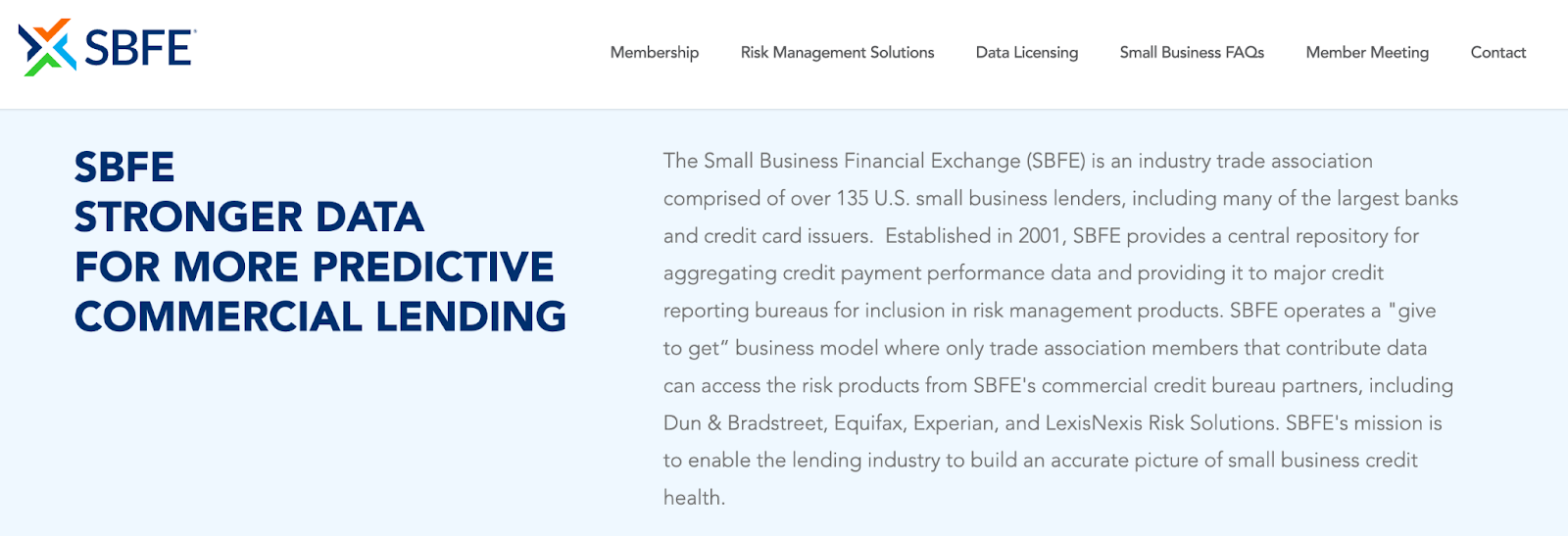
You might also like: What is the SBFE & How Do They Impact Small Businesses?
CreditSafe Competitor Overview
Again, the three main business credit bureaus that small businesses rely on to build credit in the U.S. are Dun & Bradstreet (D&B), Equifax, and Experian. Another key player, though not a credit bureau itself, is the Small Business Financial Exchange (SBFE), which collects data and shares it with these bureaus.
CreditSafe is not typically used for business credit building in the U.S. Major lenders and suppliers do not rely on its reports the same way they do with D&B, Experian, or Equifax. However, it does appear in various resources, and some small business owners come across it while researching business credit.
Let’s peek at how these platforms compare for small business offers:
| Starting Price | Free Business Credit Report | Free Business Credit Score | |
 | $0 | ✅ | ✅ |
 | $0 | ✅ | ⛔ |
 | NA | ⛔ | ⛔ |
 | $99 | ⛔ | ⛔ |
 | NA | ⛔ | ⛔ |
CreditSafe offers free business credit reports and scores through limited-time trials or partnerships.
D&B provides a free basic profile and DUNS number, but full reports require payment.
Equifax does not typically offer free business credit reports or scores—Access to this info usually requires that you apply for financing.
Experian offers business credit reports starting at $99 and up, while free reports or scores are not typically available.
SBFE acts as a data aggregator and does not provide reports or scores directly to businesses.
Another item worth mentioning is that, while the other bureaus provide financial reports on 25 to 40+ million businesses, CreditSafe doesn’t disclose exactly how many U.S. businesses they carry data on.
Recommended: Nav Review: A Tool that Helps Build Up Your Business Credit Score
Frequently Asked Questions
Who does CreditSafe report to?
CreditSafe does not report business credit data to major U.S. credit bureaus like Dun & Bradstreet, Experian, or Equifax. Instead, it compiles business credit information from various sources and provides reports directly to its customers, which include lenders and suppliers.
What is CreditSafe used for?
CreditSafe is primarily used for business credit risk assessment. Lenders, suppliers, and companies use it to check the creditworthiness of businesses, monitor financial stability, and make informed credit decisions. It also offers international credit reports, automated credit decisioning, and compliance tools.
Is CreditSafe a real company?
Yes, CreditSafe is a legitimate business credit reporting agency. Founded in 1997, it operates in multiple countries and serves thousands of businesses globally. Its U.S. headquarters is in Allentown, Pennsylvania.
Can I run a credit check on an individual with CreditSafe?
No, CreditSafe does not provide consumer credit reports. It focuses on business credit data, so it cannot be used to check an individual’s personal credit score.
Conclusion: Is CreditSafe Helpful to Build Business Credit?
CreditSafe provides free business credit reports and scores, but its impact on U.S. small business credit building is limited. Major lenders and suppliers rely more on Dun & Bradstreet, Experian, and Equifax for credit decisions.
For small business owners, the best approach is to pay vendors that report to major bureaus, monitor credit across platforms, and use tools like Nav for easy access. While CreditSafe offers global credit insights, it’s not a key player in U.S. business credit building.
If you work internationally, CreditSafe may be useful. Otherwise, focus on bureaus that lenders trust for financing decisions.
Do you want to learn how to obtain up to $100K in business credit in as few as 30 days? Join Business Credit Workshop today!